
Ministry of Industry supports furniture digitalisation to bolster exports
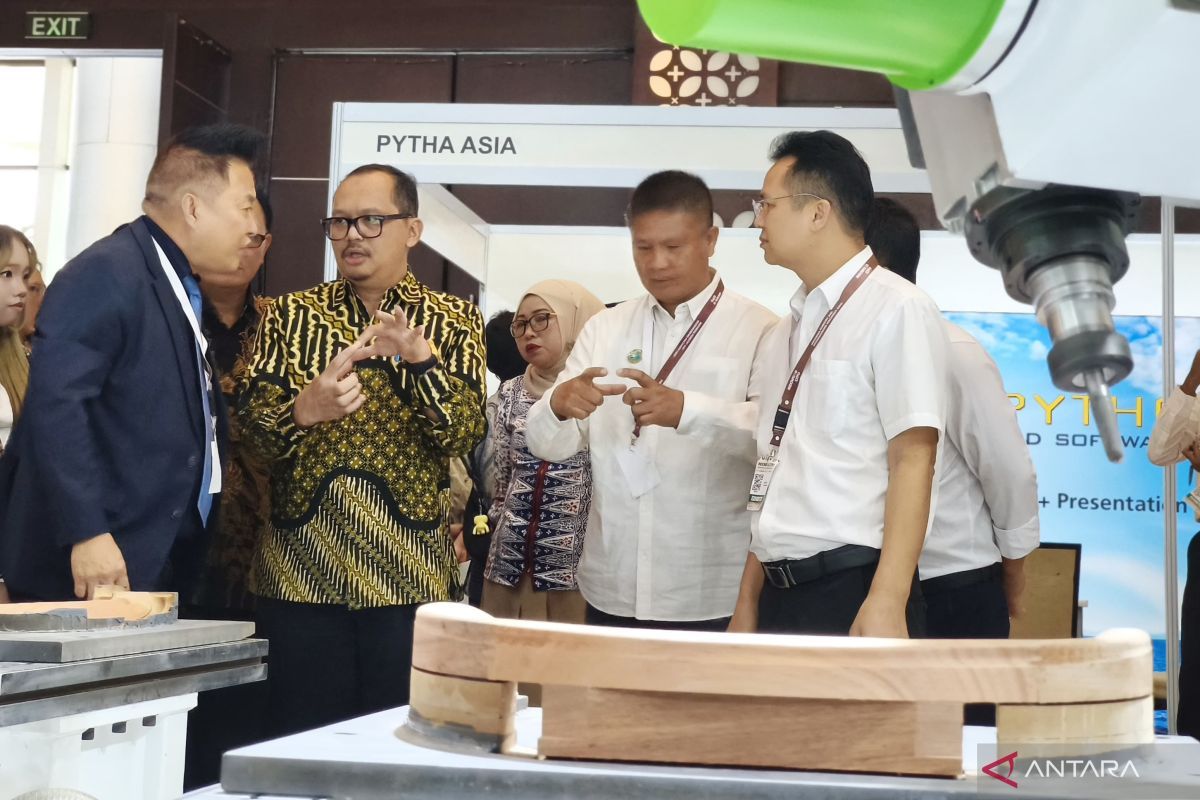
The Ministry of Industry (Kemenperin) supports the accelerated implementation of digitalisation in the furniture industry to increase productivity, efficiency, and strengthen export competitiveness, amidst the growing use of technology in the national wood processing and furniture sectors.
Andi Rizaldi, Expert Staff for Industry 4.0 Transformation Acceleration at the Ministry of Industry, stated that digitalisation is a vital strategy for strengthening the competitiveness of the national furniture industry in the global market. “We support the initiatives taken by the Indonesian Furniture and Craft Industry Association (HIMKI). Digitalisation can assist the production process, reduce defects, and increase productivity,” Andi said following the opening of the Indo Wood Expo 2026 in Surabaya on Thursday.
Furniture digitalisation involves the integration of digital technology throughout the entire business chain, including design, production automation, and online marketing. This integration allows for more precise and efficient furniture manufacturing.
He noted that the Ministry’s support aligns with the objectives of the Indo Wood Expo 2026, which serves as a platform to bring together stakeholders from the forestry, wood processing, furniture, technology, and design sectors, alongside investors and international buyers, to strengthen Indonesia’s forest product industry value chain.
Furthermore, the Ministry of Industry expressed appreciation for the signing of a memorandum of understanding between HIMKI and Labamo, a digital service provider, which is expected to accelerate technology adoption in the furniture sector. “I commend this furniture manufacturing sector. Even with a 60 per cent utilisation rate, their export figures have reached 80 per cent of their total domestic production,” he remarked.
Andi explained that the current utilisation rate of the furniture industry is around 60 per cent, while the export value of furniture reached approximately US$1.9 billion in 2024 and is projected to be around US$1.8 billion in 2025. He added that the manufacturing sector remains the primary contributor to national exports, accounting for nearly 80 per cent of Indonesia’s total exports.
Regarding the strengthening of the US dollar against the rupiah, Andi viewed this as an opportunity for national furniture players to increase exports, given that most products are marketed abroad. “Since 60 per cent of the raw materials are sourced locally, while 80 per cent of sales are for the export market,” he said.
On the same occasion, Andi emphasised that the government remains consistent in implementing downstreaming policies through the ban on the export of round logs to increase domestic value-add. He stated that this policy encourages foreign investors to build production facilities in Indonesia to gain access to raw materials while strengthening the national industry supply chain.
Meanwhile, the General Chairman of HIMKI, Abdul Sobur, stated that the implementation of manufacturing technology is a necessity for the national furniture industry to improve production efficiency and strengthen global competitiveness. “Unique goods do not necessarily have to be expensive,” he said.
He explained that Indonesian furniture products still face challenges with relatively higher production costs compared to several competing nations, despite having advantages in design and product character. According to him, the use of technology and industrial machinery can significantly accelerate the production process, thereby increasing productivity and reducing production costs. “The secret is technology,” Sobur concluded.