
Ministry of Industry strengthens local coffee development technology
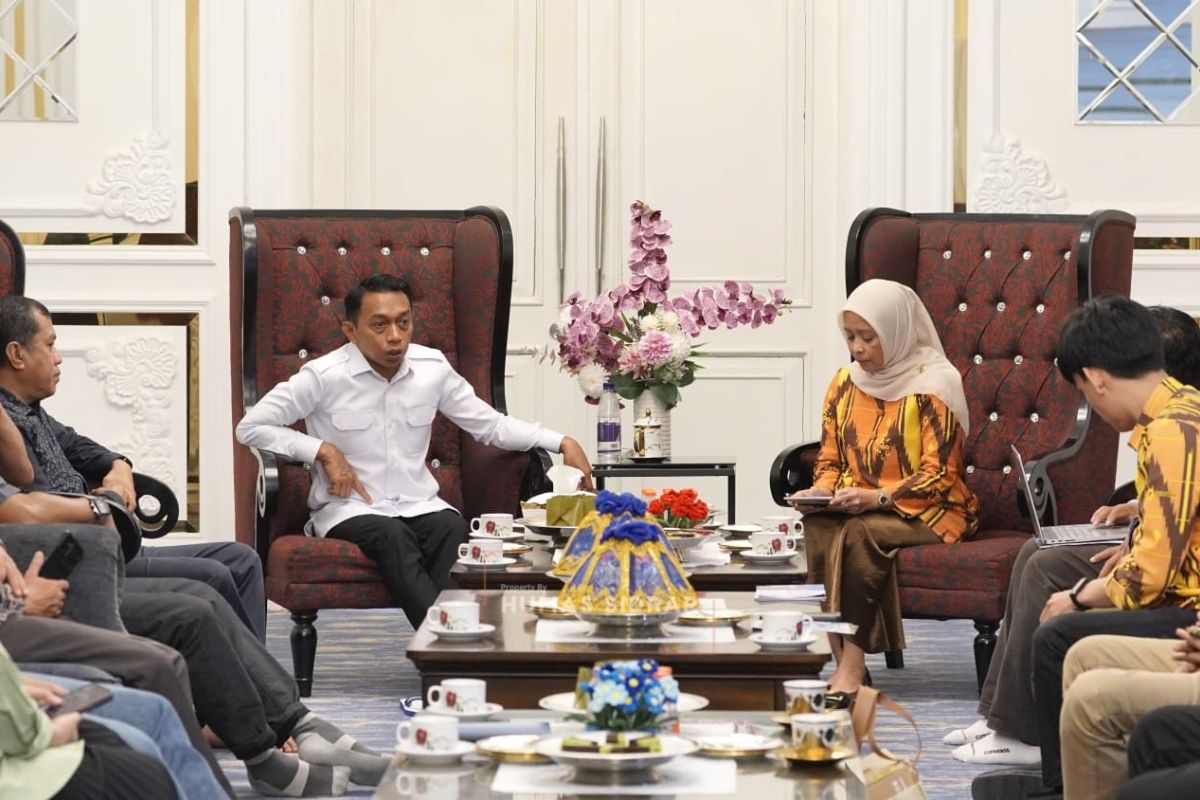
The Ministry of Industry, through the Large Center for Standardization and Industrial Services for Plantation, Mineral, Metal, and Maritime Products (BBSPJIHPMM), is strengthening the development of local coffee management technology through a partnership with the Sidenreng Rappang (Sidrap) Regency Government, South Sulawesi.
“This strengthening of cooperation is aimed at developing industries based on regional flagship commodities, specifically increasing the quality and competitiveness of Sidrap coffee products,” said Asma Assa, Head of the Technology Utilisation, Consultancy, and Technical Assistance Optimisation Team at BBSPJIHPMM, in Sidrap on Friday.
Following a meeting with the Regent of Sidrap, BBSPJIHPMM, alongside the local Trade and Industry Office, will immediately implement programmes for coaching, competency enhancement, and the application of industrial technology for local business actors.
One of the planned programmes, she noted, involves increasing the competence of coffee processors through the application of post-harvest technology, involving local coffee producers in Leppangeng Village, Pitu Riace District, Sidrap.
The Regent of Sidrap, Syaharuddin Alrif, responded positively to this synergy. He assessed that improving processing quality is key to ensuring that regional flagship commodities can provide greater added value for the community.
“Coffee is one of our region’s mainstay commodities alongside rice. Therefore, its quality must be continuously improved, from the post-harvest process to becoming a product with higher selling value,” he added.
Through this technological assistance from the Ministry of Industry, the Regent stated that there is an opportunity for coffee entrepreneurs in Sidrap to improve product quality and expand their marketing reach.
“Our potential exists. It is now a matter of how we improve quality, packaging, and marketing. The local government continues to support Sidrap’s flagship products so they are not only known regionally but are also able to compete in wider markets,” he said.
He expressed hope that the collaboration for coffee processing industry development would grow stronger, simultaneously increasing the capacity of business actors and providing a positive impact on the income of farmers and coffee producers.
In addition to Leppangeng Village, coffee plantations are spread across other villages in the Pitu Riase District. In Dusun III Matajeng, Tana Toro Village, the Sipammasemase Farmers Group manages two hectares of land planted with 4,000 robusta coffee trees, which have been in production since 2024.
This area possesses geographical conditions that support the expansion of coffee plantations on a larger scale and has already produced tens of tonnes of high-quality coffee beans.
According to the Regent, several locations in the Pitu Riase District still have vast areas of vacant land available for coffee cultivation. There are plans to transform this district into a coffee production centre, which requires government intervention and support.
This opportunity must be realised to increase income and stimulate the village economy. Previously, the Regent participated in a coffee harvest and personally observed the hulling process (removing the skin from green beans) using machinery, as well as the drying, sorting, and processing stages prior to roasting.