
Ministry of Industry Strengthens Industrial Zones as Instrument to Boost Halal Industry
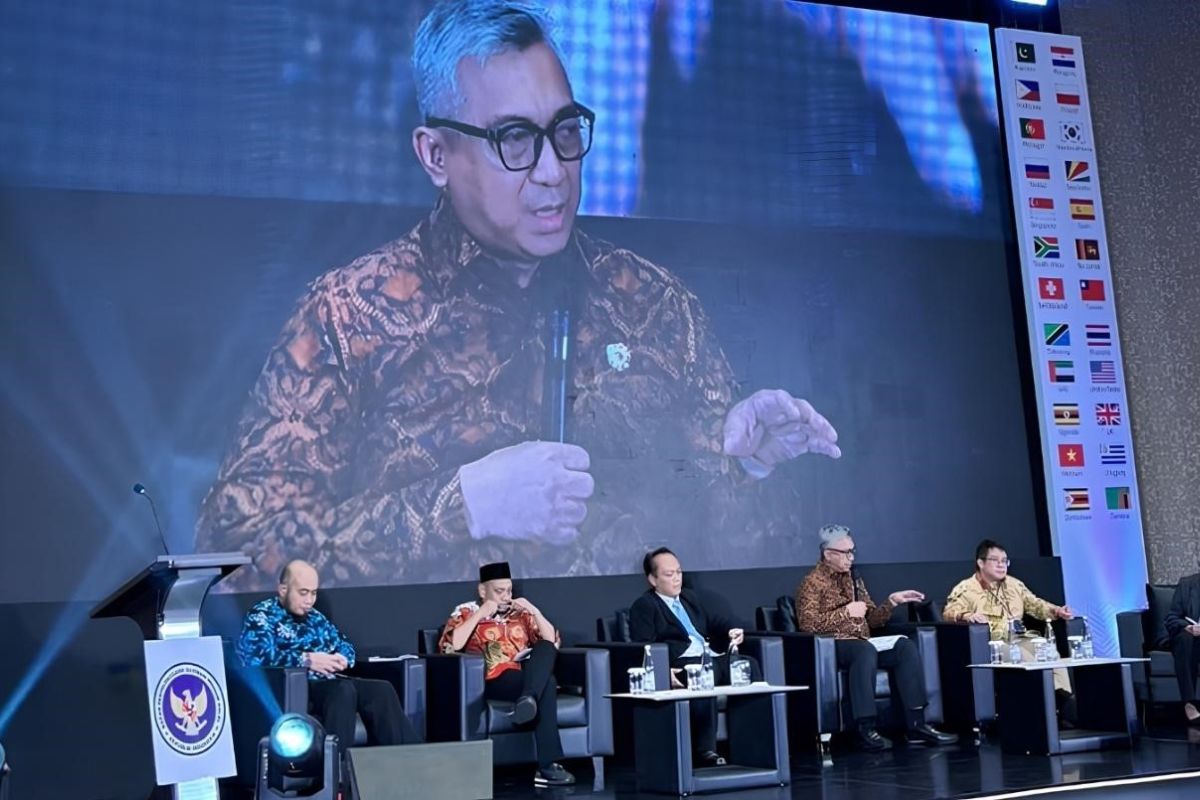
Jakarta (ANTARA) - The Ministry of Industry (Kemenperin) is strengthening the development of halal industrial zones as an instrument to drive the growth of the national halal industry by integrating production, human resources, certification services, raw materials, and other supporting requirements within a single zone.
“In this regard, Indonesia views international cooperation as vital so that the halal industry does not only grow as a consumer market, but also becomes a basis for production, investment, innovation, and increasingly integrated global trade,” stated Minister of Industry Agus Gumiwang Kartasasmita in an official statement confirmed from Jakarta on Monday.
These efforts include facilitating the establishment of four halal industrial zones located in Bintan, Cikande, Jababeka, and Sidoarjo. The development of these zones is directed towards building a more integrated foundation for the halal industry while simultaneously increasing investment attractiveness in the sector.
According to the Minister, the development of the halal industry must be directed so that its vast market potential can be linked to production and investment activities. Fragmentation between producers, investors, technology owners, and the market is seen as a reason why demand for halal products has not yet fully transformed into increased production capacity and a global halal value chain.
“Therefore, the development of the halal industry needs to be directed not only to expand the consumer market but also to strengthen the relationship between producers, investors, technology owners, and the market,” he said.
The development of the halal industry has become part of the national industrialisation policy through the Minister of Industry Regulation Number 40 of 2025 regarding the Halal Industry Development Roadmap 2025–2029. This roadmap serves as the foundation for various programmes, ranging from the preparation of regulations and guidelines, the strengthening of halal infrastructure and institutions, human resource development, and certification assistance, to the promotion and cooperation of the halal industry.
Tri Supondy, Director General of Industrial Resilience, Regionality, and International Industrial Access (KPAII) at the Ministry of Industry, stated that zone development is one of the instruments used to build a more integrated halal industry foundation. He shared this during The 5th Summit of Halal 20 (H20) on 18 September.
“This approach is expected to provide ease for business actors while increasing investment attractiveness in the halal sector,” he said.
The Ministry of Industry is also strengthening the halal industry ecosystem through institutional development and human resource capacity building. Currently, the Ministry of Industry oversees 22 Halal Inspection Agencies (LPH), four Halal Product Process Assistance Agencies (LP3H), five Halal Product Assurance Training Implementation Agencies (LP2JPH), and three Professional Certification Agencies (LSP).
These institutions are being strengthened through training, technical guidance, and competency certification for both industry players and officials. Attention is also being given to small industries; by 2026, the Ministry of Industry has facilitated halal certification for 12,171 small industries. This facilitation is complemented by promotional tools through Halal Indo 2026 and participation in various international halal exhibitions to ensure Indonesian small halal industry products can connect with wider markets.
Source: jawawa.id (https://jawawa.id/newsitem/ministry-of-industry-strengthens-industrial-zones-as-instrument-to-boost-halal-industry-1790593739)
Originally published by Antara (Indonesian) (https://www.antaranews.com/berita/5761800/kemenperin-perkuat-kawasan-jadi-instrumen-pacu-industri-halal), translated from Indonesian