
Ministry of Industry seeks to restructure import entry points to boost Indonesian economy
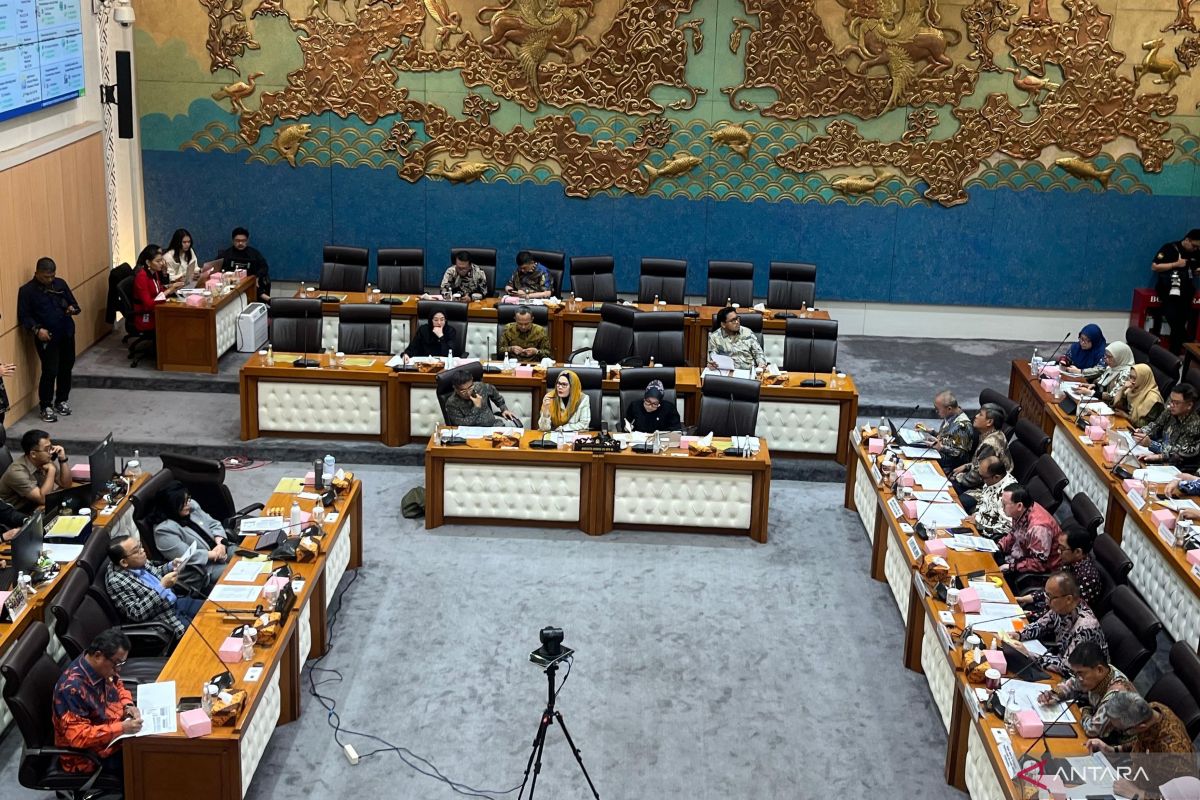
Jakarta (ANTARA) - The Ministry of Industry (Kemenperin) is working to restructure the entry points for certain imported consumer goods as a measure to strengthen supervision and drive economic growth.
During a meeting with Commission VII of the Indonesian House of Representatives (DPR RI) in Jakarta on Monday, Minister of Industry Agus Gumiwang Kartasasmita stated that this policy is aimed at increasing the effectiveness of import monitoring and control, while simultaneously improving national logistics management and optimising port capacity outside of Java.
“We have been continuously fighting for this, namely the initiative to restructure import entry points for certain consumer goods, to increase the effectiveness of import supervision and control, as well as to improve national logistics management,” he said.
He proposed the ports of Sorong, Bitung, and Kupang as alternative import entry points, noting that these ports currently have relatively low utilisation rates of 23.09 per cent, 34.7 per cent, and 32.6 per cent, respectively.
“Therefore, if these entry points are decided upon, we hope there will be new economic growth in the cities we have targeted, namely Sorong, Bitung, and Kupang,” he added.
The Minister noted that this initiative is part of an effort to safeguard domestic industry, given that 80 per cent of national industrial products still rely on the domestic market. Furthermore, the government is monitoring the potential for trade diversion, where shifts in international trade flows could trigger an influx of consumer products from various countries into the Indonesian domestic market.
“Therefore, strengthening industrial competitiveness and protecting the domestic market must be continuously reinforced in a measured and balanced manner. The goal is not only to maintain the sustainability of domestic industrial production but also to ensure that the domestic market truly becomes a space for domestic industry to grow and act as a host in its own country,” he said.
To maintain the sustainability of the national industry, Agus revealed that the Ministry, alongside relevant ministries and agencies, is implementing other strategic steps, such as strengthening fiscal and non-fiscal incentives to maintain the competitiveness and sustainability of manufacturing investments. Additionally, the government is implementing measured import controls and restrictions, particularly on consumer goods or finished products that can already be produced by domestic industries.
He added that one of the instruments widely used by various countries to protect their industries is Technical Barriers to Trade (TBT). He noted that while Indonesia possesses similar instruments, such as the application of Indonesian National Standards (SNI), entry point supervision, and Domestic Component Level (TKDN) requirements, the Minister assessed that Indonesia’s industrial protection instruments remain relatively limited compared to other nations.
According to World Trade Organization (WTO) data as of April 2024, Indonesia has only 142 TBT instruments. “This number is still very low compared to liberal market economies, where the United States has over 2,000 TBT instruments, China has 1,600, Korea has 1,100, and Thailand has 760; we only have 142,” he revealed.
He assessed that this condition indicates there is still significant policy space to strengthen national industrial protection instruments in a measured, selective manner that remains aligned with international trade regulations.