
Ministry of Industry Pushes for Indonesia's Halal Industry to Become a Global Production and Investment Hub
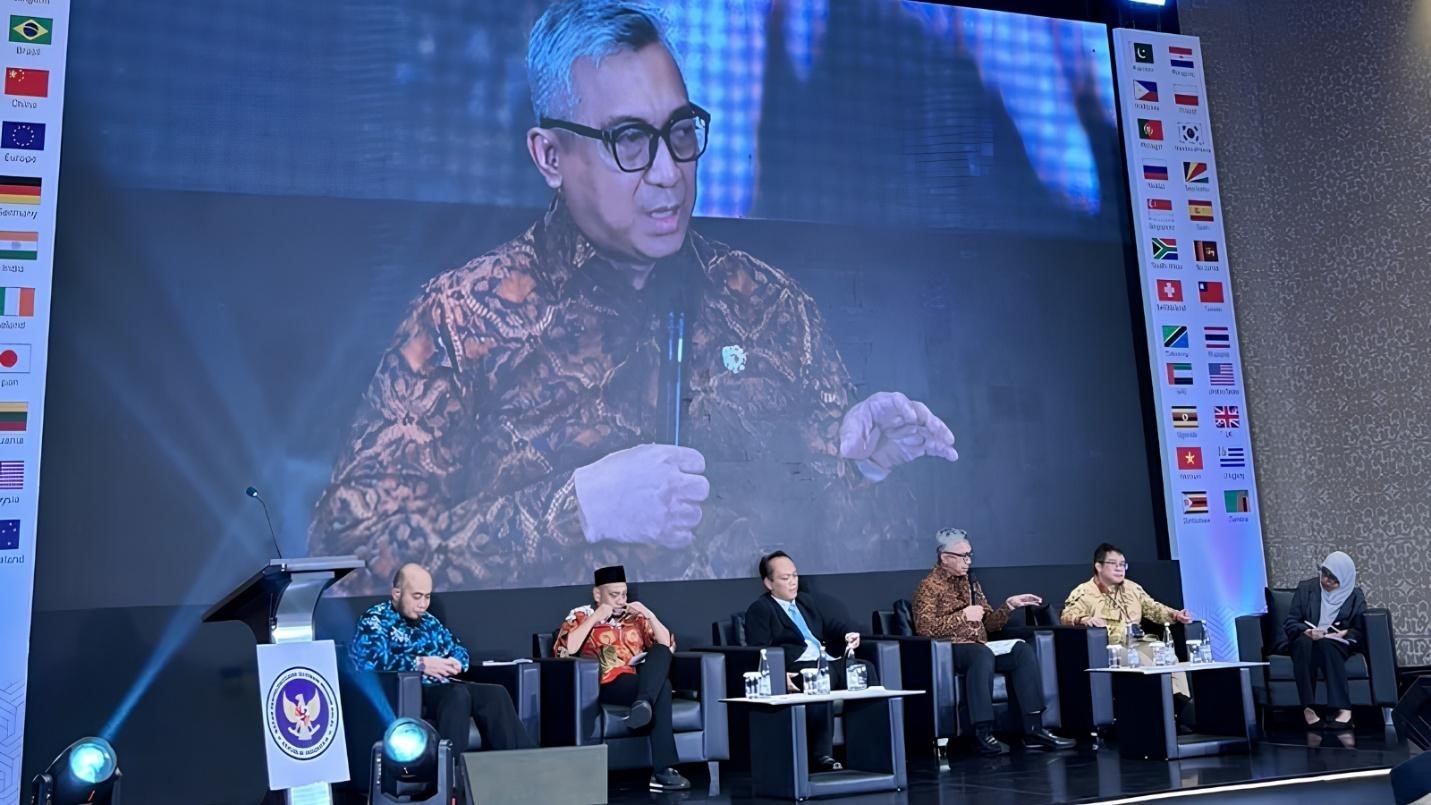
The halal industry in Indonesia possesses a vast market and must continue to receive developmental support through the construction of halal industrial infrastructure, including the facilitation of four Halal Industrial Zones in Bintan, Cikande, Jababeka, and Sidoarjo. This step is an effort by the Ministry of Industry to bring together industry, human resources, certification services, raw materials, and other requirements within a single zone.
“In this regard, Indonesia views international cooperation as vital so that the halal industry does not only develop as a consumption market, but also becomes a basis for production, investment, innovation, and increasingly integrated global trade,” stated Minister of Industry Agus Gembira Kartasasmita in a statement in Jakarta on Monday (28/9).
Fragmentation has prevented the large demand for halal products from fully translating into investment decisions, increased production capacity, and the formation of a global halal value chain. For industry players, certainty regarding raw materials, the alignment of standards between countries, market scale, and connectivity with supply chains are critical considerations before making investments.
“Therefore, the development of the halal industry needs to be directed not only towards expanding the consumer market but also towards strengthening the links between producers, investors, technology owners, and the market,” he said.
In Indonesia, the development of the halal industry has been positioned as part of the national industrialisation policy through the Minister of Industry Regulation Number 40 of 2025 regarding the Halal Industry Development Roadmap 2025–2029. This roadmap serves as the foundation for various programmes, ranging from the formulation of regulations and guidelines, the strengthening of halal infrastructure and institutions, human resource development, and certification assistance, to the promotion and cooperation of the halal industry.
Zone development is one of the instruments used to build a more integrated halal industry foundation. At The 5th Summit of Halal 20 (H20) on 18 September, the Director General of International Industry Resilience, Regionality, and Access (KPAII), Tri Supondy, stated that Halal Industrial Zones do not only provide space for production activities but also bring together various supporting industrial needs within one area.
“This approach is expected to provide ease for business actors while simultaneously increasing investment attractiveness in the halal sector,” he said.
Strengthening the halal industry is also being carried out through institutional development and human resource capacity building. Currently, the Ministry of Industry possesses 22 Halal Inspection Agencies (LPH), four Halal Product Process Assistance Agencies (LP3H), five Halal Product Assurance Training Implementation Agencies (LP2JPH), and three Professional Certification Agencies (LSP). These institutions are being strengthened through training, technical guidance, and competency certification for both industry players and officials.
Equal attention is being given to small industries. By 2026, the Ministry of Industry has facilitated halal certification for 12,171 small industries. This facilitation is further complemented by promotional means through Halal Indo 2026 and participation in various international halal exhibitions, ensuring that Indonesian small-scale halal products have the opportunity to connect with wider markets.
“The development of the halal industry must encompass all business actors, both small and large industries. For small industries, access to certification and promotion is essential, whereas for large industries, the implementation of halal product processes can be part of good industrial governance while providing added value in competition,” added the Director General of KPAII.
For large-scale industries, the Ministry of Industry is accelerating the implementation of halal product processes as part of Good Manufacturing Practices (GMP). This effort is also reinforced through the Indonesia Halal Industry Awards (IHYA), which provides recognition to stakeholders who consistently support the growth, development, and empowerment of the national halal industry.
Moving forward, Indonesia views international cooperation as a vital component in connecting halal industries across countries. The strengthening of standards, the connectivity of industrial zones and production needs, the exchange of information on investment opportunities, and partnerships between producers, technology owners, investors, and markets are all part of the effort to build a more integrated halal industry.
Through the strengthening of zones, institutions, human resources, and business capacity, Indonesia aims to expand its role in the global halal industry. The direction of development is not merely to make Indonesia a market for halal products, but also to establish it as a global basis for halal production, investment, innovation, and trade.
Source: jawawa.id (https://jawawa.id/newsitem/ministry-of-industry-pushes-for-indonesias-halal-industry-to-become-a-global-production-and-investment-hub-1790589092)
Originally published by suarapemerintah.id (https://suarapemerintah.id/2026/09/kemenperin-dorong-industri-halal-indonesia-jadi-basis-produksi-dan-investasi-global/), translated from Indonesian