
Ministry of Industry optimises use of domestic products to boost added value
The Ministry of Industry (Kemenperin) is optimising the use of domestic products to drive increased added value in national industries while simultaneously strengthening production capacity, supply chains, investment, and employment absorption.
Minister of Industry Agus Gumiwang Kartasasmita stated that increasing the use of domestic products is a vital component in building a more robust national industrial ecosystem. He noted that Indonesia’s large domestic market serves as capital for the manufacturing industry to expand market share and enhance competitiveness.
“The utilisation of domestic products is part of the effort to build a stronger industrial ecosystem. When national industrial products have a wider market, production capacity can be utilised more optimally, providing downstream impacts on investment, job creation, and the strengthening of domestic supply chains,” he said.
According to Agus, every Rp1 spent on domestic products can generate an impact of Rp2.2 on the national economy. Currently, approximately 7lar 78.39 per cent of national manufactured products are destined for the domestic market, while 21.61 per cent are for export.
With a large population and continuous consumption needs, the domestic market offers vast space to increase the penetration of national industrial products. The Head of the Centre for Increasing the Use of Domestic Products (P4DN) at the Ministry of Industry, Kris Sasono Ngudi Wibowo, added that this opportunity is supported by industrial capacity that can still be optimised, as reflected by the 61.8 per cent utilisation rate of non-oil and gas processing industries recorded for 2025.
Furthermore, Indonesian household consumption throughout January–December 2025 reached Rp12,834.8 trillion for a population of 284.44 million people. “The size of this consumer base provides space for national manufactured products to expand the domestic market,” he said.
The government is also strengthening domestic industry through Local Content Requirement (TKDN) policies. As of 2 September 2026, there are over 57,000 TKDN-certified products originating from more than 5,600 industrial companies. These products form part of the national industrial base that can be utilised in the procurement of goods and services, while expanding market access for domestic manufacturing.
In the pharmaceutical and health products sector, the Bio Farma Group is one of the industries implementing TKDN policies. The company holds 29 TKDN and BMP (Company Benefit Weight) certificates covering vaccines, enoxaparin, diagnostic kits, and other products. The TKDN value of certified products ranges from 44.28 per cent to 95.03 per cent, while the Company Benefit Weight reaches a maximum of 15 per cent.
Evi Sylvia, President Director of PT Bio Farma, stated that strengthening domestic production in the pharmaceutical industry is not just about how much can be produced locally, but also about building capabilities from upstream to downstream. “With technological mastery, increased TKDN, and the application of quality and Halal standards, the resulting products can meet national needs while remaining competitive in the global market,” she said.
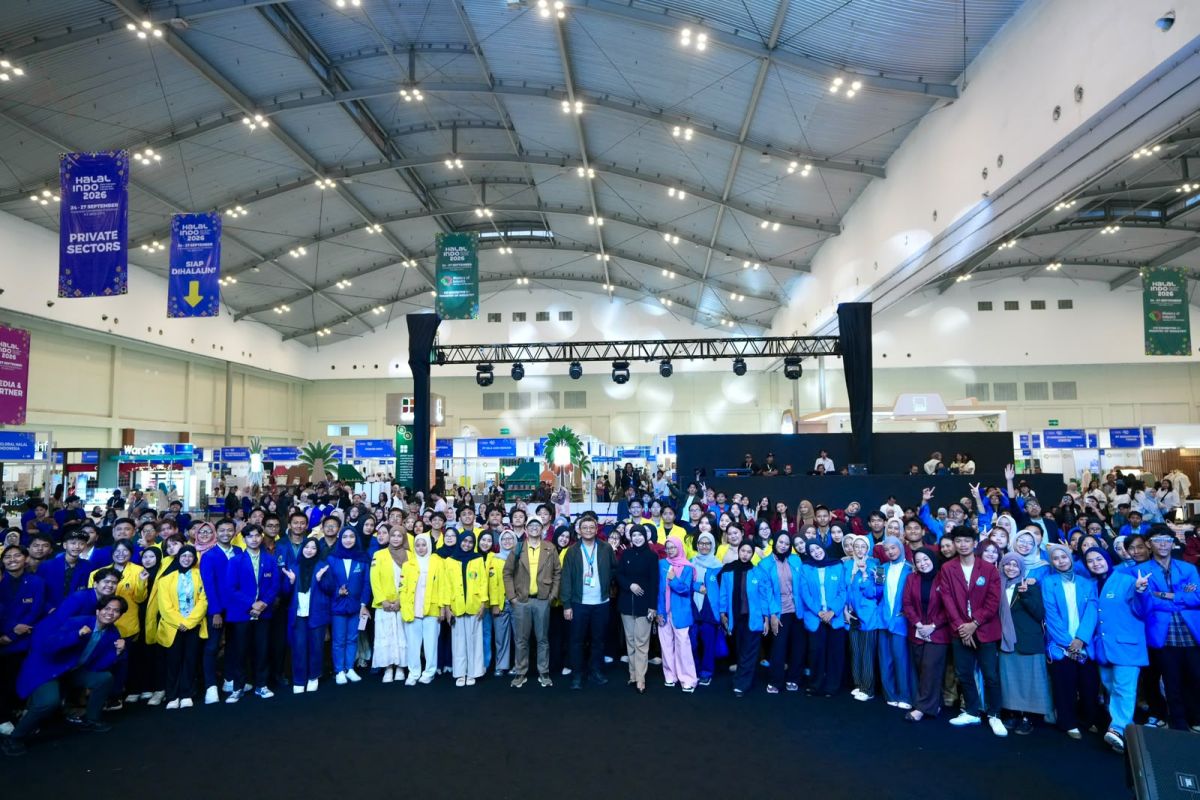
During a community engagement talkshow titled “Local Content, Greater Market: Domestic Products, Growing Business” at the Industrial Festival x Halal Indo 2026 in Tangerang on Friday (25/9), Evi noted that the Halal aspect is also a crucial part of developing pharmaceutical and vaccine products in Indonesia. Bio Farma expressed its commitment to developing and producing Halal vaccines and life science products in accordance with Islamic law, while implementing the Halal Product Assurance System (SJPH).
Meanwhile, in the consumer goods sector, the strengthening of domestic products must be accompanied by the ability of business actors to understand consumer needs, maintain quality, and build relevant brands. Ben Wirawan, CEO & Co-Founder of Torch, assessed that the use of local raw materials needs to be placed within a comprehensive product development framework to ensure quality is maintained and prices remain acceptable to the market.
Source: jawawa.id (https://jawawa.id/newsitem/ministry-of-industry-optimises-use-of-domestic-products-to-boost-added-value-1790420461)
Originally published by Antara (Indonesian) (https://www.antaranews.com/berita/5759823/kemenperin-optimalkan-penggunaan-produk-domestik-pacu-nilai-tambah), translated from Indonesian