
Ministry of Industry optimises industrial technology to support disaster mitigation
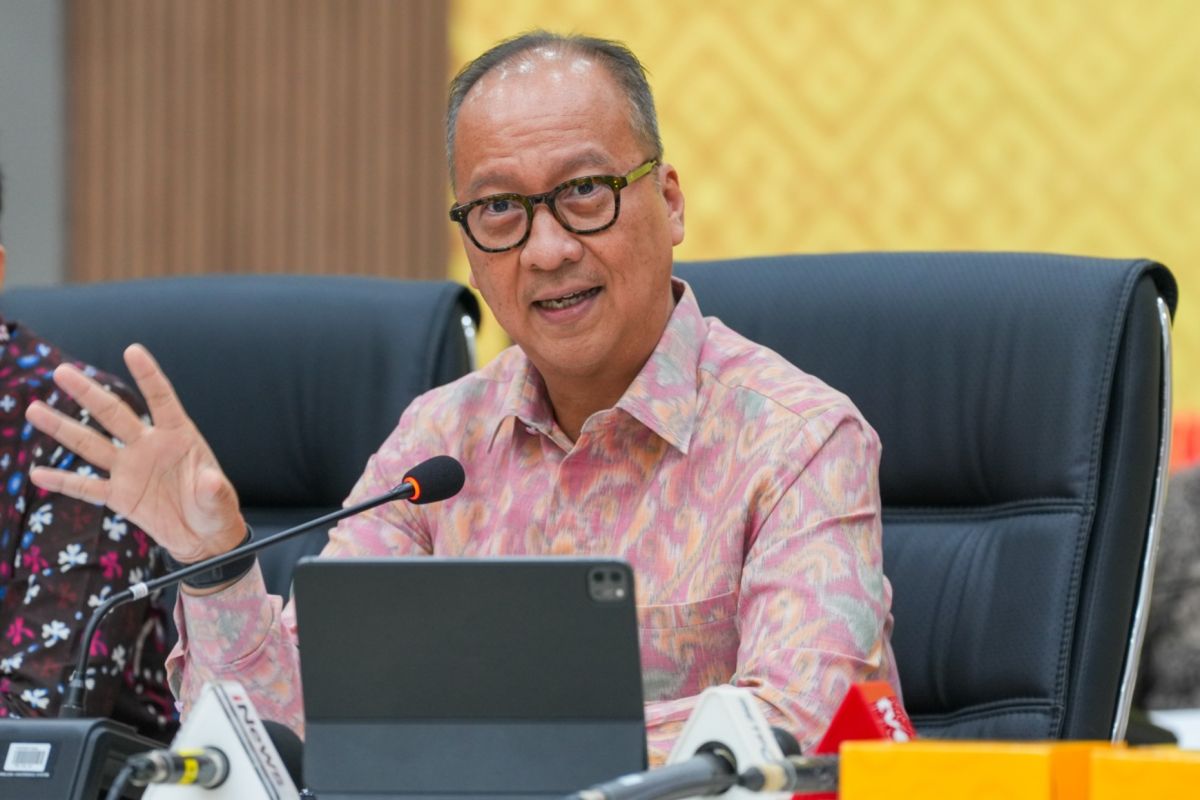
Jakarta (ANTARA) - The Ministry of Industry (Kemenperin) is optimising the use of Industry 4.0 technology to support efforts in disaster prevention, mitigation, handling, and recovery, in line with the accelerated digital transformation of the national manufacturing sector.
The Minister of Industry, Agus Gumiwang Kartasucasmita, stated that digital transformation must be directed towards the utilisation of technology that provides tangible benefits. “The most important component in the digital transformation process is the awareness of the benefits of using digital equipment; it is not merely about the ability to adopt technology, but must be aligned with a change in digital mindset,” the Minister said in a statement confirmed in Jakarta on Monday.
To accelerate digital transformation, the Ministry of Industry has established the Indonesia Industry 4.0 Digital Centre (PIDI 4.0) as a technology and digital hub for the national manufacturing sector. PIDI 4.0 has currently built collaborations with at least 65 partners, including industries, technology providers, associations, and universities.
According to the Minister, the Industry 4.0 transformation ecosystem holds great potential to generate various innovations that can meet societal needs, including the use of technology to support disaster management in Indonesia.
The Acting Head of the Industrial Human Resources Development Agency (BPSDMI), Adie Rochmanto Pandiangan, noted that PIDI 4.0 is also building partnerships with startups that develop technology for disaster management. “Regarding the field of disaster management, the Ministry of Industry’s PIDI 4.0 has partnerships with two startups: TechnoGIS from Sleman, Yogyakarta, and BATARI Energy from Cimahi, West Java. Both companies have produced technological innovations beneficial for disaster prevention and management in Indonesia,” said Adie.
The Ministry of Industry will present both companies at the Asia Disaster Management and Civil Protection Expo & Conference (ADEXCO) 2026, organised by the BNPB from 9–12 September 2026 at JIExpo Kemayoran, Jakarta. This participation aims to expand business-to-business (B2B) cooperation opportunities while introducing domestic technological capabilities.
TechnoGIS develops geospatial technology, including the NiVO VTOL, which can provide real-time geospatial data and analysis for mapping disaster-affected areas. The company also develops the Blue Marine Echosounder for underwater mapping and monitoring changes in river channels caused by sedimentation or flooding.
Meanwhile, BATARI Energy develops solar energy and energy storage solutions, including solar panels and portable energy devices for emergency power supply post-disaster. High-capacity, lightweight batteries are also being developed to support drone operations for mapping disaster-affected regions.
In addition to technology, the Ministry of Industry is strengthening the preparation of industrial human resources. Politeknik APP Jakarta, through its Diploma Programme in Electronic Industrial Logistics Management, is preparing logistics competencies related to mitigation, emergency handling, and post-disaster recovery.
“The Ministry of Industry continues to strengthen the realisation of a disaster technology independence ecosystem, including the readiness of its human resources. The hope is that in the future, Indonesia will be increasingly capable of building technology that is useful for handling natural disasters. It is not just about advanced technology, but how that technology’s presence and benefits can be felt by the community,” said Adie.