
Ministry of Industry Boosts Milk Downstreaming Amid 80 Per Cent Import Dependency
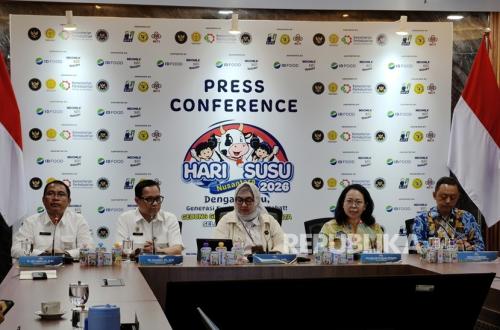
The Ministry of Industry (Kemenperin) is continuing to strengthen the development of the national milk industry through accelerated downstreaming, improved raw material quality, product innovation, and the strengthening of partnerships between milk processing industries and livestock farmers. This step is being taken to reduce dependency on imported raw materials, which still dominate domestic industrial needs.
The Minister of Industry, Agus Gumiwang Kartasasmita, stated that milk is a strategic commodity that plays a vital role in supporting food security and improving the quality of human resources by meeting the nutritional needs of the population. According to Agus, the development of the national milk industry holds immense potential, as evidenced by Indonesia’s relatively low milk consumption compared to several other Southeast Asian nations.
“The milk industry plays a very important role in supporting the improvement of public nutritional quality. The low level of milk consumption in Indonesia actually presents a massive opportunity for the future development of the national milk industry,” Agus said in a statement in Jakarta on Wednesday.
Based on 2022 data from the World Population Review, milk consumption in Indonesia was recorded at approximately 17.76 litres per capita per year, a figure still below neighbouring countries such as Malaysia, Singapore, and Vietnam. Meanwhile, the raw material requirement for the national milk processing industry currently reaches about 5 million tonnes of fresh milk equivalent per year, yet approximately 80 per cent of this demand is still met through imports.
The Acting Director General of Agro-Industry at the Ministry of Industry, Putu Juli Ardika, assessed that strengthening the domestic fresh milk supply is key to reducing import dependency. He noted that synergy between smallholder farmers, cooperatives, and the milk processing industry must be continuously strengthened to create an integrated and sustainable dairy industry ecosystem.
“Strengthening the domestic fresh milk supply chain through partnership programmes is one of the primary keys. Synergy between smallholder farmers, cooperatives, and the milk processing industry needs to be reinforced to create an integrated, productive, and sustainable dairy industry ecosystem,” said Putu.
As part of upstream sector reinforcement, the Ministry of Industry has encouraged the improvement of fresh milk quality through the provision of cooling unit technology and digitalisation at Milk Collection Centres (TPS). By 2024, this digitalisation programme has been implemented at 96 collection centres under nine cooperatives in West Java and East Java, involving more than 12,000 dairy farmers.
The Ministry of Industry is also developing an application to monitor the domestic fresh milk supply, used to track raw material availability for the industry. The use of such technology is expected to increase efficiency and strengthen transparency within the national milk industry supply chain.
In addition to supply reinforcement, the government is also encouraging investment through the Food and Beverage Industry Machinery and Equipment Restructuring Programme. This programme provides facilities to cover up to 35 per cent of investment costs for the purchase of new machinery and equipment for milk processing industries, as well as for cooperatives and farmer groups acting as industry partners.
Putu added that rising public income, healthy lifestyle trends, and the implementation of the Free Nutritious Meal (MBG) Programme are believed to act as catalysts for the growth of the national milk industry in the coming years. He noted that this increase in demand must be balanced with the strengthening of production capacity and domestic raw material supply so that the economic benefits can be felt more widely by farmers and national industry players.