
Ministry of Industry Boosts Industrial Competitiveness Through Integrated Certification
Jakarta (ANTARA) - The Ministry of Industry (Kemenperin) continues to drive national industrial competitiveness through the strengthening of integrated certification services, as part of the implementation of the New National Industrialisation Strategy (SBIN) to promote a more competitive industry.
Industry Minister Agus Gumiwang Kartasasmita, in a statement in Jakarta on Wednesday, stated that strengthening the national industry must be accompanied by improvements in product quality and the bolstering of the domestic market.
According to him, this integrated certification service aligns with President Prabowo Subianto’s Astacita vision, particularly in strengthening downstream processing and resource-based industrialisation to increase domestic value added.
“The government continues to encourage the strengthening of the national industrial structure through various strategic policies, including improvements in standardisation and industrial product certification. This step is important so that domestic industrial products become increasingly competitive, both in the domestic and global markets,” said the Minister.
In line with that, the Head of the Agency for Standardisation and Industrial Services Policy (BSKJI) of Kemenperin, Emmy Suryandari, emphasised the strategic role of all Technical Implementation Units (UPT) in supporting the implementation of SBIN.
“All UPTs are continuously encouraged to enhance innovation, service quality, and optimisation of industrial services. These efforts aim to make the contribution to strengthening the national industry more tangible and provide broad impacts on increasing production capacity and the sustainability of the domestic industry,” said Emmy.
One of the UPTs actively supporting this competitiveness enhancement is the Central Agency for Standardisation and Industrial Pollution Prevention Services (BBSPJPPI) in Semarang.
This institution optimises integrated industrial service certification to help business actors meet quality standards, production efficiency, and environmental sustainability aspects.
BBSPJPPI Semarang provides various services, ranging from testing, calibration, product certification, ISO 9001 and ISO 14001 management system certification, green industry certification, verification of domestic component levels (TKDN), to industrial technical consultancy and assistance.
In addition, services for halal inspection, Continuous Emission Monitoring System (CEMS) audits, and the provision of Adaptive Monitoring Systems (AiMS) are also available.
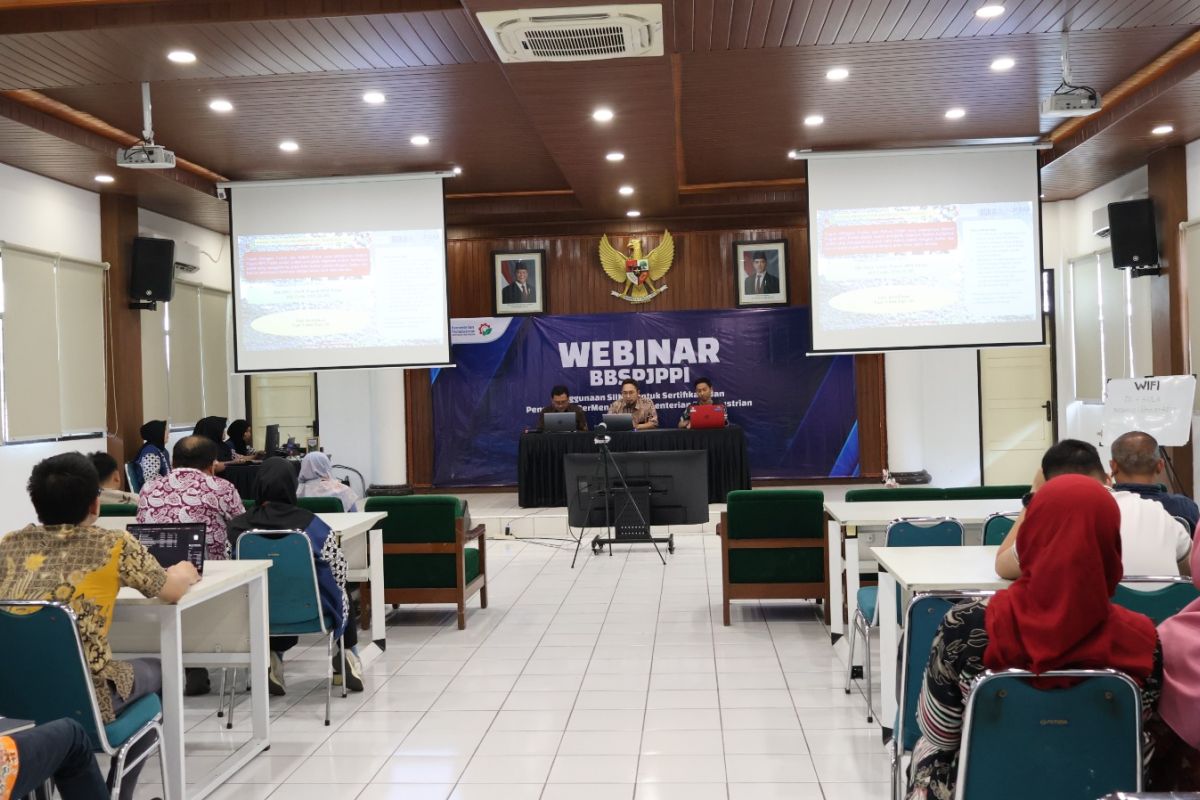
To improve services as well as educate industry actors, BBSPJPPI held a webinar titled Socialisation of SIINAS Usage Procedures for Certification Processes and Policy Regulations on Mandatory Ministerial Rules for Palm Oil, Fertiliser, and Iodised Consumption Salt on Tuesday (17/3/2026).
This event was attended by industry actors from the palm oil, solid NPK fertiliser, and iodised consumption salt sectors.
The webinar serves as a proactive step to welcome the implementation of several new regulations, namely Ministry of Industry Regulation Number 3 of 2025, Number 11 of 2025, and Number 16 of 2025, which mandate the application of Indonesian National Standards (SNI) for the related commodities.
These three regulations require the certification process to be carried out in a digitised and integrated manner through the National Industrial Information System (SIINas).
This platform serves as the centre for managing industrial data so that the certification process can proceed more transparently, efficiently, and accountably.
Head of the Centre for Formulation, Implementation, and Enforcement of Industrial Standardisation (P4SI) of Kemenperin, Tri Ligayanti, stated that the socialisation is important to enhance industry actors’ understanding.
“Through this webinar, it is hoped that industry actors can comprehensively understand the certification application procedures via SIINas. Thus, the certification process can run faster and without administrative obstacles,” said Tri.
Through the strengthening of integrated standardisation and certification services, Kemenperin is optimistic that the quality of national industrial products will continue to improve while strengthening Indonesia’s manufacturing competitiveness in the global market.