
Ministry of Immigration and Correctional Services Strengthens Governance and Prevents Conflicts of Interest
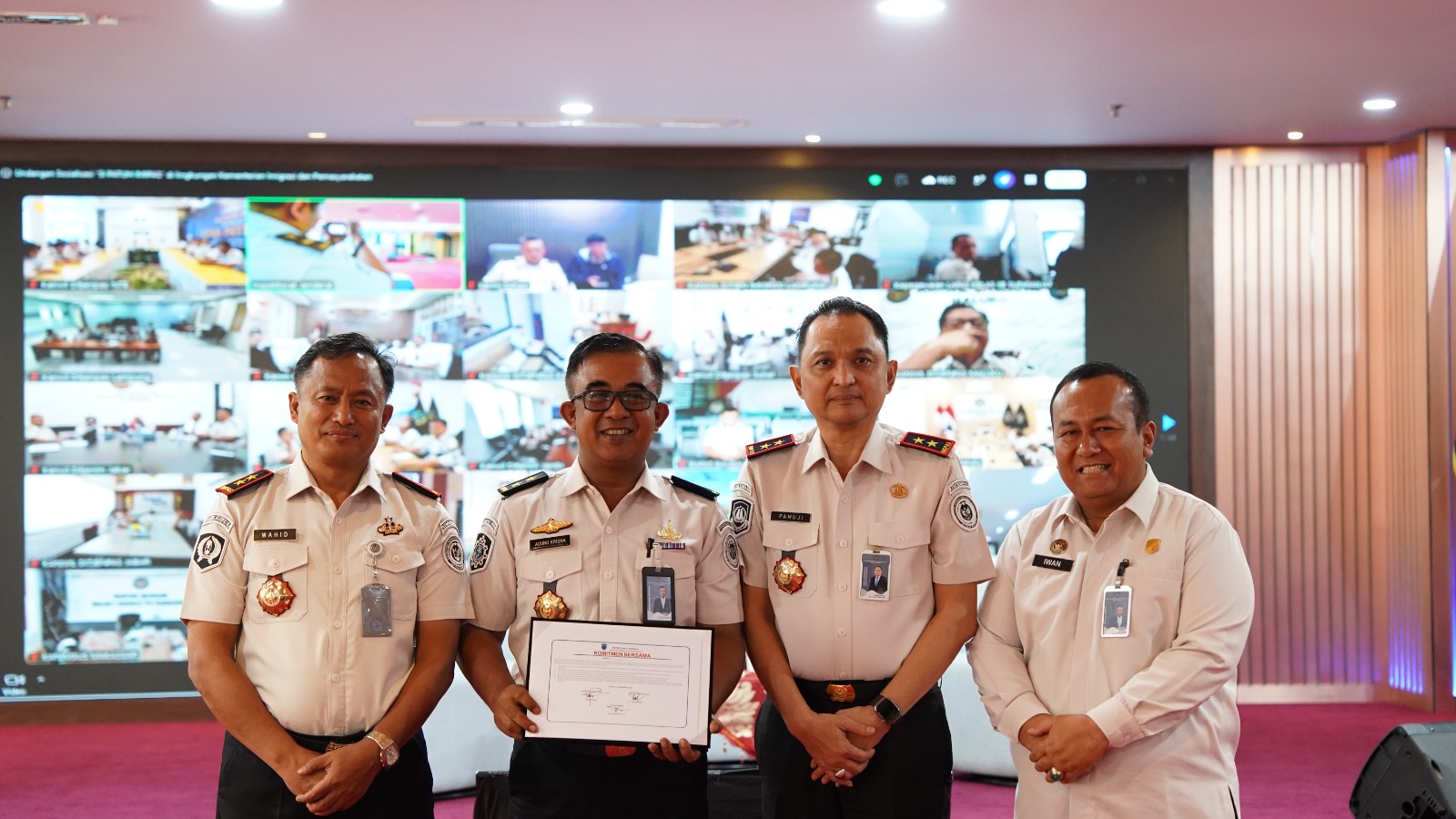
The Ministry of Immigration and Correctional Services (Kemenimipas) is strengthening efforts to prevent conflicts of interest within the ministry through the socialisation of SI PATUH IMIPAS (Synergy, Recording of Conflicts of Interest, Adherence to Procedures, Transparent Management, and Avoidance of Misuse).
Strengthening the management of conflicts of interest has become a priority for Kemenimipas during its institutional consolidation process as a new ministry. Based on the results of the Government Internal Control System (SPIP) assessment, the regulation and implementation of conflict of interest management were deemed to require further reinforcement.
This condition is also related to the need to accelerate the improvement of government governance and increase integrity, as reflected in the results of the Corruption Eradication Commission (KPK) Integrity Assessment Survey.
This activity is a follow-up to several regulations, including Government Regulation Number 60 of 2008 concerning the Government Internal Control System and the Decree of the Minister of Immigration and Correctional Services Number M.IP-69.HK.01.03 of 2026 regarding the Management of Conflicts of Interest within the Kemenimipas environment.
Regional Inspector I of Kemenimipas, Anak Agung Gde Krisna, stated that the significant authority held by Kemenimipas makes the strengthening of integrity a vital matter. This authority encompasses passport and visa services, foreign national supervision, as well as the management of correctional institutions, detention centres, and correctional centres.
According to him, several work areas possess potential conflicts of interest that need to be anticipated from the outset. These areas include immigration services, foreign national supervision, the management of prisons and detention centres, procurement of goods and services, human resource management, programme and budget planning, and the formulation of internal policies.
He added that the Government Internal Supervisory Apparatus (APIP) has three main roles in this control: conducting prevention through education and strengthening internal control systems, detecting risks early through risk-based audits and reviews, and providing guidance to departments in need of assistance.
“The Inspectorate General serves as a strategic partner, not merely as a frightening supervisor,” said Anak Agung Gde Krisna in his statement on Thursday (17/9).
He emphasised that the effort to create a clean institution and gain public trust cannot be placed solely on the Inspectorate General, but is the responsibility of all ranks within Kemenimipas.
Meanwhile, the Expert Staff to the Minister for Public Services and Legal Reform, Iwan Santoso, in a keynote speech titled ‘Managing Conflicts of Interest as the Foundation for Clean Public Services and Sustainable Legal Reform’, stated that managing conflicts of interest has three primary objectives.
These are to maintain public trust, strengthen integrity, and provide legal certainty.
Iwan explained that conflicts of interest can arise when personal interests, family ties, specific relationships, or rewards potentially influence the objectivity of officials or officers in exercising their authority and providing services to the public.
Therefore, prevention, according to him, must be carried out from the beginning through a work system that is transparent, healthy, and possesses clear control mechanisms. This approach is in line with Law Number 25 of 2009 concerning Public Services and Law Number 30 of 2014 concerning Government Administration.
“Prevention is far more efficient than repressive law enforcement after a violation has occurred,” said Iwan.
He warned that violations originating from conflicts of interest, even if they appear minor, can impact the institution’s reputation and decrease public trust in the bureaucratic reform process.
Through the socialisation of SI PATUH IMIPAS, Kemenimipas encourages all personnel not only to understand the rules but also to actively identify and report potential conflicts of interest.
Self-disclosure of potential conflicts of interest is expected to become part of the work culture within the Kemenimipas environment.
This step also serves as a follow-up to the SPIP assessment results and KPK recommendations to strengthen governance and build clean, fair, and transparent public services.
Source: jawawa.id (https://jawawa.id/newsitem/ministry-of-immigration-and-correctional-services-strengthens-governance-and-prevents-conflicts-of-interest-1789664852)
Originally published by Media Indonesia (https://mediaindonesia.com/politik-dan-hukum/934564/kemenimipas-perkuat-tata-kelola-dan-cegah-konflik-kepentingan), translated from Indonesian