
Ministry of Human Rights Affirms Protection for Activists from the Start of Legal Proceedings
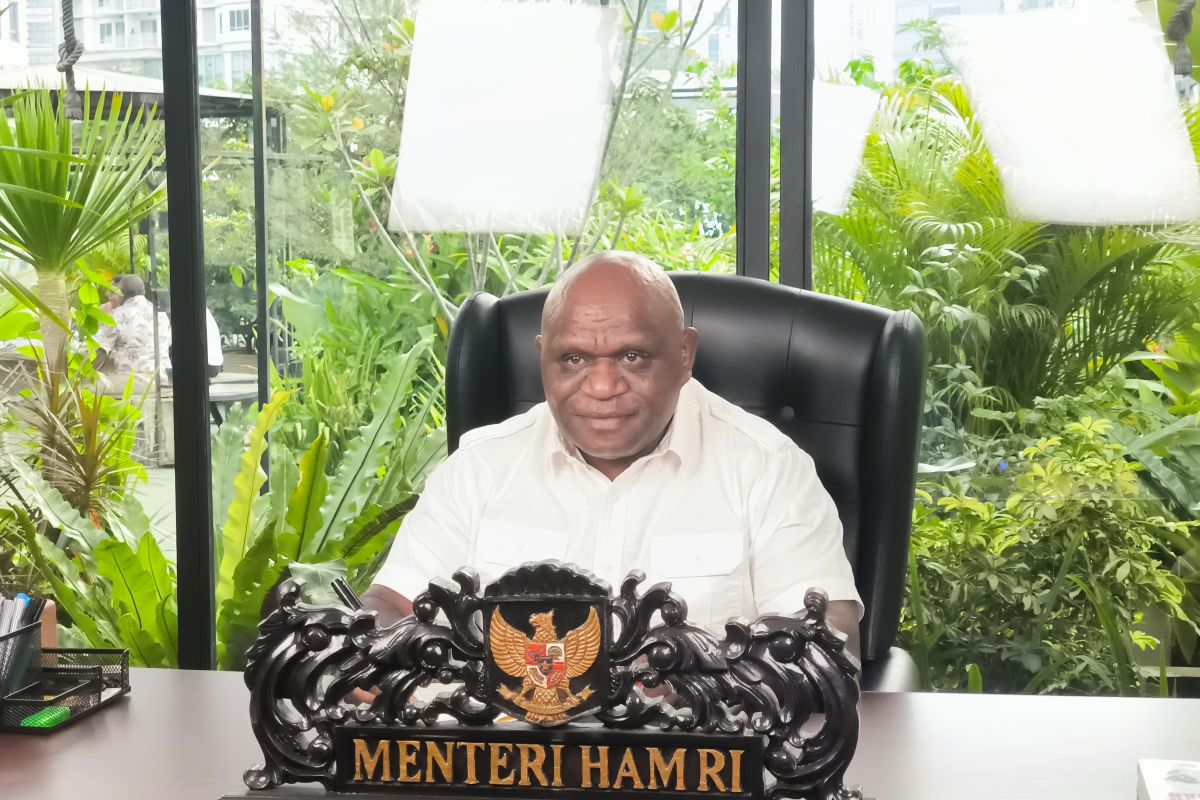
Jakarta (ANTARA) - The Ministry of Human Rights has affirmed that protection for human rights activists will apply from the beginning of the legal process, in line with the strengthening of regulations based on the law in the government’s ongoing preparation of revisions to Human Rights Law Number 39 of 1999. Human Rights Minister Natalius Pigai stated that this protection mechanism will be implemented through determinations by an assessment team, ensuring that activists meeting the criteria cannot be legally processed. “As soon as someone is arrested, the assessment team will issue a letter stating that they are an activist in the context of defence. Based on that, they cannot be tried or processed,” he said in an exclusive interview with ANTARA in Jakarta on Wednesday. According to Pigai, this scheme forms part of a stronger regulatory design because it is based on the law, not merely derivative regulations. In addition to the mechanism through the Ministry of Human Rights’ assessment team, the government is also introducing a protection pathway through the judicial system, namely amicus curiae together with the National Human Rights Commission to strengthen the position of activists in legal proceedings. “So, whenever there is a specific case, Komnas HAM issues a letter to the judge stating that this violates human rights. Based on that letter, the judge considers the decision,” he said. He added that the government will integrate this protection with a rapid response system through the network of regional offices of the Ministry of Human Rights across Indonesia. Reports from the regions will then serve as the basis for the assessment team to determine whether someone is acting in the capacity of a human rights defender or not. “With reports from the regional offices, the assessment team determines and immediately sends a letter to the police and prosecutors. (The activist) cannot be detained,” he said. Pigai assessed that this mechanism is important to ensure protection operates quickly, measurably, and evidence-based, while also providing legal certainty for activists working to defend vulnerable groups. This strengthening of regulations is expected to form the foundation of a more comprehensive human rights protection system capable of closing gaps in the criminalisation of human rights defenders in Indonesia.