
Ministry of Human Rights Affirms Free Nutritious Meals as a Non-Negotiable Basic Right
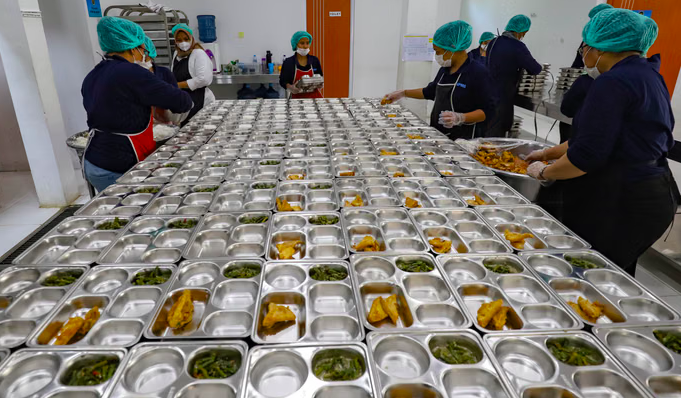
The Free Nutritious Meals (MBG) programme is considered not only a government social policy but also part of the effort to fulfil human rights, particularly the right to adequate food for the community. The Ministry of Human Rights stated that fulfilling the right to food is a state obligation that must be carried out sustainably.
Acting Director General of Instruments and Human Rights Strengthening at the Ministry of Human Rights, Sofia Alatas, said the right to food is a basic right that has been included in the National Action Plan on Human Rights (RANHAM).
“Regarding MBG, the right to food is one of the basic rights that must be fulfilled by the state so that the community’s right to food is met. In relation to the right to food that we have included in RANHAM, it is one of the pillars that must be fulfilled,” Sofia said in Jakarta on Tuesday (23/6).
According to her, Indonesia has great potential to realise food security and sovereignty because it is supported by abundant natural conditions. Therefore, the state has a responsibility to ensure that food can be accessed by the entire community.
“If we look at it, Indonesia’s conditions should be food-worthy. With such beautiful and good natural conditions, it should be fulfilled,” she said.
Furthermore, Sofia explained that MBG is one of the instruments used by the government to guarantee the fulfilment of the community’s basic rights, especially for children who are currently in education. The programme is considered able to help ensure that students receive adequate nutritional intake during the learning process.
“Regarding MBG, it is one of the tools used by the government to fulfil basic rights, especially targeting those in education,” she said.
She also emphasised that fulfilling the right to food is not only done through the provision of ready-to-eat food but also covers the entire food production and distribution chain, from supporting farmers to distributing to the community.
“There are various ways to fulfil the right to food, starting from providing fertiliser, how farmers can plant food, then distributing it to the community, including in the form of ready-to-eat food given to those at the education level,” Sofia explained.
Furthermore, she assessed that the fulfilment of nutritional needs is closely related to the quality of education. Children who receive adequate food intake will be better prepared to participate in learning activities compared to those who experience malnutrition.
“The hope is that in the future, with their food rights fulfilled, they can develop their education much better. You can imagine someone going to school without fulfilling their nutrition but having to receive so many lessons. That will certainly affect their learning ability,” she said.
On that basis, the Ministry of Human Rights encourages the distribution of food to the community to take place evenly and consistently. Sofia stated that the success of fulfilling the right to food will contribute to the healthier growth and development of the community while supporting the improvement of the quality of Indonesia’s human resources.
“Regardless of MBG, this food can be distributed to the community and fulfilled consistently, so that Indonesian people grow and develop healthily,” she concluded.