
Ministry of Home Affairs Urges Regions to Identify Obstacles to Economic Growth
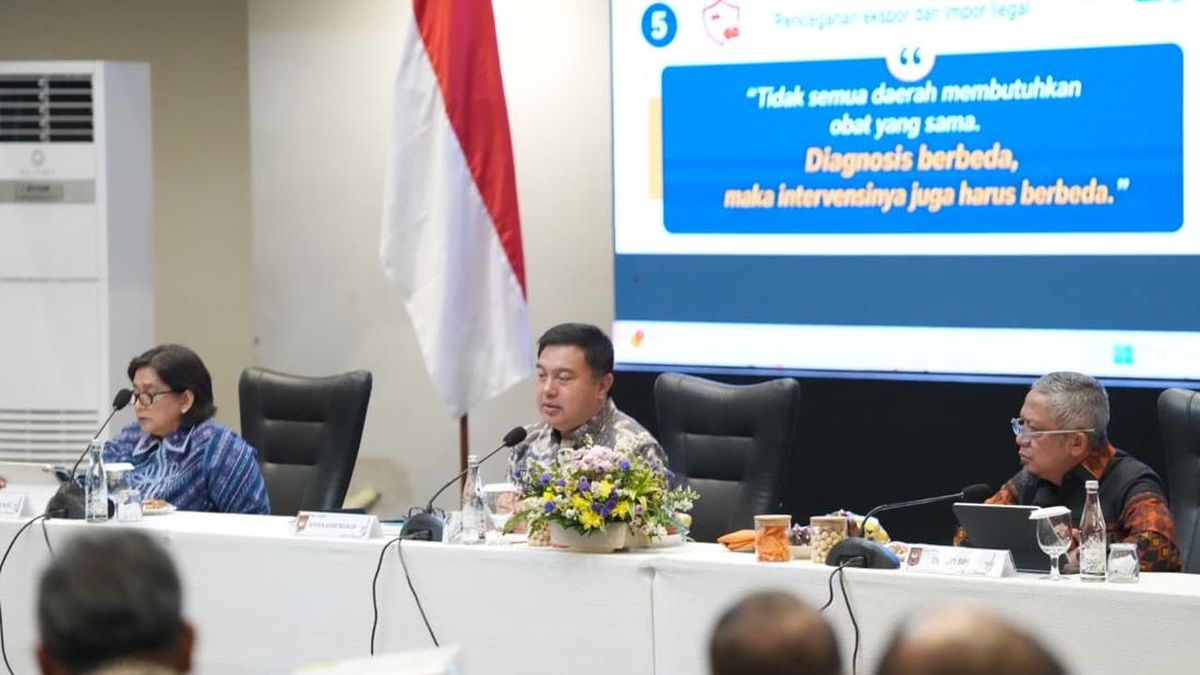
The Ministry of Home Affairs (Kemendagri) is encouraging the Regional Economic Growth Monitoring, Supervision, and Acceleration Team to identify the root problems hindering economic growth in their respective regions, determine appropriate interventions, and oversee their resolution.
This was stated by the Secretary-General of the Ministry of Home Affairs, Tomsi Tohir, during a briefing at the Meeting for the Preparation and Presentation of the Work Plan for the Regional Economic Growth Acceleration Monitoring Team towards an 8 per cent Economic Growth Target in Ancol, Jakarta, on Friday (4/9).
“Ladies and gentlemen, as regional supervisors, you must not merely collect data; we must be able to pinpoint solutions for economic problems in those regions,” said Tomsi.
The team is tasked with monitoring economic growth developments while considering the specific conditions and characteristics of each region. Each team has a designated area of responsibility to oversee, ranging from the provincial level to regencies and cities.
The team’s core duties include coordinating monitoring activities according to the assigned region, collecting data and information on regional economic growth, verifying data and information submitted by local governments, and conducting analysis and evaluation to serve as material for leadership consideration.
In performing these duties, the team is also requested to assist local governments in driving economic growth through nine concrete steps. These steps include accelerating the realisation of regional budgets (APBD), accelerating the realisation of the state budget (APBN), and speeding up government infrastructure projects.
Other steps include controlling the prices of basic commodities, preventing illegal exports and imports, expanding employment opportunities, increasing production in agriculture, fisheries, and livestock according to local potential, increasing manufacturing industry output accordings to local potential, and simplifying business licensing.
From these nine steps, each region is asked to determine at least three steps that are most decisive in driving economic growth. The determination of priorities must be tailored to the potential and primary issues faced by each region.
Tomsi emphasised that the approach to each region cannot be standardised. Differences in characteristics, potential, and economic issues mean that the required interventions will also differ.
“Not all regions require the same medicine. The diagnosis is different, so the intervention must also be different. If we do not analyse sharply, we will not be able to capture the details of the problem and how to overcome it,” he said.
To produce an accurate diagnosis, Tomsi requested that the regional Central Bureau of Statistics (BPS) be involved in the coordination between the team and local governments. The involvement of BPS is considered vital, particularly in helping to ensure that data and information regarding regional economic growth submitted by local governments truly reflect the conditions on the ground.
“The teams we have formed already know their respective provinces, cities, and regencies, and have the obligation to collect data and information regarding regional economic growth. Therefore, every time we hold a Zoom meeting with local governments, the regional BPS must be present,” said Tomsi.
With verified data and sharper analysis, the team is expected to go beyond merely identifying problems and be able to determine concrete resolution steps and oversee their implementation in each region.
Tomsi emphasised that the success of economic growth cannot be measured solely by an increase in growth figures. Economic growth must have a real impact on people’s lives through increased investment, job creation, increased public income, and improved welfare.
“High economic growth that does not create jobs is not a sufficient measure of success. Growth must be translated into investment, employment, public income, and welfare,” concluded Tomsi.
Source: jawawa.id (https://jawawa.id/newsitem/ministry-of-home-affairs-urges-regions-to-identify-obstacles-to-economic-growth-1788609374)
Originally published by CNN Indonesia (https://www.cnnindonesia.com/nasional/20260905173135-25-1400456/kemendagri-dorong-daerah-temukan-penghambat-pertumbuhan-ekonomi), translated from Indonesian