
Ministry of Home Affairs Secretary General Urges Local Governments to Strengthen Food Price Controls
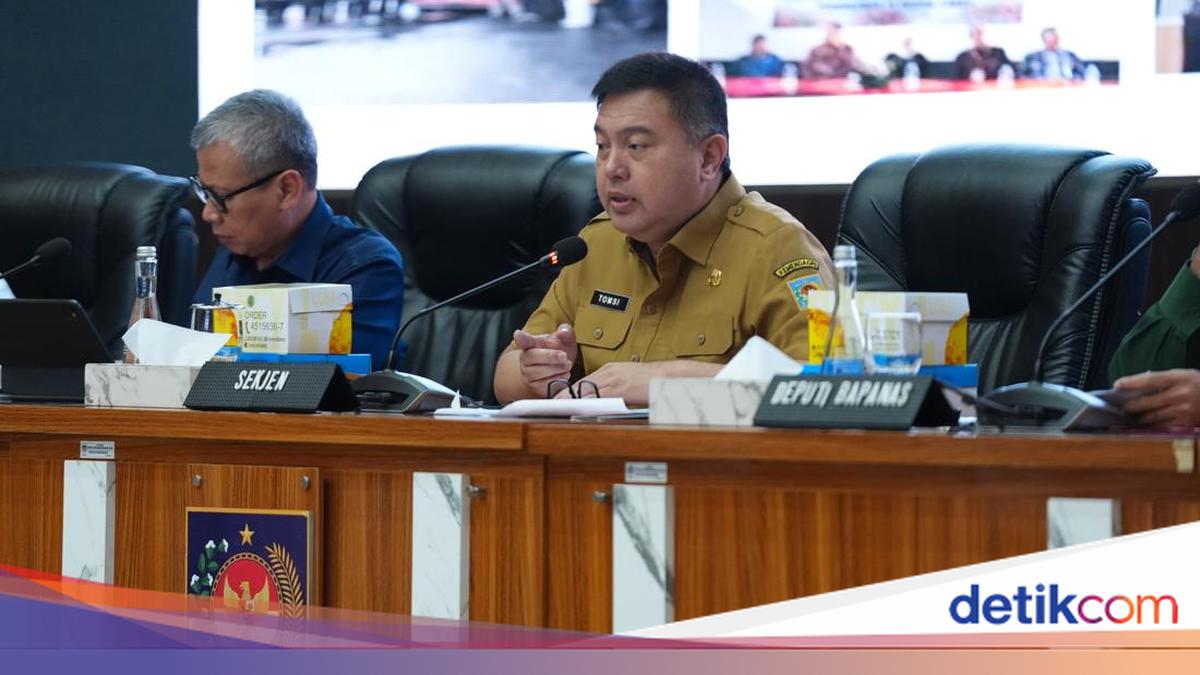
The Secretary General of the Ministry of Home Affairs, Tomsi Tohir, has requested that local governments strengthen food price controls by adjusting interventions based on commodity price developments in their respective regions. This step is deemed essential to ensure that government efforts have a genuine impact on price stability and public purchasing power.
Tomi made these remarks while leading the Regional Inflation Control Coordination Meeting at the Sasana Bhakti Praja Building, Ministry of Home Affairs Headquarters, Jakarta, today.
Tomi stated that price control must be conducted based on current commodity figures and conditions so that regions do not merely repeat previous measures. Such evaluation is particularly necessary for commodities that continue to exert pressure on inflation, such as rice and chillies.
“Regarding the price of rice and chillies, for this meeting, we are not starting from scratch, but rather looking at the figures to continuously increase our efforts,” Tomsi said in a written statement on Monday (5/10/2026).
According to data from Statistics Indonesia (BPS), the inflation rate for September 2026 was recorded at 0.30 per cent month-to-month (mtm), 3.28 per cent year-on-year (yoy), and 2.17 per cent year-to-date (ytd). Several food commodities contributing to inflation include bird’s eye chillies, red chillies, broiler chicken, rice, chicken eggs, and fresh fish, which are the primary monthly contributors to inflation.
This pressure remained visible through the first week of October 202lar. BPS data noted that 259 regencies/cities experienced an increase in the Bird’s Eye Chilli Consumer Price Index (CPI), while 292 regencies/cities saw an increase in the Red Chilli CPI, and 116 regencies/cities experienced an increase in the Rice CPI.
Tomi requested that local authorities respond immediately to these conditions by strengthening interventions according to regional characteristics. The central government, through the Ministry of Agriculture, has undertaken several steps, including the provision of seeds and fertiliser, as well as the development of pilot projects in several regencies.
“This support needs to be followed up with concrete steps from local governments to maintain production while simultaneously stabilising prices,” he explained.
According to Tomsi, inflation control also needs to be strengthened towards the end of the year. Although current inflation figures are relatively controlled, changes in food prices at year-end must still be anticipated. Furthermore, Tomsi urged local governments to closely monitor price developments in the transport component, which affects inflation.
“Based on BPS data, the transport sector contributed 0.58 per cent to inflation,” he explained.
Tomi emphasised that price control is part of the government’s responsibility to protect and serve the community. Therefore, he requested that local governments continue to strengthen control measures based on price developments and the specific characteristics of each region.
“Because it is a primary duty of the government to protect, serve, and look after the community regarding these prices. Therefore, we apologise if our words are harsh or firm. We have no choice; we must be able to control the prices of food and other commodities,” Tomsi concluded.
Source: jawawa.id (https://jawawa.id/newsitem/ministry-of-home-affairs-secretary-general-urges-local-governments-to-strengthen-food-price-controls-1791198056)
Originally published by detikcom (https://news.detik.com/berita/d-8693417/sekjen-kemendagri-minta-pemda-perkuat-pengendalian-harga-pangan-di-daerah), translated from Indonesian