
Ministry of Home Affairs Highlights the Importance of Village Cooperatives as Drivers of Community-Based Economy
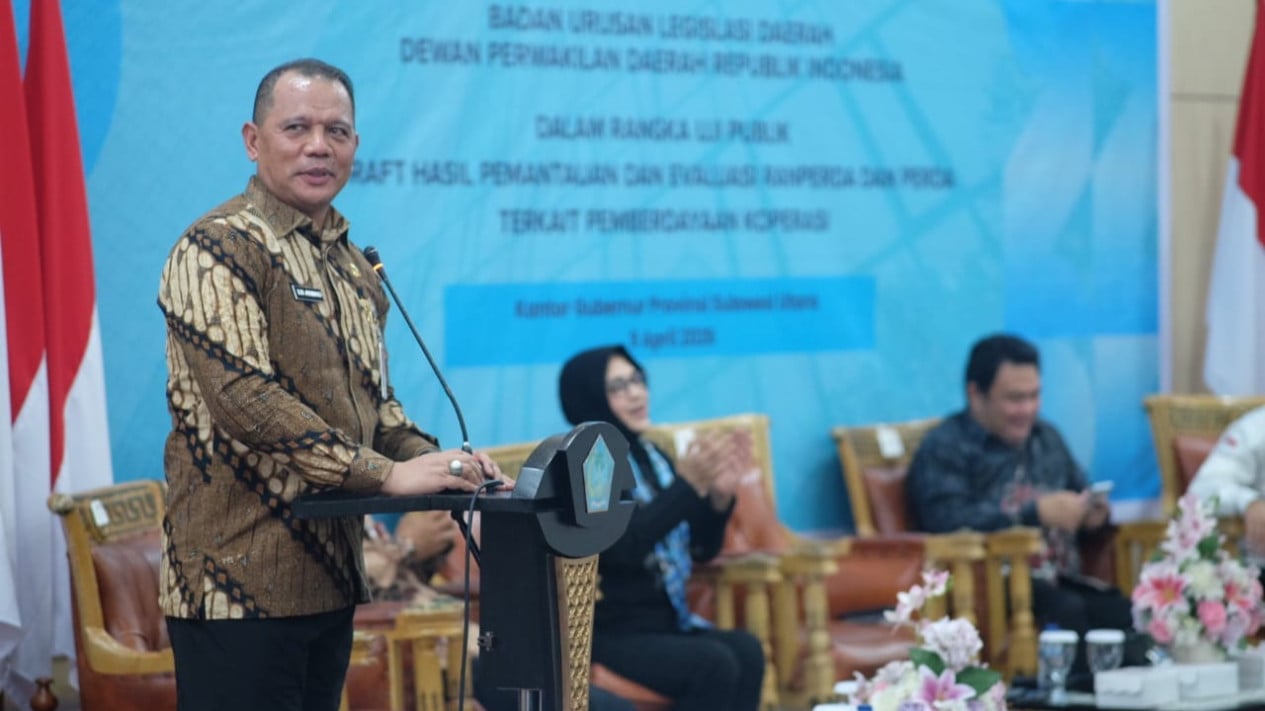
Manado, VIVA – The Director General of Village Governance (Pemdes) at the Ministry of Home Affairs (Kemendagri), La Ode Ahmad P. Bolombo, has stressed the importance of strengthening the role of village cooperatives as drivers of community-based economic development during a public consultation on monitoring and evaluating regional regulations for cooperative empowerment in North Sulawesi province on Thursday, 9 April.
The event, held at the North Sulawesi Governor’s Office, was part of a working visit by the Regional Representative Council (DPD) of the Republic of Indonesia to gather input on local cooperative policies.
La Ode assessed that village cooperatives hold a strategic position in promoting local economic growth, especially if managed professionally and integrated with village potentials.
“Village and sub-district cooperatives must be understood as part of a broader strategy for community-based economic development. This is not to replace existing cooperatives but to strengthen the existing ecosystem,” La Ode stated in a written remark on Tuesday, 21 April 2026.
He emphasised that the development of Village/Sub-district Red and White Cooperatives should be viewed as an effort to strengthen the overall village economic system, not merely an administrative programme.
According to him, the main challenge currently is the disparity in fiscal capacity among villages, which prevents the equalisation of Village Revenue and Expenditure Budget (APBDes) resilience.
Therefore, he encouraged interventions and support from the central government to accelerate the development of village flagship products so they can compete in national and international markets.
“Not all villages have the same capacity. Central government support is key to developing and commercialising village potentials more broadly,” he said.
The forum also highlighted various cooperative issues, from the many inactive cooperatives due to weak governance to the need for accelerating the revision of Law No. 25 of 1992 on Cooperatives.
La Ode assessed that revising this regulation is important to introduce more comprehensive norms, standards, procedures, and criteria (NSPK), so that local cooperative policies can operate more harmoniously and with legal certainty.
In addition, he highlighted the importance of transforming cooperatives so they do not only pursue quantity but also quality and business sustainability.