
Ministry of Home Affairs and Ministry of Public Works Integrate SIPD with SIPASTI-Pemda
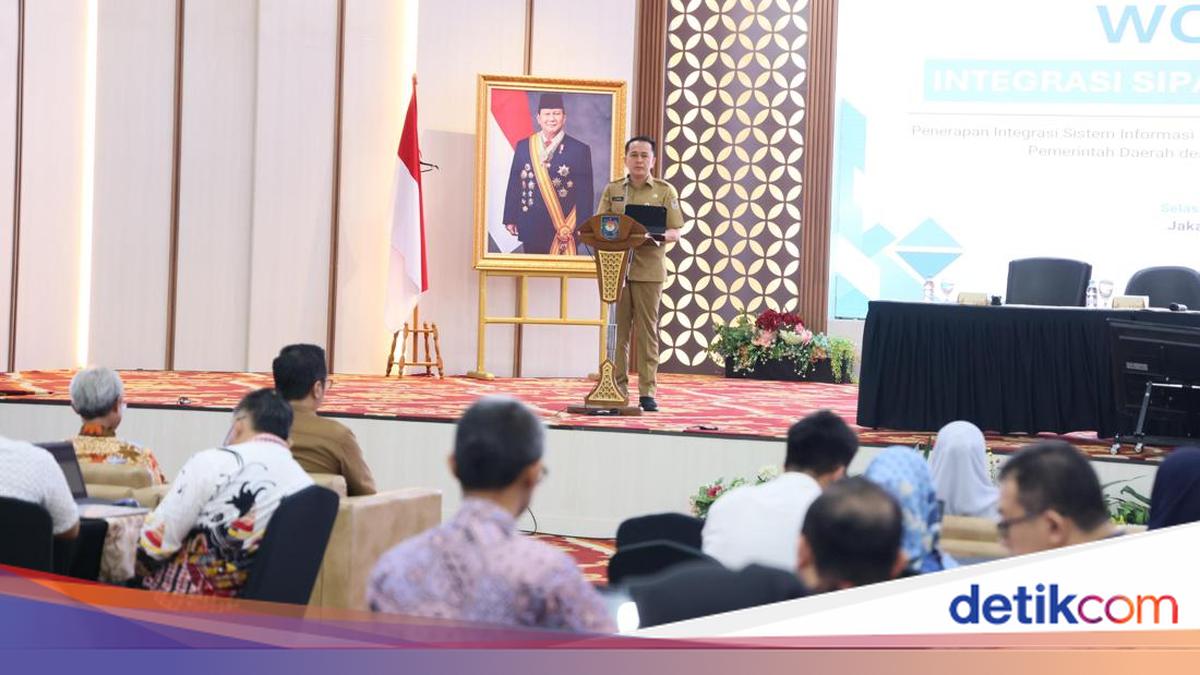
The Ministry of Home Affairs, through the Directorate General of Regional Financial Development, is integrating the Integrated Local Government Self-Estimated Price Information System (SIPASTI-Pemda) with the Regional Government Information System (SIPD). This integration was discussed during a workshop held at the Ministry of Home Affairs’ Human Resources Development Building from 29 to 30 September 2026.
This activity is part of a joint effort between the Ministry of Home Affairs, the Ministry of Public Works, and the National Strategy for Corruption Prevention (Stranas PK) to strengthen the governance of planning and management for regional construction expenditure. The goal is to ensure that such processes are standardised, accountable, and transparent. The integration serves as a concrete step to strengthen synergy between central and regional governments in building information systems that support high-quality construction cost planning.
The Director General of Regional Financial Development, Agus Fatoni, emphasised that construction work represents a significant portion of regional expenditure structures. However, issues frequently arise in construction cost planning due to inaccuracies in Self-Estimated Prices (HPS).
“The issue of construction expenditure quality is not merely a matter of field execution, but is rooted in non-standardised and untraceable construction cost planning,” Fatoni stated in a written release on Thursday (1/10/2026).
Furthermore, he explained that resolving these issues requires a balanced approach. Setting an HPS that is too high can lead to indications of mark-ups and regional budget waste, whereas bids that are too low risk poor work quality or contract terminations.
“SIPASTI-Pemda was developed to compile Standard Expenditure Analysis and HPS for regional government construction works in a standardised and fair manner; it does not necessarily mean it will be cheap. The objective is to safeguard not only the efficiency of the Regional Budget (APBD) but also the quality of the construction work itself,” Fatoni added.
Sari Anggraeni, the Daily Coordinator of Stranas PK, echoed this sentiment, stating that integrating SIPD with SIPASTI-Pemda is a corruption prevention strategy to reduce the risk of inflated construction costs prior to tendering. This integration is part of the achievement of Action Number 7 regarding the Prevention of Corruption in Goods and Services Procurement.
On the other hand, the Head of the Sub-directorate for Construction Work Cost Analysis at the Ministry of Public Works, Dimas Ricky, emphasised that one of the problems in cost calculation is the use of inconsistent formulas. “We still find calculation formulas that are no longer relevant,” he said.
Meanwhile, the Director of Regional Budget Planning at the Directorate General of Regional Financial Development, Rikie, stated that to support the implementation of this policy, local governments need to inventory the existing conditions of Standard Expenditure Analysis, practices for preparing Unit Price Standards and HPS, and prepare the users and account authorities who will operate SIPASTI-Pemda and SIPD.
He emphasised that the integration of SIPASTI-Pemda with SIPD is not the development of a new application that will burden local regions, but rather a collective effort to ensure that every rupiah spent on construction work has a clear and accountable calculation basis.
“This system is provided free of charge and is expected to serve as an instrument to strengthen the quality of regional expenditure. Ultimately, the quality of regional spending is measured not only by the amount of budget absorbed but also by the quality and benefits of the infrastructure produced for the community,” Rikie concluded.