
Ministry of Home Affairs and Jasa Raharja Support Transformation of Regional Tax Services
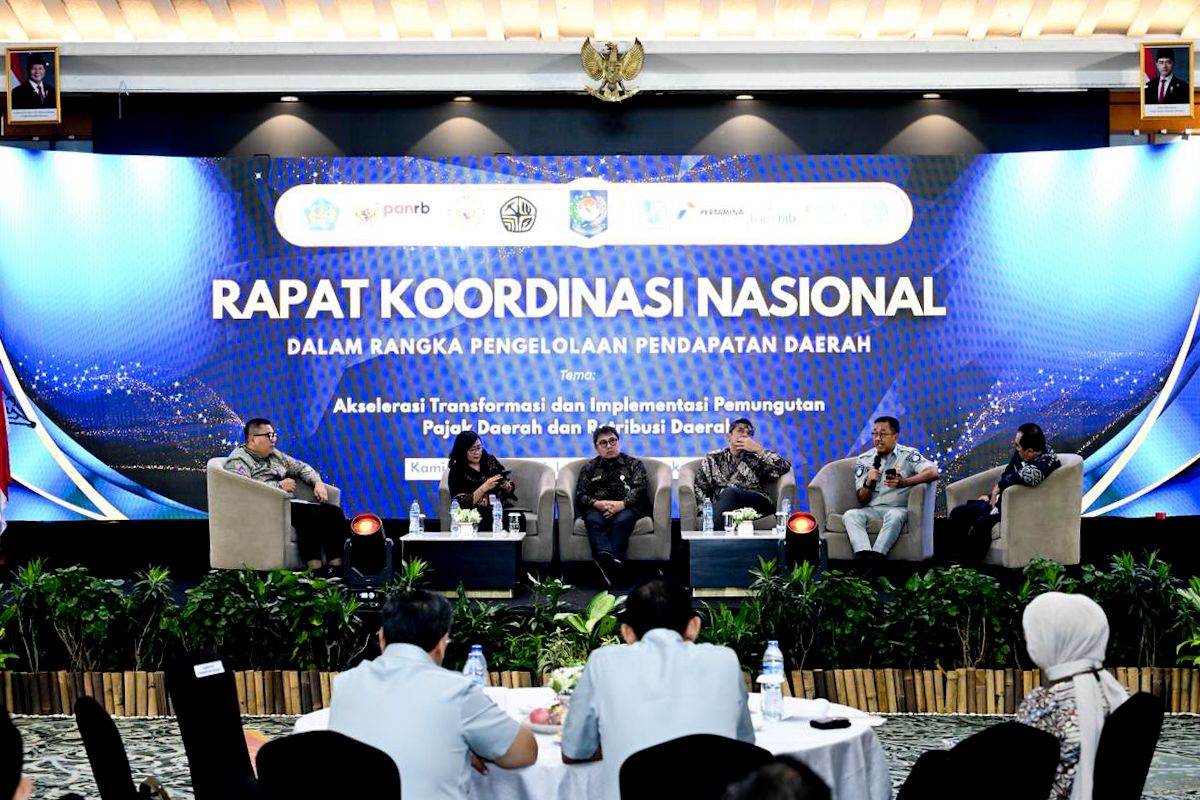
The importance of collective commitment from all parties to guide regional revenues towards greater maximisation.
Jakarta (ANTARA) - The Ministry of Home Affairs (Kemendagri) together with Jasa Raharja supports the transformation of regional tax services through digitalisation, data integration, and strengthened collaboration to enhance compliance, collection efficiency, and public service quality.
“The importance of collective commitment from all parties to guide regional revenues towards greater maximisation,” said Director General of Regional Financial Development at Kemendagri, Agus Fatoni, in his statement in Jakarta on Saturday.
He emphasised this at the National Coordination Meeting on Regional Revenue Management for 2026 held in Jakarta, themed “Accelerating Transformation and Implementation of Regional Tax and Levy Collection”.
According to him, this serves as a momentum to strengthen synergy, innovation, and effectiveness of collection to support increased regional revenues and public service quality.
Agus mentioned that measures to guide regional revenues towards greater maximisation include intensification of regional revenue sources, extensification of managing untapped sources, improvement of human resources, digitalisation of work systems, and innovation to enhance performance.
Jasa Raharja’s President Director, Muhammad Awaluddin, emphasised the company’s role in the regional revenue management ecosystem, particularly through strengthening compliance in Motor Vehicle Tax (PKB) payments and Mandatory Contribution to Road Traffic Accident Funds (SWDKLLJ).
Awaluddin stated that they act as an enabler or facilitator in driving increased compliance through data integration and technology utilisation.
“Jasa Raharja integrates vehicle registration data with PKB and SWDKLLJ payments in real-time, develops analytics systems to identify potential non-compliance, and introduces an early warning system so that interventions can be carried out earlier,” he said.
“Compliance is not only shaped by obligations, but by how the system we build can provide ease, connectivity, and sustainable trust,” he added.
Through this role, Jasa Raharja also strengthens cross-sector coordination with the Police, Regional Revenue Agencies, and Samsat partners across Indonesia.
The implementation of a host-to-host system connected in 36 provinces serves as an important foundation in ensuring data validity and improving collection effectiveness.
Additionally, as the organiser of accident insurance, Jasa Raharja continues to introduce service innovations that provide convenience for the public while strengthening basic protection for road users.
“This commitment is realised through various initiatives focused on improving public service quality with the principle of serving wholeheartedly,” he said.
He also affirmed the company’s participation in the meeting as Jasa Raharja’s commitment to continue innovating and collaborating in supporting the strengthening of the regional revenue management system.
“Cross-sector synergy is expected to drive sustainable compliance improvements, while delivering more effective, transparent public services oriented towards community needs,” said Awaluddin.