
Ministry of Home Affairs Accelerates Village Boundary Demarcation to Prevent Conflict and Strengthen Development
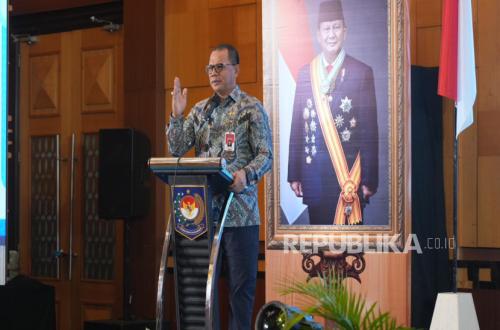
REPUBLIKA.CO.ID, MANADO – The Ministry of Home Affairs (Kemendagri) is accelerating the completion of village boundary demarcation in several regions to strengthen legal certainty in administrative governance and promote equitable village development.
This initiative is being carried out through the Integrated Land Administration and Spatial Planning Project (ILASPP) 2026, which was marked by the launch of a kick-off meeting in Manado, North Sulawesi.
Director General of Village Governance at the Ministry of Home Affairs, La Ode Ahmad P Bolombo, said that village boundary demarcation is an important part of supporting measurable and integrated village development.
“As mandated by the sixth point of President Joko Widodo’s ‘Asta Cita’ vision, village development must be supported by clear territorial boundaries. Therefore, the Ministry of Home Affairs is directly involved in overseeing the acceleration of village boundary demarcation, from the technical stages to integration into the national one-map policy,” said La Ode in a statement on Friday (15 May 2026).
He emphasised that accelerating the completion of village boundary demarcation is not just an administrative matter, but is directly related to infrastructure development, village fund management, and strengthening the local economy.
According to him, clear village boundaries are also important to minimise the potential for inter-regional conflicts that often arise due to overlapping administrative areas.
“The completion of village boundaries is not just about administrative lines, but also concerns the legal certainty of infrastructure development, equitable economic development, village fund management, and efforts to reduce poverty,” he said.
The ILASPP 2026 programme is focused on three regions, namely Bolaang Mongondow Regency in North Sulawesi and Donggala Regency and Toli-Toli Regency in Central Sulawesi.
The government is targeting the demarcation of boundaries in 457 villages, consisting of 200 villages in Bolaang Mongondow, 154 villages in Donggala, and 103 villages in Toli-Toli.
La Ode said that the Minister of Home Affairs, Tito Karnavian, also asked regional governments to play a leading role in accelerating the completion of village boundary demarcation in their respective regions.
“Regents and mayors must be the leaders in the process of accelerating the completion of village boundary demarcation. The Directorate General of Village Governance is tasked with overseeing the entire process to ensure that it runs in accordance with technical and legal provisions,” he said.
He added that the government currently has a stronger legal basis for completing village boundary demarcation, ranging from the Village Law to Government Regulation No. 16 of 2026 and Ministry of Home Affairs Regulation No. 45 of 2026 concerning Guidelines for the Determination and Demarcation of Village Boundaries.
Through the ILASPP programme, the Ministry of Home Affairs is also collaborating with the Ministry of Agrarian and Spatial Planning/National Land Agency to present a digital village boundary demarcation system that is integrated with the national one-map policy.
The final result of the programme will be the establishment of a Regional Head Regulation on the Village Boundary Map, which will have legal force.
“The ILASPP programme is a form of support from the central government in accelerating the digital, accurate and integrated demarcation of village boundaries. The ultimate goal is for all villages to have definitive boundary maps that have legal force,” explained La Ode.
In addition to regulatory and technological support, the Ministry of Home Affairs also believes that community participation is an important factor in the process of completing village boundary demarcation so that the potential for inter-regional conflicts can be reduced.
“We hope that there will be strengthened collaboration between the central and regional governments and active community participation so that the acceleration of the completion of village boundary demarcation can run effectively and be able to reduce the potential for inter-village conflicts,” he concluded.