
Ministry of Higher Education, Science, and Technology Promotes Downstreaming of Electronic Passport Chip Research through ITB and PERURI Collaboration
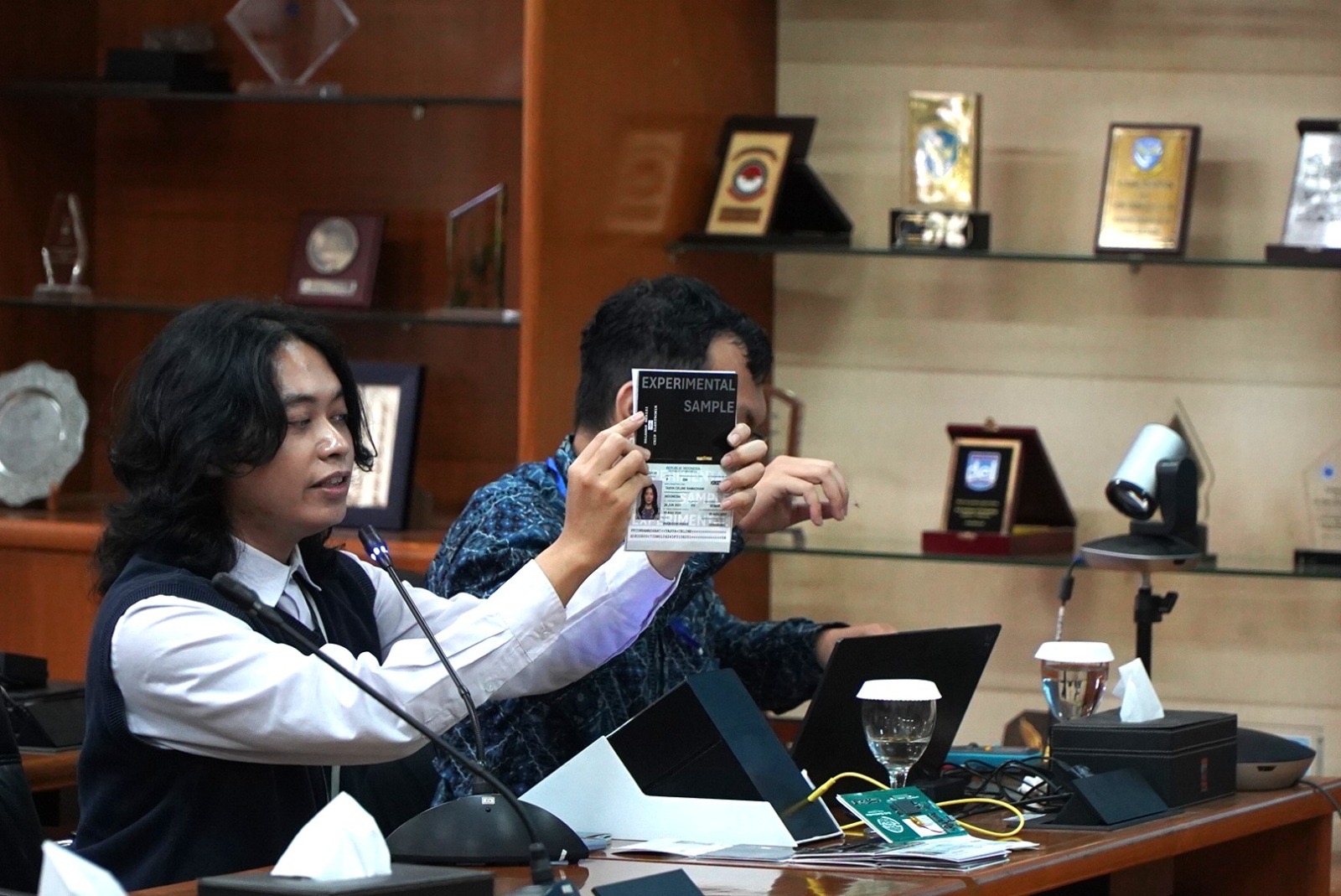
The Ministry of Higher Education, Science, and Technology (Kemdiktisaintek), through the Directorate General of Research and Development, is pushing for the strengthening of the national semiconductor research and innovation ecosystem by encouraging collaboration between universities and industry. This is demonstrated through the research and development project for electronic passport chips being developed by the Bandung Institute of Technology (ITB) in partnership with PERURI.
During the presentation and demonstration of the 2025–2026 electronic passport chip project at ITB, Bandung, on Wednesday (16/9), this collaboration was highlighted as part of the effort to master secure integrated circuit (secure IC) technology and develop national capacity in chip technology for strategic needs.
The Director General of Research and Development, Fauzan Adzimann, emphasised that semiconductor development must be directed not only towards research activities but also towards the utilisation of research results and product development to ensure entry into the global supply chain.
“Our goal is for Indonesia to begin transitioning from a user to a developer of technology and to become part of the global supply chain,” he stated.
Although the research project has reached the prototype demonstration stage, the process towards commercial production still requires several stages. PERURI and the ITB research team emphasised the importance of further development, including more comprehensive testing and meeting certification requirements.
To be implemented in e-passports, certification is required not only for the chip but also for supporting components such as the operating system and the applications used. This stage is crucial given that e-passport technology has high security demands.
On this occasion, Director General Fauzan stated that Kemdiktisaintek is opening opportunities for support towards technology development that already has clear industrial needs and off-takers, as the development of electronic passport chips is also part of the agenda to build the national semiconductor ecosystem.
Furthermore, the strengthening of human resources is also a priority, with various semiconductor talent development programmes being established, including training and international cooperation with partners in universities and the technology industry.
In line with this, the Rector of ITB, Tatacipta Dirgantara, expressed appreciation for the collaboration established between ITB and PERURI in developing electronic passport chip technology. According to him, this achievement is the fruit of hard work and mutual commitment to building national technological capability, and is part of an engineering process that requires consistency, testing, and continuous refinement.
“Projects like this are work that we may have dreamed of for years—how research in universities can then find a channel until it is finally ready for mass production for use by the wider community,” he said.
According to Rector Tata, the success of national technology development requires the will to continue developing and to face various challenges in the process. This activity is not the end of the development process, but rather part of a journey towards more mature technology that can provide benefits for national needs.
The event, attended by leaders, researchers, and teams from ITB and PERURI alongside Kemdiktisaintek, serves as a momentum to strengthen university-industry collaboration to continue the development of electronic passport chip technology, while simultaneously promoting research downstreaming and the strengthening of the national semiconductor ecosystem.
Source: jawawa.id (https://jawawa.id/newsitem/ministry-of-higher-education-science-and-technology-promotes-downstreaming-of-electronic-passport-chip-1789638996)
Originally published by Media Indonesia (https://mediaindonesia.com/humaniora/934479/kemdiktisaintek-dorong-hilirisasi-riset-chip-paspor-elektronik-melalui-kolaborasi-itb-dan-peruri), translated from Indonesian