
Ministry of Higher Education, Science, and Technology Highlights Oversupply of Teacher Graduates, Doctors Potentially in Excess by 2028
The Ministry of Higher Education, Science, and Technology (Kemdiktisaintek) has highlighted the condition of an excess number of graduates in Indonesia that does not match industry needs, particularly in the fields of teaching and medicine.
Secretary General of the Ministry of Higher Education, Science, and Technology, Badri Munir Sukoco, explained that the number of teaching graduates is disproportionate to the needs of the job market.
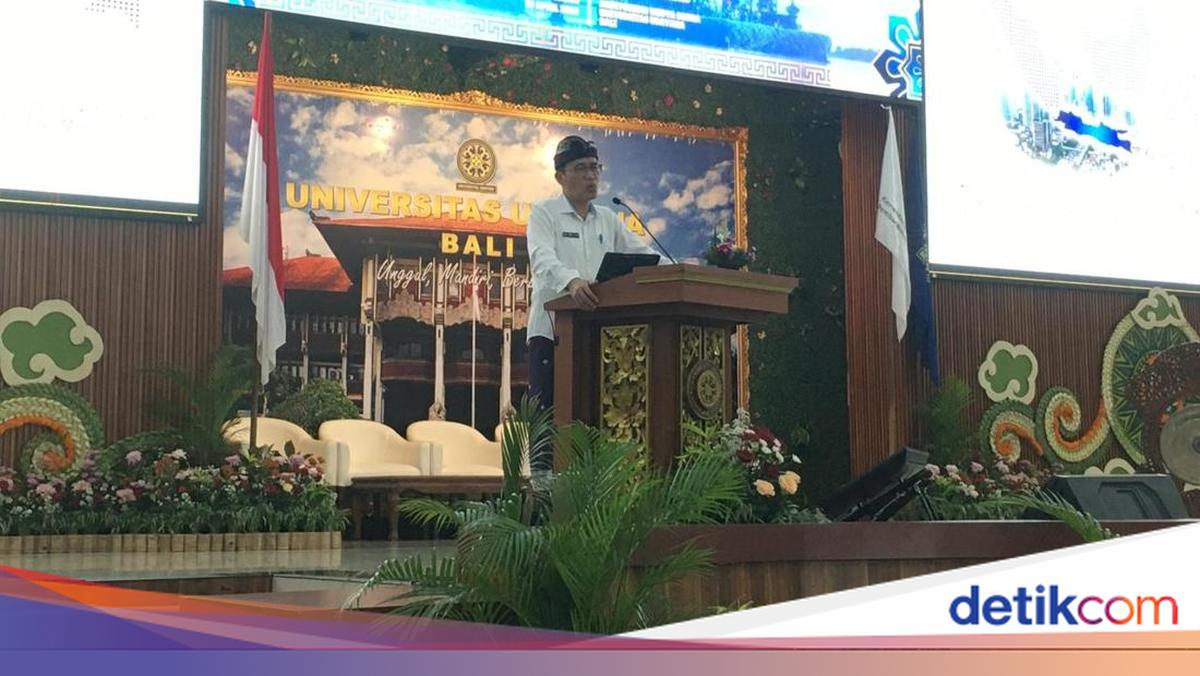
“Our teaching sector graduates 490,000 from education programmes each year, while at the same time, the market for education—for prospective teachers and also facilitators in kindergartens—is only 20,000,” he stated during a speech at the National Population Symposium 2026 at Udayana University, Jimbaran, Badung, on Thursday (23/4/2026).
This situation leaves around 470,000 teaching graduates at risk of not being absorbed into the workforce and becoming educated unemployed. In addition, he also warned of the potential excess of doctors in the coming years. He highlighted the ongoing imbalance in the distribution of medical personnel across various regions.
“By 2028, we will actually have an oversupply of doctors; if this is left unchecked, the oversupply of doctors. If we use the minimum standard from the World Bank, especially with maldistribution and imbalance in distribution across regions,” he said.
According to Badri, this condition presents a major challenge, given that Indonesia produces around 1.9 million young graduates each year, with 1.7 million of them being bachelor’s and diploma graduates.
He assessed that most higher education institutions currently still use a market-driven strategy, opening study programmes based on current trends.
“In our terms, most higher education institutions in Indonesia currently use a market-driven strategy. What is market-driven? Whatever is popular is opened as a programme. Then oversupply occurs there,” he explained.
Badri explained that to optimally utilise the demographic bonus, higher education must be aligned with future economic growth needs to avoid mismatches.
Badri mentioned the importance of shifting strategies to market-driving, which involves promoting the opening of study programmes that match future industry needs.
He gave examples, such as students taking a major in engineering with a minor in management, or medicine with additional expertise in management, such as hospital management, pharmaceutical logistics, and medical equipment.
“There will be a policy that we will issue, for example, interdisciplinary programmes or major-minor. The major might be in engineering, but the minor in management. Or the major might be in medicine, but the minor in management.”
For this reason, the government is encouraging the need for joint policies and support from various parties, including studies from the Technical Committee for Medical Education (PTPK).
“I hope that the study from PTPK can strengthen the policies that will be taken by the Ministry so that what we do can run well, and the demographic bonus can be utilised,” he hoped.
According to him, this step is expected to strengthen higher education policies to be more targeted, so that the demographic bonus can be optimally utilised towards the Indonesia 2045 vision.