
Ministry of Higher Education, Science, and Technology Ensures Poverty Decile Changes Will Not Disqualify KIP Kuliah Recipients
Jakarta (ANTARA) - The Ministry of Higher Education, Science, and Technology (Kemdiktisaintek) has ensured that changes in poverty deciles will not immediately disqualify students from receiving the Kartu Indonesia Pintar (KIP) Kuliah scholarship.
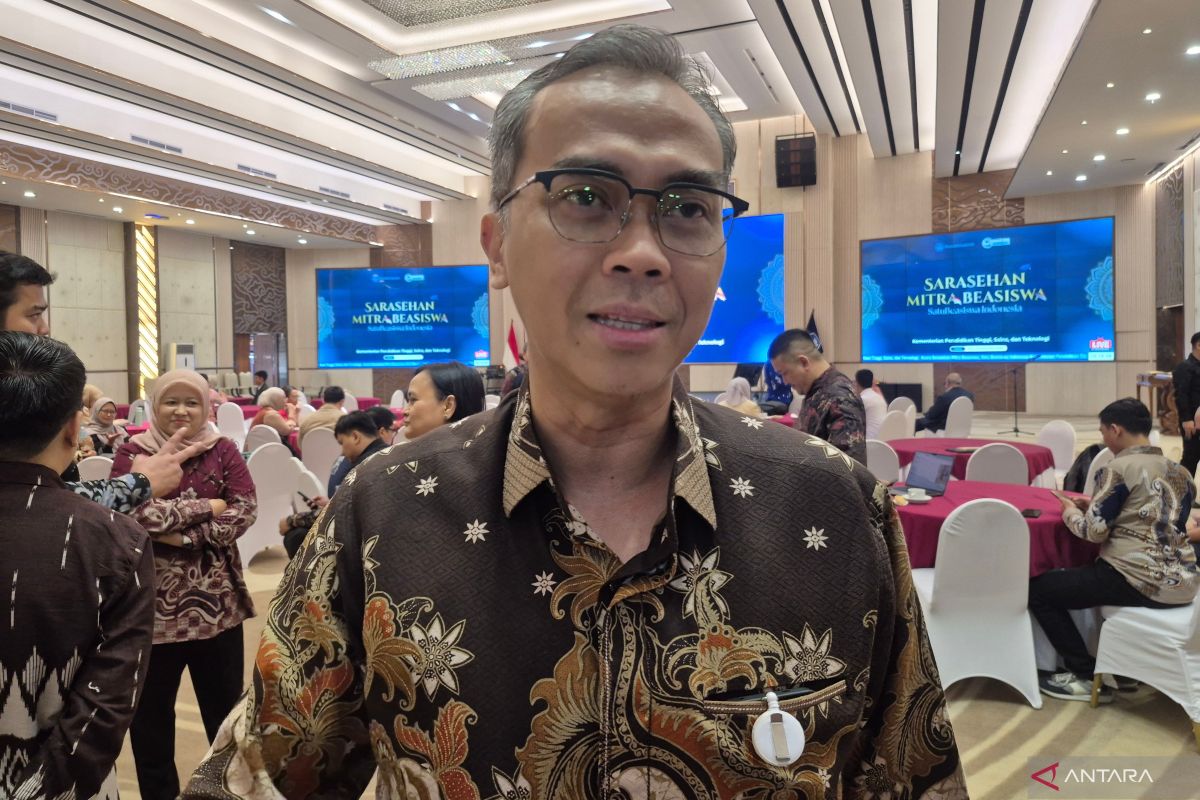
The Head of the Centre for Higher Education Financing and Assessment (PPAPT) of Kemdiktisaintek, Sandro Mihradi, speaking during a Scholarship Partner Seminar in Jakarta on Wednesday, emphasised that the Ministry will continue to use the initial registration data as the primary reference.
With this affirmative policy, he stated, students whose poverty status shifts suddenly over several months will still retain their rights and will not have their aid cancelled unilaterally.
“This means they are not automatically removed, because we know that these deciles are dynamic. If we were to rely on only a single point in time, it would be quite risky, which is why we have implemented such a policy,” he said.
According to him, the decile shifts released by the Central Bureau of Statistics (BPS) are essentially a form of national-scale poverty proportion division that is highly dynamic.
Sandro cited an example where a natural disaster in a certain region causes many residents to suddenly fall into poverty, which would immediately impact the national decile balance. This condition could cause residents in unaffected regions to be shifted into a higher decile, even though they have experienced no actual increase in wealth.
To address this dynamic, Kemdiktisaintek plans to change the evaluation mechanism for KIP Kuliah recipients in the future so that it no longer relies entirely on decile data, but rather through direct verification by each respective university.
Sandro also shared positive news regarding a proposal to increase the quota for KIP Kuliah recipients for 2027, which is expected to be ratified by the House of Representatives (DPR) next week.
“Initially, during the RDP (Hearing), the budget for 2027 for new students was only for 90,000 students. Thankfully, there has been news that there will be an additional 130,000, bringing the total to 220,000 students for the year 2027,” said Sandro Mihradi.