
Ministry of Higher Education, Science, and Technology Encourages Tempe to Penetrate Global Markets
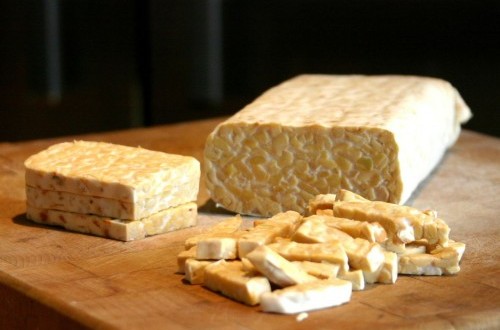
Tempe, long recognised as a staple food for the people, possesses the potential to be developed into a high-economic-value product capable of penetrating global markets. Its development requires support through research, innovation, industry, and the utilisation of Indonesia’s biodiversity.
“Tempe, which has long been known as a food for the masses, can be developed into a high-value economic product through research, packaging innovation, and industrial development. We simply need to find industrial off-takers capable of producing export-grade tempe,” said the Deputy Minister of Higher Education, Science, and Technology, Fauzan, during a public discussion titled ‘Ragi Nusantara: From a Piece of Tempe for Food Security’ at the Antara Heritage Centre, Jakarta, on Wednesday (2/9).
The development of tempe aligns with the ‘Impactful Higher Education, Science, and Technology’ concept, which encourages university research results to move beyond the laboratory to be utilised by society and provide economic impact.
A research team from the University of Indonesia, through the Bestari Saintek Programme funded by LPDP, is developing tempe starter innovations using a combination of several Rhizopus species. The research is conducted via a ‘living lab’ approach, involving testing under real-world conditions and utilising user feedback.
Bestari Saintek researcher and UI academic, Prof. Wellyzar Sjamsuridzal, stated that the starter research is also part of an effort to understand and preserve Indonesia’s microbial biodiversity.
“Tempe starter is a vital part of the effort to utilise Indonesia’s biodiversity to strengthen food security. Through research and collaboration, microbial diversity can be developed responsibly into innovations that benefit society,” he said.
The research also considers the influence of temperature and humidity on tempe fermentation, necessitating the development of starters that are more adaptive to environmental conditions.
Meanwhile, FKS Group has become a partner in the development and scale-up of these innovations from the laboratory to pilot and industrial scales. FKS Group VP of Commercial, Danar Samron, noted that the downstreaming process requires testing, standardisation, production readiness, food safety, and supply sustainability.
Gastronomy expert and chef Wira Hardiyansyah added that the diversity of starters and fermentation practices is part of Indonesia’s culinary identity, which needs to be preserved and developed to introduce the richness of Nusantara flavours to the world.
The discussion, organised by the Directorate of Dissemination and Utilisation of Science and Technology alongside FKS Group and LKBN ANTARA, brought together academics, industry players, the government, and food experts to discuss the development of Nusantara starters as part of strengthening food security.
Through this collaboration, tempe is expected to not only remain a daily food staple but also serve as an example of how biodiversity, science, technology, and industry can produce value-added food innovations with the potential to penetrate global markets.
Source: jawawa.id (https://jawawa.id/newsitem/ministry-of-higher-education-science-and-technology-encourages-tempe-to-penetrate-global-markets-1788411406)
Originally published by Republika (https://rejogja.republika.co.id/berita/tkrre2291/kemendiktisaintek-dorong-tempe-tembus-pasar-global), translated from Indonesian