
Ministry of Health tests JKN reforms in Makassar, testing three systems simultaneously
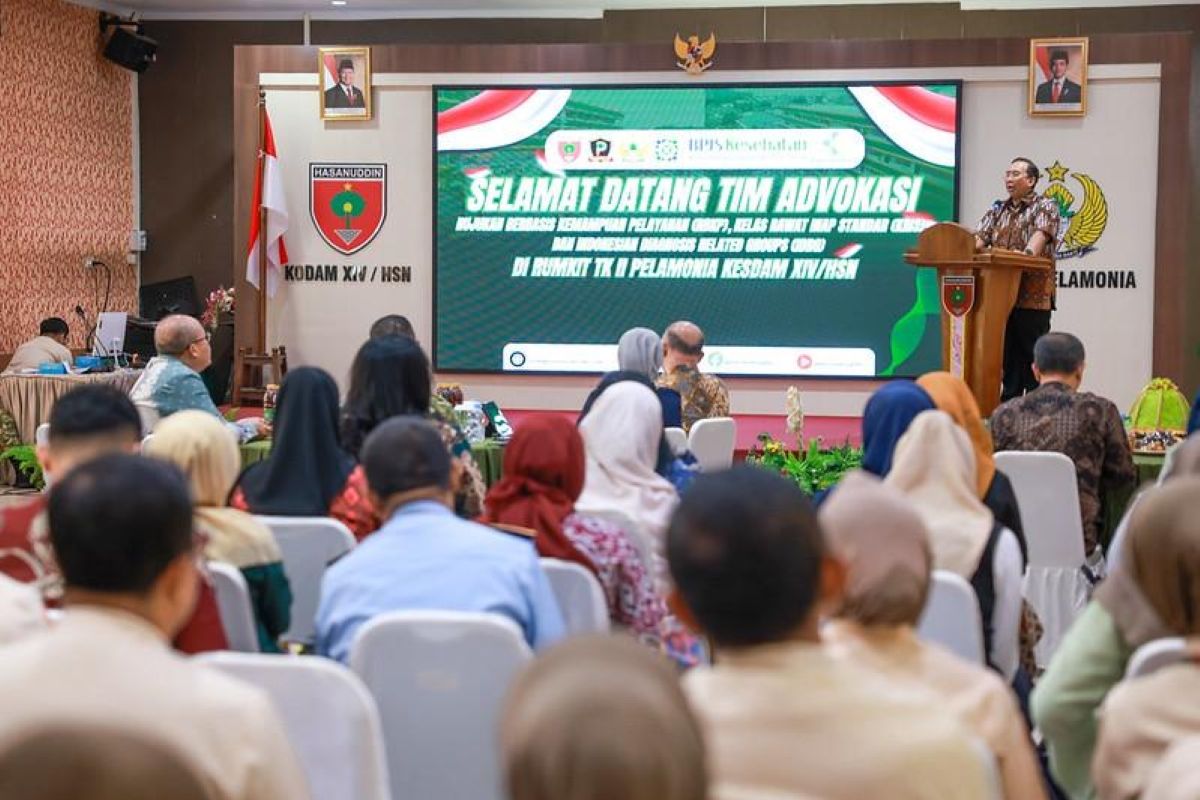
The Ministry of Health has designated Makassar as one of the locations for testing National Health Insurance (JKN) reforms, which include the implementation of Service Capability-Based Referrals (RBKP), Standard Inpatient Classes (KRIS), and the Indonesian Diagnosis Related Groups (iDRG) system.
The Director General of Advanced Health Services at the Ministry of Health, Azhar Jaya, explained that Makassar was chosen because it possesses relatively complete healthcare facilities and is deemed ready to test the comprehensive application of these systems. Supported by adequate infrastructure, Makassar also possesses competent healthcare human resources and a service network ranging from primary care to central government-owned hospitals.
“This trial will be conducted in four locations: first is Bandung, followed by Makassar, Tulungagting Regency, and Muara Enim Regency,” he stated in Jakarta on Monday.
Azhar noted that the implementation of the JKN reform trial involves the entire healthcare service network, including community health centres (puskesmas), private practices, clinics, regency/city government hospitals, provincial government hospitals, and vertical hospitals owned by the Ministry of Health.
One of the primary changes to be tested is the Service Capability-Based Referrals (RBKP). Under this system, healthcare facilities are grouped based on their service capabilities into four levels: Basic, Intermediate, Main, and Comprehensive.
With this system, patient referrals will no longer need to follow a sequential hierarchy of healthcare facilities. If a doctor at a community health centre determines that a patient requires treatment at a facility with higher service capabilities, the patient can be referred directly to the facility that meets their medical needs.
Furthermore, Azhar stated that the trial also includes the implementation of Standard Inpatient Classes (KRIS). This standard is aimed at ensuring JKN participants receive more uniform inpatient facilities.
“For instance, if someone is ill and hospitalised in a room with more than four beds, where the bathroom is located outside and requires queuing, the standard inpatient class—featuring four beds, an ensuite bathroom, and a nurse call system—will become a mandatory requirement for healthcare facilities, particularly hospitals in Indonesia,” said Azhar.
In addition, the JKN reform includes the implementation of the Indonesian Diagnosis Related Groups (iDRG) payment system. He mentioned that these three changes will be tested in an integrated manner to provide an overview of field implementation and to gather feedback for system refinement before national implementation.
Previously, the Ministry of Health had established a trial team for the implementation of iDRG, KRIS, and service capability-based referrals in healthcare facilities collaborating with BPJS Kesehatan.
The Ministry of Health hopes that the trials in these four regions will provide an overview of the readiness of healthcare facilities to operate the new JKN service system. The results of the field evaluations will serve as material for refinement before the system is implemented more widely.
The Governor of South Sulawesi, Andi Sudirman Sulaiman, welcomed the designation of Makassar as a trial location. In his view, the implementation of this system could be part of the effort to build more standardised healthcare service patterns.
“Our hope is that through competency-based approaches and the JKN pilot project, there will be standardisation and patterns that can be applied to improve healthcare services,” he said.
The Mayor of Makassar, Munafri Arifuddin, also expressed his support for the programme’s implementation. He requested that the central government provide guidance regarding facilities and service aspects that still need improvement at the regional level.
“We also request the Director General to identify what is still lacking and what we need to fix here to ensure this service pattern can be maximised and reach the community,” said Munafri.