
Ministry of Health strengthens air quality monitoring in response to Anak Krakatau eruption
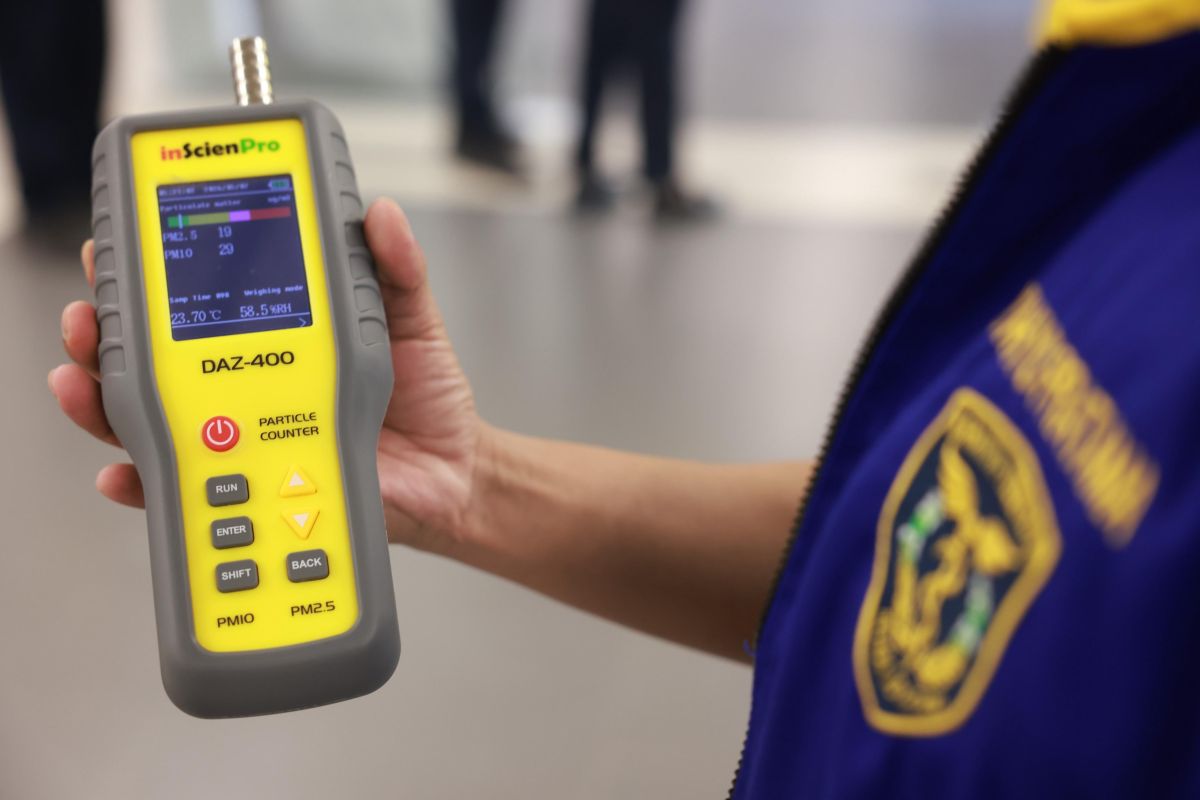
While airport authorities may use paper tests to ensure flight safety, particulate matter levels remain high from a health perspective.
Jakarta (ANTARA) - The Ministry of Health (Kemenkes) is continuing to strengthen air quality monitoring following the eruption of Mount Anak Krakatau and the subsequent dispersal of volcanic ash affecting several regions.
Deputy Minister of Health Dante Saksono Harbuwono stated in Jakarta on Friday that monitoring results at several points within Soekarno-Hatta (Soetta) International Airport in Tangerang, Banten, on Wednesday (9/9), showed that PM2.5 concentrations in several outdoor areas remain above safe limits.
At the Damri Terminal in Soetta Airport, for instance, measurements showed PM2.5 levels at 63 µg/m³, whereas the safe limit for PM2.5 is 25 µg/m³. Monitoring is being conducted using a particulate counter to measure particulate concentrations, specifically PM2.5.
The Deputy Minister explained that although flight activities can proceed based on paper test results, air quality from a public health perspective still requires close attention. He noted that using a particulate counter is essential to identify small particle concentrations that can impact health and are not always visible to the naked eye.
“For health purposes, we focus on the 2.5 [PM2.5]. Even if larger particles begin to decrease, if the 2.5 levels remain high, the risk persists,” he said.
Based on the Ministry of Health’s monitoring on 8 September 2026, several points at Soetta Airport and surrounding areas still showed PM2.5 and PM10 concentrations exceeding safe limits. Measurements are being conducted periodically by the Great Center for Health Quarantine (BBKK) and the Health Quarantine Centre (BKK) using Air Quality Detectors/Particulate Counters.
He explained that volcanic ash contains particulates of various sizes. Fine particles such as PM2.5 can be inhaled deep into the lungs, potentially increasing the risk of health disorders, particularly among vulnerable groups.
As of 6 September 2026, the Ministry recorded a cumulative total of 16,759 cases of Acute Respiratory Infection (ISPA) in areas affected by the volcanic ash from the Anak Krakatau eruption, spread across four provinces and 23 regencies/cities. Of these, 3,771 cases occurred in the 0–5 age group, while 12,988 cases occurred in those over the age of 5.
Deputy Minister Dante stated that Ministry of Health monitoring shows that ISPA incidents in 2026 are higher compared to the same period in 2025. Consequently, the public is urged to remain vigilant regarding respiratory symptoms. The Ministry of Health will continue to monitor air quality and the developing health impacts resulting from the eruption of Mount Anak Krakatau as part of its efforts to protect public health.
Source: jawawa.id (https://jawawa.id/newsitem/ministry-of-health-strengthens-air-quality-monitoring-in-response-to-anak-krakatau-eruption-1789121740)
Originally published by Antara (Indonesian) (https://www.antaranews.com/berita/5736529/kemenkes-perkuat-pantau-kualitas-udara-respons-erupsi-anak-krakatau), translated from Indonesian