
Ministry of Health: SATUSEHAT EMR can be accessed by healthcare workers during emergencies
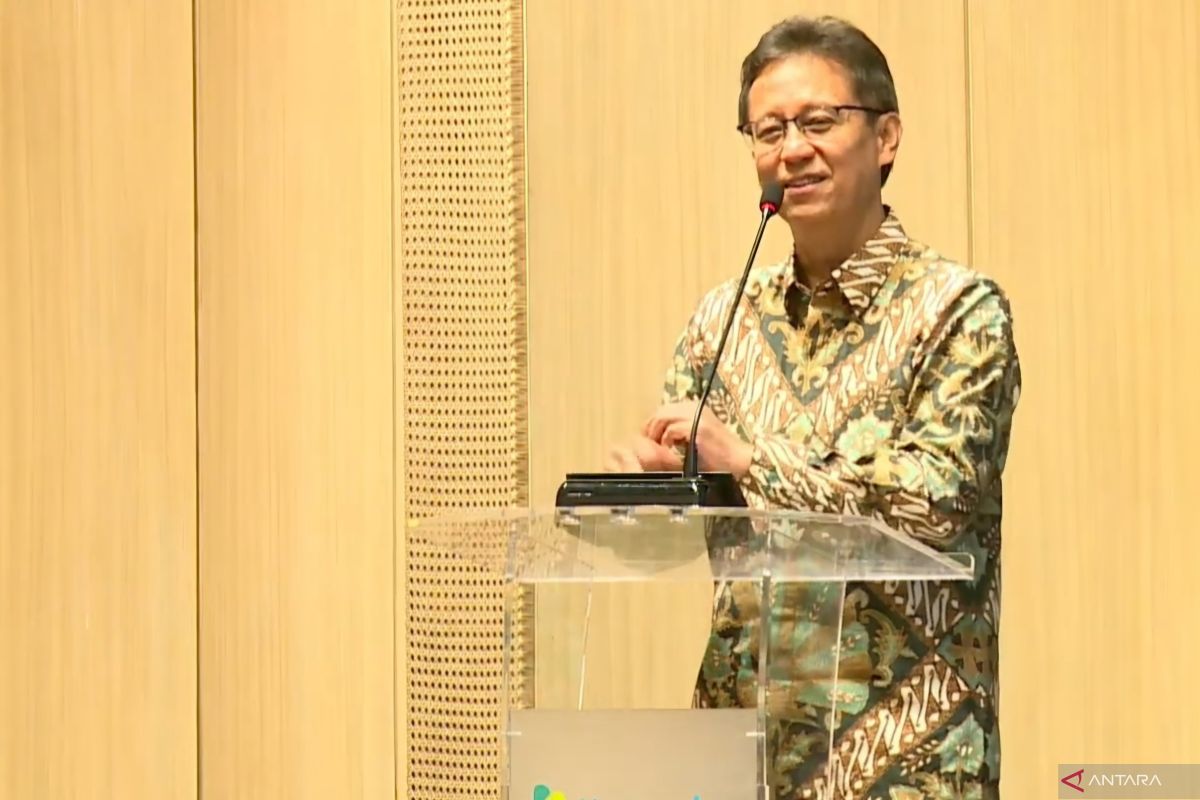
Jakarta (ANTARA) - The Ministry of Health has stated that information within the SATUSElar Electronic Medical Record (EMR) can be accessed by healthcare professionals during emergency conditions, such as when a patient is unconscious, through an emergency consent mechanism to perform actions for patient safety.
“This ease of access is accompanied by protections for patient data confidentiality. In non-emergency conditions, EMR access is granted after the patient provides consent via a six-digit access code generated through SATUSEHAT Mobile,” said the Director General of Advanced Health at the Ministry of Health, Azhar Jaya, in Jakarta on Wednesday.
He added that the history of such access can still be monitored by the patient through the SATUSEHAT Mobile application.
He mentioned that the ecosystem is being implemented gradually in several healthcare facilities (Fasyankes), including RSUP Dr. Wahidin Sudirohusodo Makassar and RS PON Prof. Dr. dr. Mahar Mardjono Jakarta. Subsequently, implementation will be expanded to all healthcare facilities that have integrated with the SATUSEHAT ecosystem.
In emergency situations where a patient is unconscious or unable to provide consent, healthcare workers can utilise the emergency consent mechanism to access the medical information necessary for patient safety.
Azhar explained that patients with a verified SATUSEHAT Mobile profile can also access medical summaries independently through the Medical Resume feature after undergoing examinations, consultations, or medical procedures.
The launch of SATUSEHAT EMR is part of the Health Technology Transformation to realise healthcare services that are increasingly connected, fast, accurate, secure, and continuous.
The Minister of Health, Budi Gunadi Sadikin, stated that this integration will provide primary benefits for patients because their health history can be available continuously when moving between healthcare facilities.
“This data is not stored based on the healthcare facility, but based on the individual. Therefore, when someone undergoes examinations at various healthcare facilities, all that data can be connected within a single health account belonging to the patient,” he said.
The integrated data includes diagnoses, laboratory results, medications, medical procedures, vital signs, and radiology. Consequently, patients no longer need to carry physical medical record files when moving or being referred to other healthcare facilities.
“The main goal of this SATUSEHAT system is for patients to know their health condition at any time. Just as we can view our financial status through mobile banking, with this, we can view our health status,” said Budi.
In addition to providing access to health information for patients, SATUSEHAT EMR also assists doctors in obtaining more complete patient medical information as a basis for determining medical actions.
The Minister of Health provided an example where, if a patient has undergone laboratory tests at one healthcare facility, the results can be viewed by the next facility if the patient grants access. This avoids the need for repeated examinations when they are still clinically relevant.
“If Hospital A wants to refer a patient to Hospital B, there is no longer a need to carry and manually input all the data. The data is already connected, so the doctor receiving the patient in the Emergency Department can already know the patient’s health condition,” he said.
Source: jawawa.id (https://jawawa.id/newsitem/ministry-of-health-satusehat-emr-can-be-accessed-by-healthcare-workers-during-emergencies-1788365068)
Originally published by Antara (Indonesian) (https://www.antaranews.com/berita/5723296/kemenkes-satusehat-rme-bisa-diakses-nakes-saat-darurat), translated from Indonesian