
Ministry of Health Reveals Latest Facts: 2.3 Million Indonesian Children Have Never Been Immunised
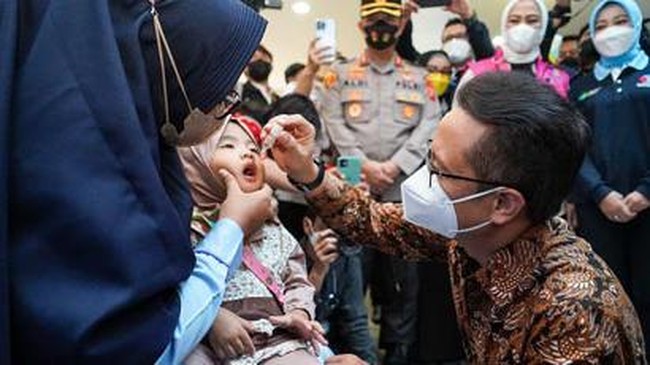
Jakarta, CNBC Indonesia - The Ministry of Health (Kemenkes) has revealed that around 2.3 million Indonesian children have yet to receive any immunisation at all, falling into the zero-dose category. Indonesia is even recorded as the country with the sixth highest number of zero-dose children worldwide.
Chair of the Baby and Child Immunisation Working Team at the Kemenkes Immunisation Directorate, Dr Gertrudis Tandy, stated that this situation presents a major challenge to the national immunisation programme.
“Zero-dose means children who have never received any immunisation,” said Gertrudis during a media briefing on Chasing Zero-Dose Children in Bandung, West Java, on Monday (11/5/2026).
She explained that operationally, the zero-dose category applies to one-year-old children who have not received the first dose of DPT-HB-Hib or pentavalent vaccine.
Based on data from Kemenkes and the WHO, the number of zero-dose children in Indonesia has been increasing over the past three years. In 2023, there were 372,965 such children, rising to 973,378 in 2024, and reaching 959,990 in 2025.
“In total, the number now stands at around 2.3 million children,” she said.
Kemenkes also noted a downward trend in complete child immunisation coverage in Indonesia over the past three years. In 2025, the national full infant immunisation achievement was only at 80.2%, still below the 90% target.
Meanwhile, in 2026 up to April, only DKI Jakarta succeeded in meeting the monthly infant immunisation coverage target. Other provinces, including West Java, have yet to meet the national target.
Gertrudis warned that low immunisation coverage can trigger extraordinary events (KLB) of vaccine-preventable diseases, such as measles and polio.
“If the accumulation of unvaccinated children gathers in one place, herd immunity will not form, leading to increased cases and subsequently extraordinary events,” she stated.
She cited Indonesia’s past experience with a polio KLB, which required Indonesian Hajj pilgrims to receive polio vaccines to enter Saudi Arabia.
“Well, why was that? Because the WHO reported a polio KLB in Indonesia. So other countries saw that Indonesia was experiencing a polio KLB, making Saudi Arabia fear transmission,” said Gertrudis.
Gertrudis added that the impact of low immunisation coverage not only triggers disease outbreaks in the short term but can also affect the quality of Indonesia’s human resources (SDM) in the long term. Unvaccinated children are at higher risk of frequent illnesses, disabilities, and death from preventable diseases.
“In the long term, children who are frequently ill will impact the economy, human resources, and so on,” she said.
Kemenkes assesses that numerous factors contribute to the low immunisation rates in Indonesia, ranging from hoaxes and public doubts about vaccines (vaccine hesitancy), limitations in health personnel, to suboptimal digital recording.
Additionally, tracking unvaccinated children remains a significant challenge because the government’s data is still in the form of projections.
“Where are these children? That’s a challenge in itself—tracking the targets, their addresses, their names,” said Gertrudis.
Therefore, Kemenkes is seeking cross-sectoral support from local governments, Posyandu cadres, religious leaders, and the media to help educate the public on the importance of child immunisation.
Source: jawawa.id (https://jawawa.id/newsitem/ministry-of-health-reveals-latest-facts-2-3-million-indonesian-children-have-never-been-immunised-1778559379)
Originally published by CNBC Indonesia (https://www.cnbcindonesia.com/lifestyle/20260512084700-33-734259/kemenkes-ungkap-fakta-terbaru-23-juta-anak-ri-tidak-pernah-imunisasi), translated from Indonesian