
Ministry of Health: Regional Leadership Key to Strengthening Primary Healthcare Services
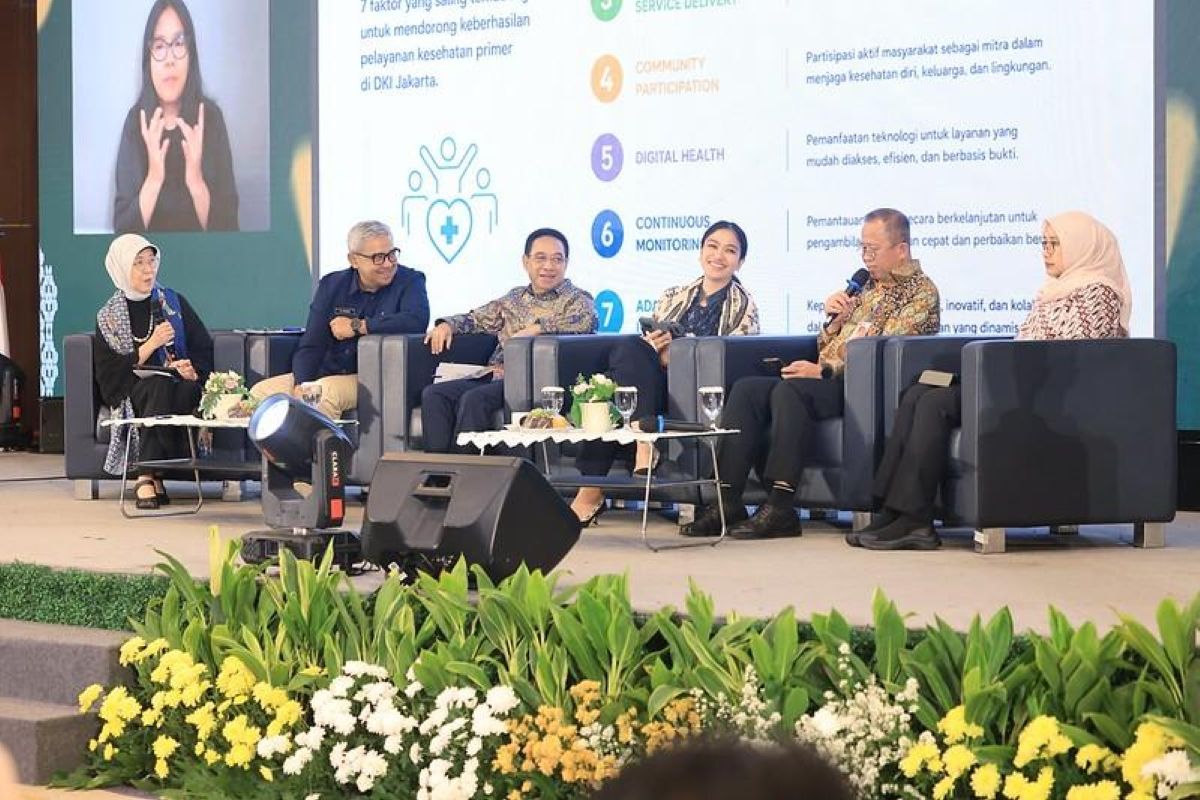
Jakarta (ANTARA) - The Ministry of Health has said that the success of primary healthcare transformation is determined not only by central government policy, but above all by the leadership of regional heads capable of translating policy into tangible services for the public.
Deputy Health Minister Benjamin Paulus Octavianus said in Jakarta on Tuesday that Indonesia is preparing healthy and productive human resources as the foundation for achieving Golden Indonesia 2045. Therefore, strengthening primary healthcare services has become a strategic investment that must begin at the village level and extend to community health centres (puskesmas).
“Regional heads are not merely administrators, but agents of change who can make health a development investment, strengthen puskesmas, revitalise integrated health posts (posyandu), empower health cadres, build cross-sector collaboration, and make decisions based on public health data,” said Benny.
He said the government continues to expand equitable access to healthcare services. One example is the construction of hospitals in 66 regencies that previously had none, so that people in remote areas can obtain healthcare services more easily.
Benny also commended the role of puskesmas health workers as the spearhead of the Free Health Check Programme (CKG). By mid-July 2026, more than 66 million people had taken part in the programme.
“Through this programme, we are shifting the paradigm from treatment to prevention. Examination results provide the basis for regional governments to formulate more precisely targeted health policies,” he said.
He also emphasised accelerating tuberculosis (TB) elimination as a national priority. Indonesia remains a country with a high TB burden, so the control strategy is now being strengthened through active case finding, X-ray screening, contact tracing, preventive therapy, and the strengthening of TB cadres in villages.
According to the Deputy Health Minister, such proactive outreach approaches demonstrate how regional innovation can address public health problems based on local conditions.
Indonesia currently also possesses enormous social capital, with more than 156,000 active life-cycle posyandu and around 1.58 million health cadres. Going forward, the Ministry of Health will strengthen cadre capacity through more intensive training in response to needs conveyed directly by the regions.
“Health transformation is not a race, but a collective movement. Our measure of success is not the number of programmes implemented, but more people staying healthy, diseases being detected sooner, services being more accessible, and public trust in the national health system growing higher,” he said.
Meanwhile, the Bandung City Government is utilising population data and Free Health Check results as the basis for formulating health policies, including child mental health handling, obesity, environmental sanitation, and strengthening life-cycle-based services through ILP.
The Banyuwangi Regency Government, for its part, shared various healthcare service innovations, ranging from the Healthy People’s Mall, Bunga Desa (Regent Works from the Village), specialist doctor services in villages, village health posts (Poskesdes), Permata Hati, BTS (Responsive Stunting Assistance), the Kancang Karon medicine delivery service, and the Oasis Wangi digital health consultation service.
According to the Deputy Health Minister, these diverse innovations show that the success of primary healthcare services is determined not by programme uniformity, but by the ability of regional heads to develop solutions suited to the needs of their areas.