
Ministry of Health: Pay Attention to 4 Precautions Related to Sacrificial Animal Health
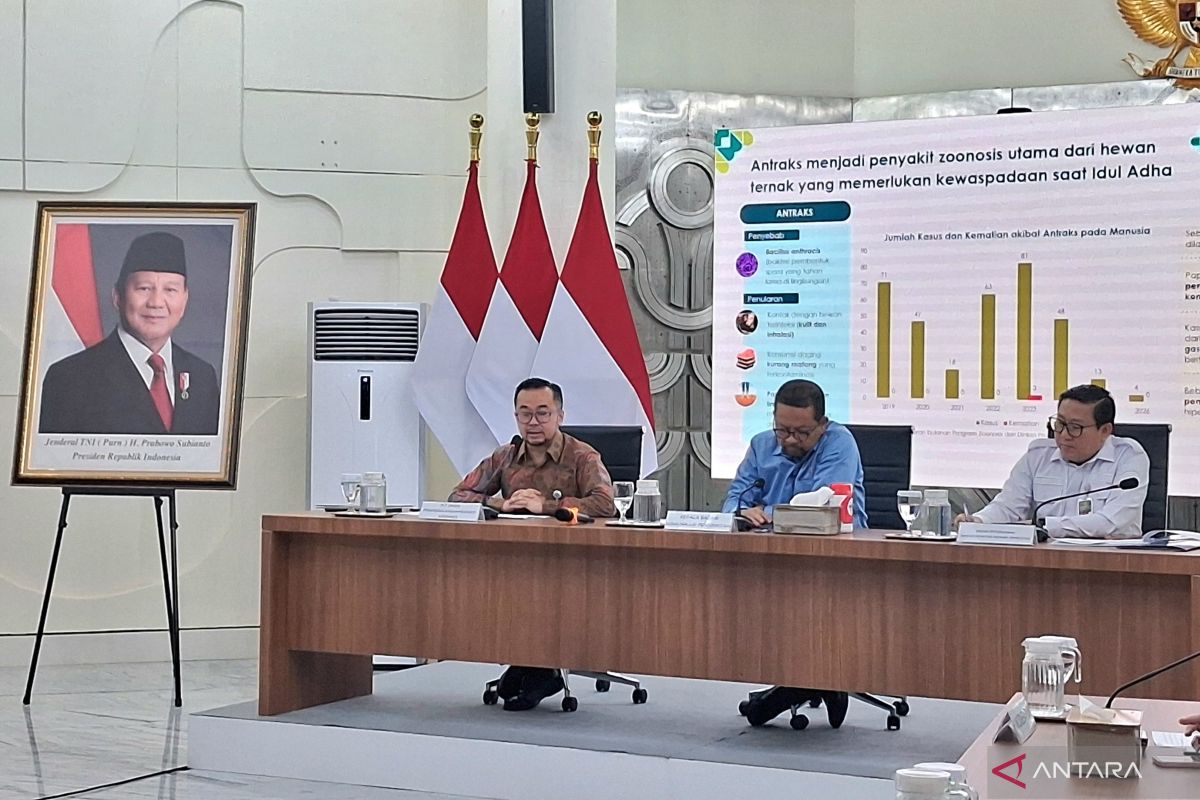
Jakarta (ANTARA) - The Ministry of Health (Kemenkes) has asked the public to pay attention to four precautions related to the health of sacrificial animals ahead of the 2026 Eid al-Adha celebrations. “There are four main precautions that we must really pay attention to in order to protect public health. The first is selection and purchase, as there is certainly contact with the sacrificial animals that may be infected,” said Acting Director General of Disease Control and Prevention at the Ministry of Health, Andi Saguni, during a press conference with the Indonesian Government Public Communication Agency in Jakarta on Wednesday. Andi stated that the Ministry of Agriculture will also deploy thousands of personnel to ensure that sacrificial animals are declared healthy. According to him, the risk of disease transmission from sacrificial animals must continue to be monitored so that diseases carried by livestock do not come into contact with humans. “The control is certainly through hygiene practices. So, hands after contact must be ensured to be kept clean during the selection and purchase process. The most important thing is to wash hands with soap after that process, and not to buy sick or symptomatic animals as sacrificial animals,” he said. He continued that the second precaution to be observed is during the transportation and storage process, as sacrificial animal sellers will gather many animals, from cattle, goats, and so on, in one place. “So, during transportation and storage, as well as the process, we must separate healthy and sick animals. In addition, maintain the cleanliness of the vehicles, and if there are sick animals, it is best to report them immediately to the livestock services,” said Andi. “During slaughter, what we are most concerned about is contact with blood by those tasked with slaughtering. The most important thing is that there are at least four tools or materials that must be used by the slaughterers to prevent contact or transmission if there is an infection in the livestock,” he said. The four tools for protection during the slaughter of sacrificial animals are an apron to protect against blood or animal dirt splashing onto the slaughterer. Second, the use of a mask. “This is something I rarely see being paid attention to, so it’s important for us to convey. The standard is to wear a mask because anthrax disease can be transmitted through inhalation (breathing in air). The third is gloves to protect from blood or dirt that could lead to transmission from infected animals to humans,” said Andi. The fourth tool is boot shoes to protect the feet from the transmission process of livestock infections.
Source: jawawa.id (https://jawawa.id/newsitem/ministry-of-health-pay-attention-to-4-precautions-related-to-sacrificial-animal-health-1778666244)
Originally published by Antara (Indonesian) (https://www.antaranews.com/berita/5566427/kemenkes-perhatikan-4-kewaspadaan-terkait-kesehatan-hewan-kurban), translated from Indonesian