
Ministry of Hajj Pushes for 60% Value-Added Benefit in Hajj Financing, BPKH Awaits DPR Decision
The Hajj Financial Management Agency (BPKH) is waiting for the House of Representatives’ (DPR) working committee on Hajj Implementation Costs (BPIH) to deliberate on a proposed change to the hajj financing composition. The proposal suggests shifting the ratio to 60 per cent from value-added benefits and 40 per cent paid by pilgrims.
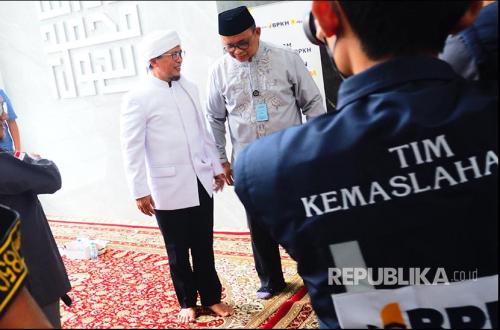
Acep Riana Jayapura, a member of the BPKH Executive Board, stated that discussions on the financing composition will be conducted by the Ministry of Hajj and Umrah and the DPR within the BPIH working committee. “We are waiting for the decision of the DPR’s BPIH working committee,” Acep told Republika on Tuesday (14/7/2026) when asked about the possibility of implementing the scheme.
For the 2026 hajj season, approximately 61 per cent of costs were paid directly by pilgrims and 39 per cent came from the value-added benefits of hajj funds. The government has proposed reversing this composition for the 2027 season, with pilgrims paying around 40 per cent and 60 per cent coming from value-added benefits. Deputy Minister of Hajj and Umrah Dahnil Anzar Simanjuntak explained that the proposal is part of a financing formulation still to be discussed with the DPR. He said the scheme is expected to ease the financial burden on pilgrims without reducing the quality of hajj services.
However, the proposal has drawn attention from various quarters. One concern is the potential use of value-added benefits derived from the deposits of pilgrims still on the waiting list to finance those departing in the current year. PBNU Religious Affairs Chairman KH Ahmad Fahrur Rozi previously reminded that the utilisation of value-added benefits must prioritise fairness for all prospective pilgrims. He stressed that the government must ensure the financing scheme does not disadvantage pilgrims who are still waiting for their turn to depart.
Similarly, MUI Deputy Chairman KH Cholil Nafis assessed that the 60:40 scheme could be implemented as long as the value-added benefits used are the entitlement of the departing pilgrims and not taken from the rights of those still in the queue. “It is good as long as the benefits come from the departing pilgrims’ funds, not from the waiting list’s profit share,” Kiai Cholil told Republika.