
Ministry of Hajj and Umrah Targets Indonesian Food Products to Meet 2027 Pilgrimage Needs
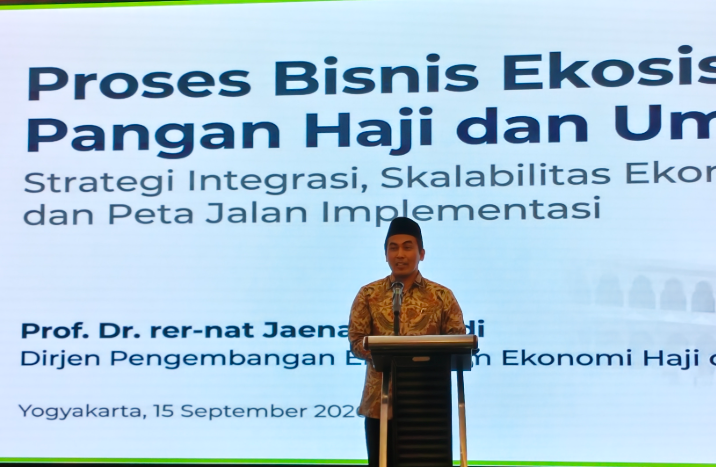
The Ministry of Hajj and Umrah (Kemenhaj) is preparing to strengthen the national food supply chain to support the consumption needs of Indonesian Hajj pilgrims for the 2027 season. The government aims to increase the volume of domestic food products used and shipped directly to Saudi Arabia.
In 2027, Indonesia has been allocated a Hajj quota of 221,000 pilgrims. This figure is viewed as an opportunity to expand the role of national food products in meeting consumption needs while simultaneously broadening market access for domestic businesses.
Jaenal Effendi, Director General of Hajj and Umrah Economic Ecosystem Development, stated that the government intends to build a more self-sufficient Hajj food system by optimising national production capabilities. “We want to achieve food independence by empowering national products. If needs can be met from within the country, there will be no need to rely on imports,” Ja него said on Wednesday.
According to him, the commodities prepared to supply pilgrim needs are not limited to seasonings or ready-to-eat (RTE) meals. Development also encompasses staples such as rice, protein sources, fruits, vegetables, and oil.
Kemenhaj is also encouraging food products from various regions to enter the Hajj supply chain. This opportunity is expected to increase the involvement of the business community and MSMEs in providing food requirements for pilgrims.
However, products marketed to Saudi Arabia must be adjusted to local standards and conditions. Therefore, innovation and the use of food technology are vital components of product development.
Universities are also being encouraged to participate through research and development, including the production of RTE meals made from national rice or local food products capable of withstanding and adapting to the weather conditions in Saudi Arabia.
Jaenal mentioned that these preparations will be outlined in a roadmap regulating stages from product standardisation, provider curation, production and packaging processes, and regulatory compliance, to export and logistics management.
“The hope for the 2027 roadmap is that all food products are targeted to be ready and located in Saudi Arabia one month before departure,” Jaenal explained.
The food supply chain will be built comprehensively, starting from calculating needs and production capacity, determining providers, ensuring nutritional and quality standards, to managing distribution in Saudi Arabia.
In addition to availability, the government is focusing on product traceability. Monitoring will be conducted on both raw materials and production processes to ensure that the food used for pilgrims meets the established quality standards.
Source: jawawa.id (https://jawawa.id/newsitem/ministry-of-hajj-and-umrah-targets-indonesian-food-products-to-meet-2027-pilgrimage-needs-1789545213)
Originally published by Media Indonesia (https://mediaindonesia.com/humaniora/933990/kemenhaj-targetkan-produk-pangan-indonesia-penuhi-kebutuhan-jemaah-haji-2027), translated from Indonesian