
Ministry of Forestry's M4CR Programme Strengthens Mangrove Rehabilitation and Economy in Kalimantan
The Mangroves for Coastal Resilience (M迫CR) programme is driving the rehabilitation of mangrove ecosystems in Kutai Lama Village, Kutai Kartanegara Regency, East Kalimantan, while simultaneously strengthening community livelihoods through the development of businesses based on local potential.
These efforts involve engaging local communities in the restoration of mangrove areas and strengthening economic activities situated around the coastal ecosystem.
The Sinar Abab Mandiri Forest Farmer Group (KTH) is one of the community groups involved in the programme. Since 2024, the group has rehabilitated 275 hectares of mangroves using the silvofishery method, as well as enriching vegetation on 11 hectares of land.
The silvofishery approach combines mangrove planting with aquaculture activities, ensuring that ecosystem recovery proceeds alongside sustainable economic utilisation.
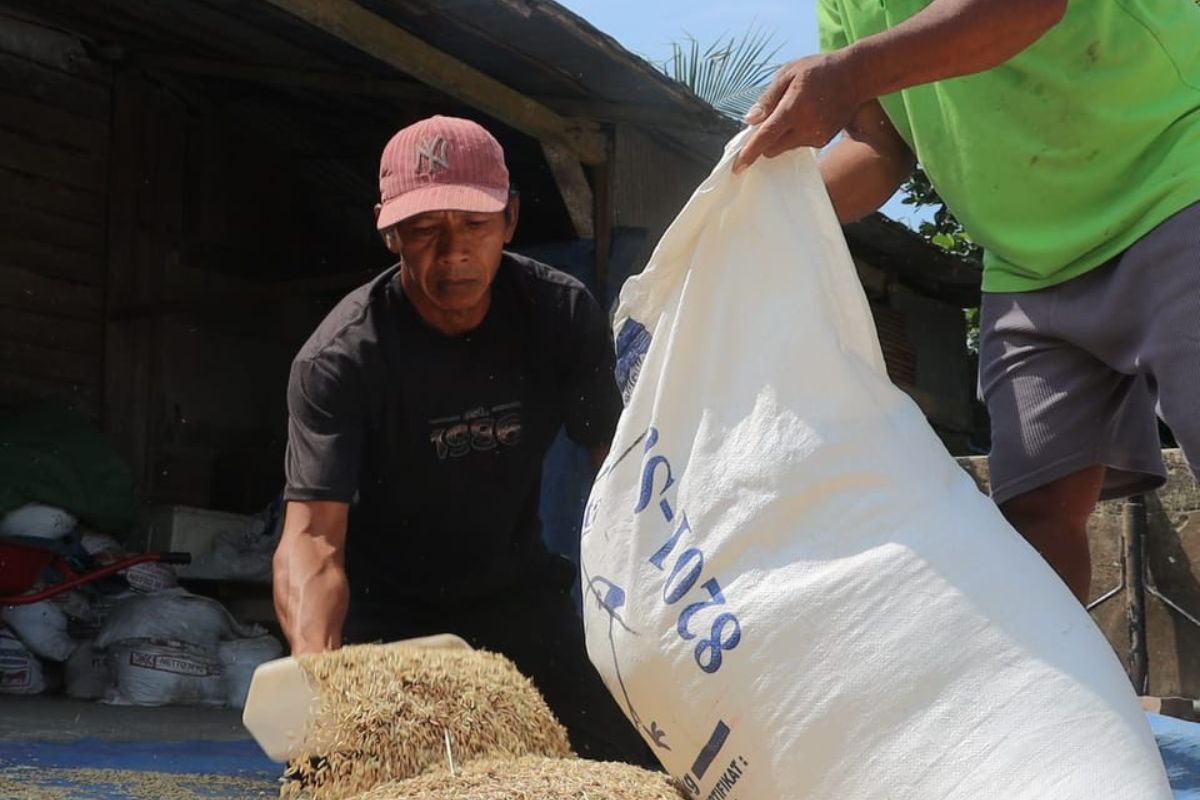
In addition to supporting rehabilitation, M4CR provides business empowerment through a matching grant scheme. This support has been utilised by KTH Sinar Abab Mandiri to develop a collectively managed rice milling business.
Asman Azis, Manager of PPIU M4CR, stated that strengthening the community’s economy is a vital component in ensuring the sustainability of mangrove rehabilitation.
“M4CR mangrove rehabilitation also considers social and economic aspects so that the community can reap benefits and have a reason to continue protecting the area,” he said.
According to Asman, the existence of sustainable livelihoods can encourage the growth of community awareness to collectively protect the mangrove ecosystem.
Meanwhile, the Chairman of KTH Sinar Abab Mandiri, Hamka, mentioned that M4CR support has helped improve the quality of the group’s rice milling production.
The assistance was used to purchase a rice polisher machine to remove bran from the rice, as well as a separator to help distinguish between whole rice, broken rice, and small broken grains.
The development of rice milling is considered highly relevant to the geographical conditions of the Mahakam Delta. Access to agricultural land, which must be travelled via river routes, makes transporting paddy for processing outside the area more time-consuming and costly.
With milling facilities available near the agricultural areas, harvests can be processed directly on-site. Part of the production is used to meet the food needs of members, while the remainder is marketed.
To ensure business sustainability, KTH Sinar Abab Mandiri allocates 10 per cent of the milling proceeds to the group’s treasury. These funds are used for equipment maintenance, production house repairs, and other operational needs.
M4CR is a mangrove rehabilitation programme implemented by the Ministry of Forestry through the Directorate General of Watershed Management and Forest Rehabilitation (PDASRH) in collaboration with the World Bank. The programme targets the rehabilitation of 32,634 hectares of mangroves by 2027 across four priority provinces: Riau, North Sumatra, East Kalimantan, and North Kalimantan.
Through community involvement, M4CR integrates ecosystem recovery with local economic strengthening. This approach is expected to maintain mangrove sustainability while enhancing the community’s ability to manage resources in coastal areas.
Source: jawawa.id (https://jawawa.id/newsitem/ministry-of-forestrys-m4cr-programme-strengthens-mangrove-rehabilitation-and-economy-in-kalimantan-1789726214)
Originally published by Antara (Indonesian) (https://www.antaranews.com/berita/5747361/program-m4cr-kementerian-kehutanan-perkuat-rehabilitasi-mangrove-dan-ekonomi-di-kalimantan), translated from Indonesian