
Ministry of Forestry: Utilising forests does not mean destroying them
The Ministry of Forestry has emphasised that sustainable forest utilisation is not identical to forest destruction, but is instead part of efforts to maintain the sustainability of forest areas.
Director of Forest Product Fees and Administration at the Directorate General of Sustainable Forest Management, Krisdianto, stated that sustainable forest management is carried out through regulated mechanisms, from setting harvesting limits and annual allowable cuts to mandatory replanting after forest product utilisation.
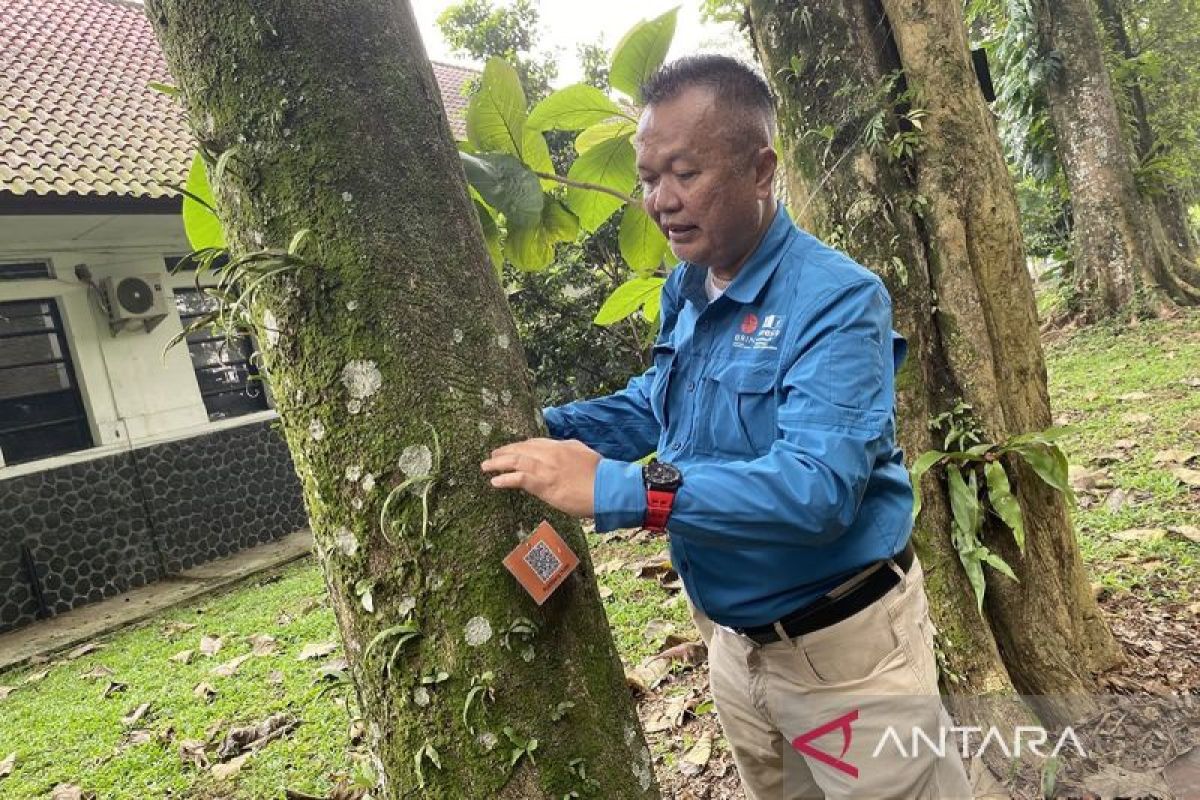
“We want to change public perception. Cutting down trees does not mean destroying the forest, but managing it sustainably,” Krisdianto said during a discussion with journalists at the Gunung Batu Sustainable Forest Development Centre in Bogor, West Java, on Friday.
He explained that forest product utilisation is actually an important part of maintaining the sustainability of the area. According to him, if forests are left unmanaged, accumulated biomass on the forest floor could potentially increase the risk of forest fires and disasters such as floods and landslides.
Therefore, he continued, the utilisation of forests and their products is part of the effort to preserve forests. Conversely, restricting the utilisation of forest products is considered inconsistent with the concept of sustainable forest management.
Krisdianto said the government continues to encourage increasing the economic value of forest areas through the development of various forest products, both timber and non-timber, so that forest areas retain economic value and are not easily converted to other uses.
According to him, one of the efforts being pursued is through a multi-business forestry scheme that allows various forest potentials to be utilised sustainably. Besides timber products, the government is also promoting the utilisation of non-timber forest products such as agarwood, palm sugar, and the processing of forest biomass into value-added products.
He explained that wood and biomass, which previously had little economic value, can be processed into charcoal. This process not only produces charcoal as an energy source but also yields biochar and wood vinegar, which have higher economic value.
According to him, biochar can be used to improve soil fertility while increasing carbon storage in the soil, whereas wood vinegar can be used for various purposes, including in the agricultural sector. The utilisation of these products is expected to increase the economic value of forest products while supporting climate change mitigation.
Krisdianto added that the development of non-timber forest products is also a focus of the Forest Management Units (KPH), which are tasked with managing forest areas at the site level under local governments. According to him, KPHs are encouraged not only to carry out sustainable area management functions but also to empower the economic potential of forests through the utilisation of non-timber forest products according to the potential in each region.
“With multi-business forestry, we encourage KPHs to play a greater economic role in the forestry sector as well,” he said. He added that all multi-business forestry activities must be included in the Business Work Plans and Annual Work Plans of permit holders. The government will evaluate their implementation, while violations of applicable provisions will be dealt with according to regulations.
On the same occasion, Professor Maman Turjaman, a researcher at the National Research and Innovation Agency’s Applied Microbiology Research Centre, said agarwood is one of the non-timber forest product commodities with great prospects in the international market. According to him, Indonesia has more than 30 types of high-economic-value agarwood. However, its utilisation is still not optimal compared to competing countries.
“We hope for more friendly policies so that communities can earn income from the biodiversity they possess, while on the other hand, pressure on forests can still be controlled,” he said.
Meanwhile, Saptadi Darmawan, a researcher at BRIN’s Biomass and Bioproduct Research Centre, said palm sugar also has the potential to be developed as a raw material for bioethanol because it is easier to process than second- and third-generation bioethanol raw materials derived from lignocellulosic biomass. According to him, palm sugar development is directed at marginal lands so that it remains in line with forest conservation efforts.
Besides having economic value, the palm tree is also a conservation plant that can support the restoration of forest areas while producing renewable energy. He added that the utilisation of palm-based bioethanol was trialled through the Aren Bioethanol Pilot at the Pertamina Geothermal Energy Kamojang area in December 2025.