
Ministry of Forestry Strengthens Drone Use for Law Enforcement
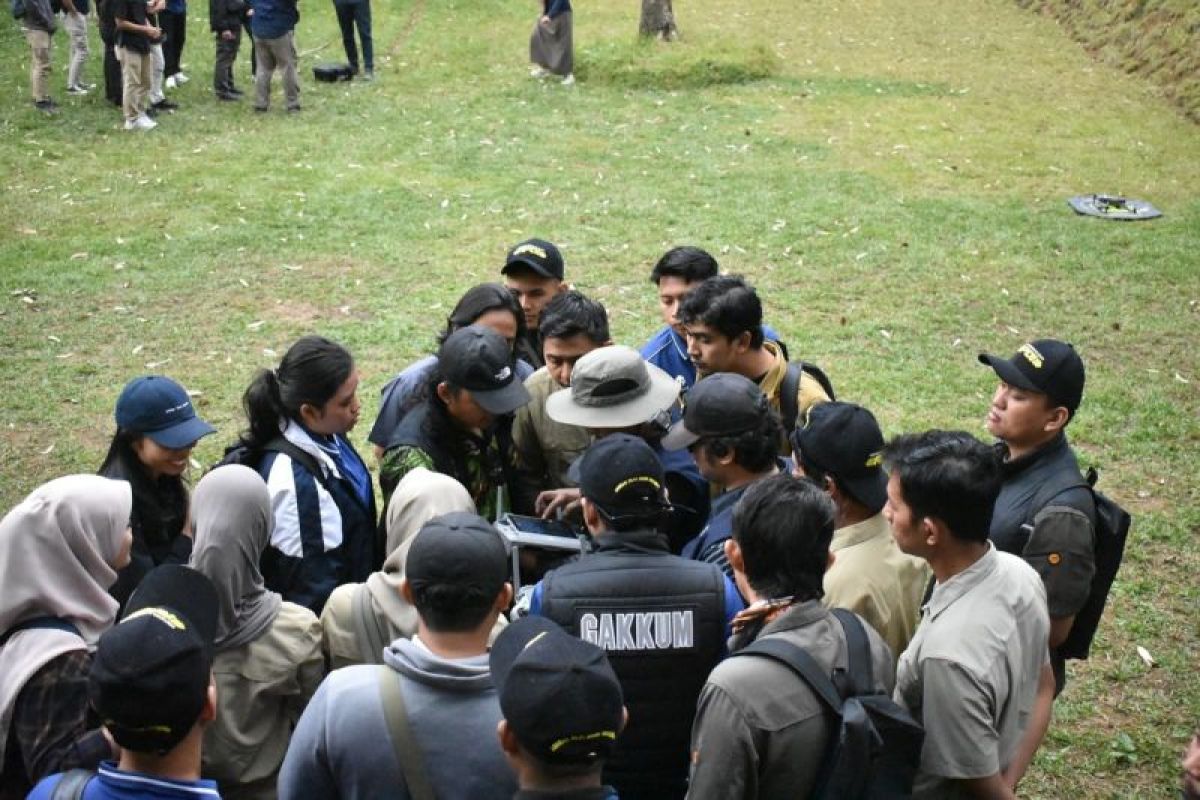
The Ministry of Forestry is strengthening its efforts to monitor forest areas and collect spatial data-based evidence by enhancing the use of drones, or Unmanned Aerial Vehicles (UAVs), for law enforcement. Director General of Law Enforcement at the Ministry of Forestry, Dwi Januanto Nugroho, confirmed on Monday that 51 personnel from the ministry’s Intelligence Center participated in a capacity-building programme on drone usage held from 7 to 12 July 2026 in West Bandung Regency, West Java. “Drones are no longer just documentation tools. This technology is a strategic instrument to strengthen intelligence work, supervision of forest area management, and field verification, in order to obtain spatial data and evidence quickly and accurately for forestry law enforcement,” said Dwi Januanto Nugroho. He highlighted that the increasing complexity of forestry crimes, which are now more organised, technology-driven, and cover vast, hard-to-reach areas, requires law enforcement to move beyond conventional methods. Instead, it must be reinforced through monitoring technology and information gathering capable of effectively reaching the field. In a similar statement, Director of Prevention and Complaint Handling at the Ministry of Forestry, Yazid Nurhuda, explained that the vastness of Indonesia’s forests and the complexity of forestry crimes make the use of technology a necessity. He noted that participants received training on regulations for operating small unmanned aircraft systems, flight safety, Aeronautical Decision Making, Crew Resource Management, risk management, the use of the SIDOPI GO application, and field mapping practices. Participants also underwent certification tests as part of efforts to increase the number of forestry law enforcement officers with official competence and certificates as drone pilots. “Spatial data from drone monitoring must be integrated into the Intelligence Center, so that decisions regarding intelligence activities, supervision, complaint handling, field verification, and the collection of materials and information can be made based on accurate and correct information,” Yazid explained.