
Ministry of Forestry Strengthens Downstream Processing of 10 Key Social Forestry Commodities
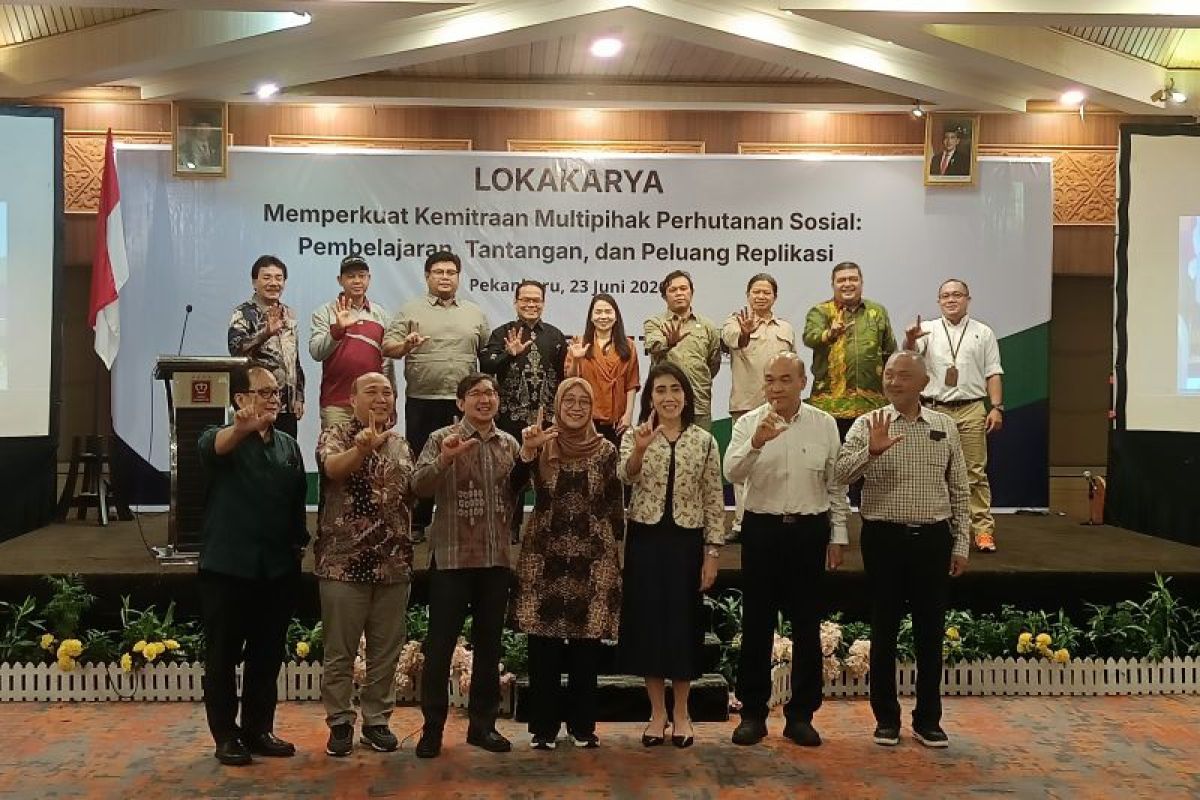
The Directorate General of Social Forestry at the Indonesian Ministry of Forestry is strengthening the downstream processing agenda for 10 key social forestry-based commodities to ensure communities enjoy greater added value. Director General of Social Forestry Catur Endah Prasetiani P stated that the 10 priority commodities are coffee, cocoa, sugar palm, cloves, candlenut, vanilla, nutmeg, cashew, coconut, and pepper. “These 10 commodity groups are expected to become the locomotive for community economic development in Social Forestry areas through a business cluster approach,” she said in Pekanbaru on Tuesday during a workshop on implementing the Agroforestry Partnership Programme in Social Forestry in Dayun Village, Siak Regency, and Rambahan Village, Kuantan Singingi Regency, Riau. The workshop, organised by RECOFTC (Regional Community Forestry Training Centre for Asia and the Pacific) and APRIL Group, carried the theme “Strengthening Multi-party Partnerships in Social Forestry: Lessons, Challenges and Replication Opportunities”. She explained that downstream processing is not merely about processing products, but transforming raw commodities into high-value-added products that can increase community incomes and create local employment opportunities. “We are currently encouraging the downstream development of Multi-Enterprise Forestry for the 10 priority commodities, including Social Forestry. Partnerships between community groups, the government, the private sector, financing institutions, universities, and development partners play a very strategic role,” she said. However, the success of downstream processing and community business development cannot be achieved sectorally. Therefore, the government is also developing an Integrated Area Development (IAD) approach based on Social Forestry, as mandated in Presidential Regulation Number 28 of 2023. Currently, 82 districts/cities have committed to developing Social Forestry-based IAD, and 32 IAD Action Plan documents have been signed by local governments. “This shows the growing support from regions in making Social Forestry a platform for regional development. Hopefully, the districts in Riau Province can follow suit in initiating IAD,” she concluded.