
Ministry of Forestry: Social Forestry Programme Creates New Jobs
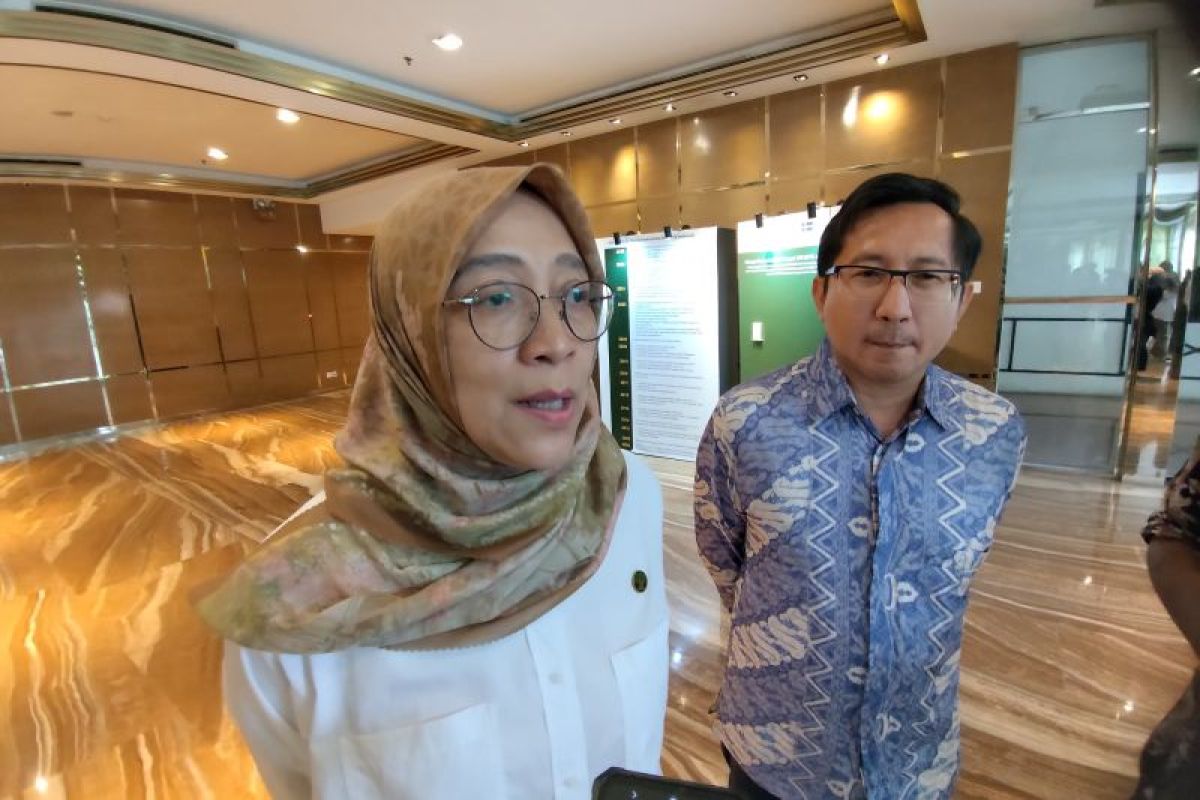
The Ministry of Forestry has stated that the Social Forestry Programme is beginning to create new jobs and improve the welfare of communities living in and around forest areas. “It turns out that through the Social Forestry Programme, 30 per cent of new jobs have emerged that previously might not have existed for communities around and within forest areas,” said Catur Endah Prasetiani, Director General of Social Forestry at the Ministry of Forestry, in Jakarta on Monday. She made the statement following the opening of an event titled “Reflection and Hope: RECOFTC Indonesia’s Experience in Strengthening Community-Based Forest Capacity and Partnerships”.
According to her, the Social Forestry Programme is a government initiative designed to support food security while alleviating poverty by granting legal access and providing assistance to communities in and around forest areas. She noted that this assistance encourages communities not only to secure business certainty but also to develop forestry-based enterprises that open up job opportunities and increase incomes.
Endah explained that a number of Social Forestry Business Groups (KUPS) have even progressed to the Platinum category, meaning the groups are capable of managing their businesses independently, creating jobs, and marketing their products outside their regions. “Platinum means they can manage social forestry not only for their own livelihoods but also recruit new workers, hire new labour, and sell their products outside their region,” she said. Based on Ministry of Forestry data presented at the event, KUPS in the Platinum category currently account for only 0.79 per cent, while the majority are still in the Blue category at 52.79 per cent, Silver at 37.67 per cent, and Gold at 8.75 per cent.
She cited examples where business development no longer stops at cultivation activities but has spawned various new business opportunities at the community level. For coffee commodities, for instance, communities are not only selling coffee beans but also processing them into green beans, roasting them, and even working as baristas. She also gave examples of processing candlenut products into oil and craft products, as well as the emergence of new jobs in product marketing and group financial management.
According to Endah, this change in community capacity is inseparable from the collaboration between the government, donor agencies, supporting organisations, the business sector, and the community in implementing the Social Forestry Programme. She mentioned that the Regional Community Forestry Training Centre for Asia and the Pacific (RECOFTC) is one of the partners assisting KUPS in strengthening capacity, institutions, and partnerships at the site level.
One example of the economic benefits can be seen in the Rimba Sejahtera KUPS in Siak Regency, Riau, which is developing agroforestry on peatlands through perennial crops, pineapples, and vegetables. Mustain, the head of Rimba Sejahtera KUPS, said the development of agroforestry has given the community, which previously depended on oil palm plantations, alternative sources of income. He noted that the activities have also opened up space for women’s farming groups to participate in planting, maintenance, harvesting, and marketing of agricultural produce. “Clearly, in terms of profit, there is definitely an increase in income from the agroforestry activities,” Mustain said.
Yurmayanti, a representative of the women’s group at Rimba Sejahtera KUPS, said the women’s farming group in her area has grown from an initial 10 members to around 16 after participating in agroforestry activities. She stated that group members now earn an additional total income of around 20 to 30 per cent from planting vegetables and pineapples, while the marketing of the harvest is carried out collectively by the group members. “Regarding the impact on the women’s income, Alhamdulillah, it has been very impactful,” Yurmayanti said.
In addition to agroforestry, the Social Forestry Programme also opens up opportunities for community-based ecotourism development, as carried out by the Pesona Alam Leuwi Hejo Cooperative in Bogor Regency, West Java. Aris Munandar, Secretary of the Pesona Alam Leuwi Hejo Cooperative, said the management of natural tourism in his area has been able to absorb local residents as managers and business operators. “Alhamdulillah, nearly 90 per cent of the management members there are local community members. And the business operators, from food stalls and others, are almost all local residents,” Aris said. According to him, the development of ecotourism provides economic benefits for residents while encouraging the community to preserve the area that is their source of income.
Furthermore, the Ministry of Forestry hopes that multi-party assistance and partnerships will continue to be strengthened so that more social forestry groups can advance in class, create jobs, and improve community welfare without reducing the ecological functions of the forest.
Source: jawawa.id (https://jawawa.id/newsitem/ministry-of-forestry-social-forestry-programme-creates-new-jobs-1782730526)
Originally published by Antara (Indonesian) (https://www.antaranews.com/berita/5627348/kemenhut-program-perhutanan-sosial-ciptakan-lapangan-kerja-baru), translated from Indonesian