
Ministry of Forestry: Social forestry commodity clusters to support product downstreaming
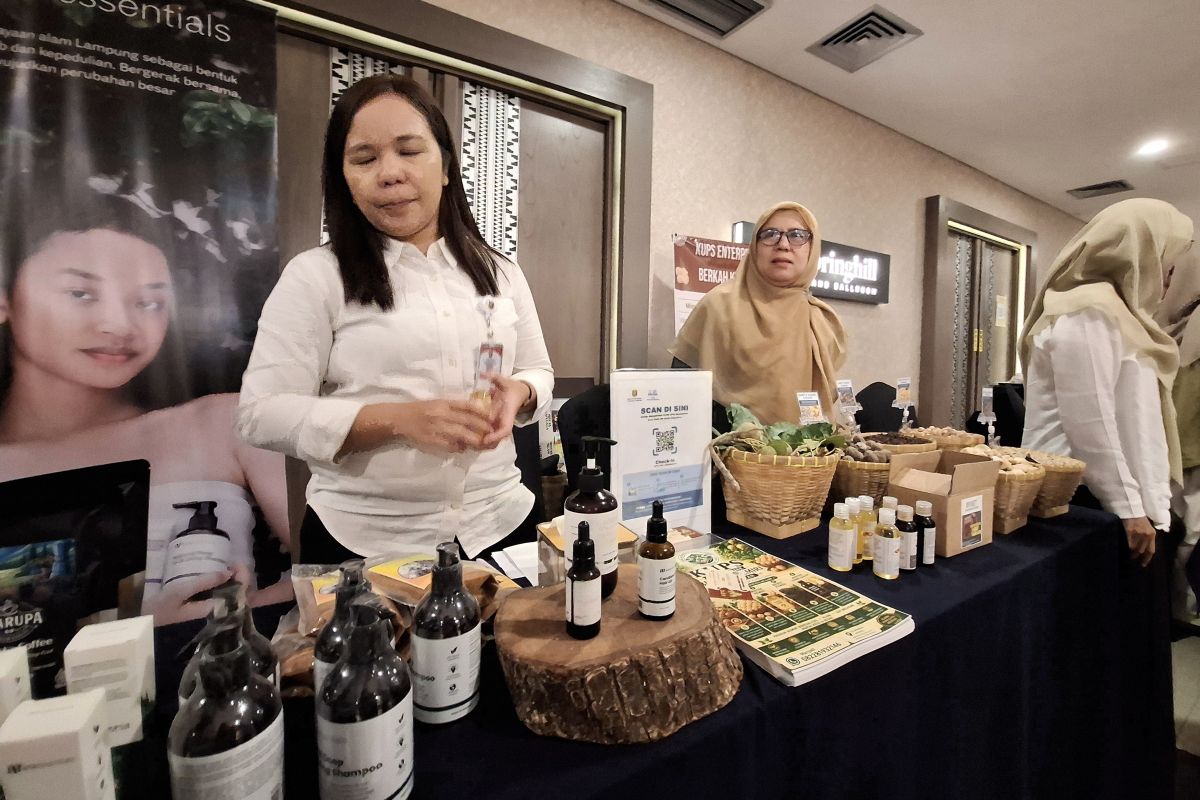
The market for downstreamed products is expected to eventually reach export, beginning with the domestic market.
Bandarlampung (ANTARA) — Catur Endah Prasetiani P, Director General of Social Forestry at the Ministry of Forestry, has said that developing commodity clusters within social forestry provides support for the product downstreaming programme.
“There is synergy or collaboration between district governments and social forestry business groups (KUPS). Then there is integrated area development, which can also produce commodity clustering that will increase the economic scale of social forestry commodities,” she said in Bandarlampung on Wednesday.
She said that nationally there are 160 social forestry products, and through cooperation with various parties, several commodities have been downstreamed, both from plantations and from multi-business forestry using agroforestry systems.
“So after being overlaid with the national social forestry programme, there are 10 commodities ready for downstreaming, including coffee, chocolate, candlenut, charcoal, coconut, cashew, pepper, nutmeg and clove. However, the main problem is that, for example, in Pesawaran Regency there are candlenut shell briquette products, but the market demands greater production and the farmers are struggling. So this requires collaboration by forming commodity clusters,” she said.
She continued that the formation of these commodity clusters helps social forestry business groups meet considerable market demand.
“If clusters are formed, it will make it easier to reach market demand, because markets always require certainty in quality, quantity, continuity, local wisdom and sustainability,” she said.
She explained that commodity development for downstreaming will use an agroforestry scheme.
“The market for these downstreamed products is expected to reach export, starting with the domestic market first and then exports. Farmers usually process nutmeg oil or the first processed raw product of commodities, and they usually cooperate with industry so that it finally becomes a product entering retail,” she added.
According to her, if social forestry products have difficulty finding a market or offtaker, they will be assisted by her directorate or by the Environmental Fund Management Agency (BPDLH).
“At the moment, all parties must ensure that farmers can sell their products, and through this integrated area development there will be innovation so that farmers do not only sell raw goods. This can increase farmers’ incomes, and BPDLH has even prepared several scenarios upstream, from planting to harvest, so that these social forestry products can be accepted by offtakers,” she said.
There are currently 10 social forestry commodities being developed for downstreaming to support forest conservation and village development: coffee, cocoa, nutmeg, pepper, candlenut, clove, cashew, coconut and vanilla.
Downstreaming social forestry commodities can strengthen institutions and community capacity, create quality products competitive in local and global markets, ensure forests remain sustainable, and improve community welfare.