
Ministry of Forestry pushes for downstream processing of social forestry commodities
The Ministry of Forestry (Kemenhut) is encouraging the increased downstreaming of social forestry commodities to enhance product value-add, expand market access, and boost the welfare of communities living within and around forest areas.
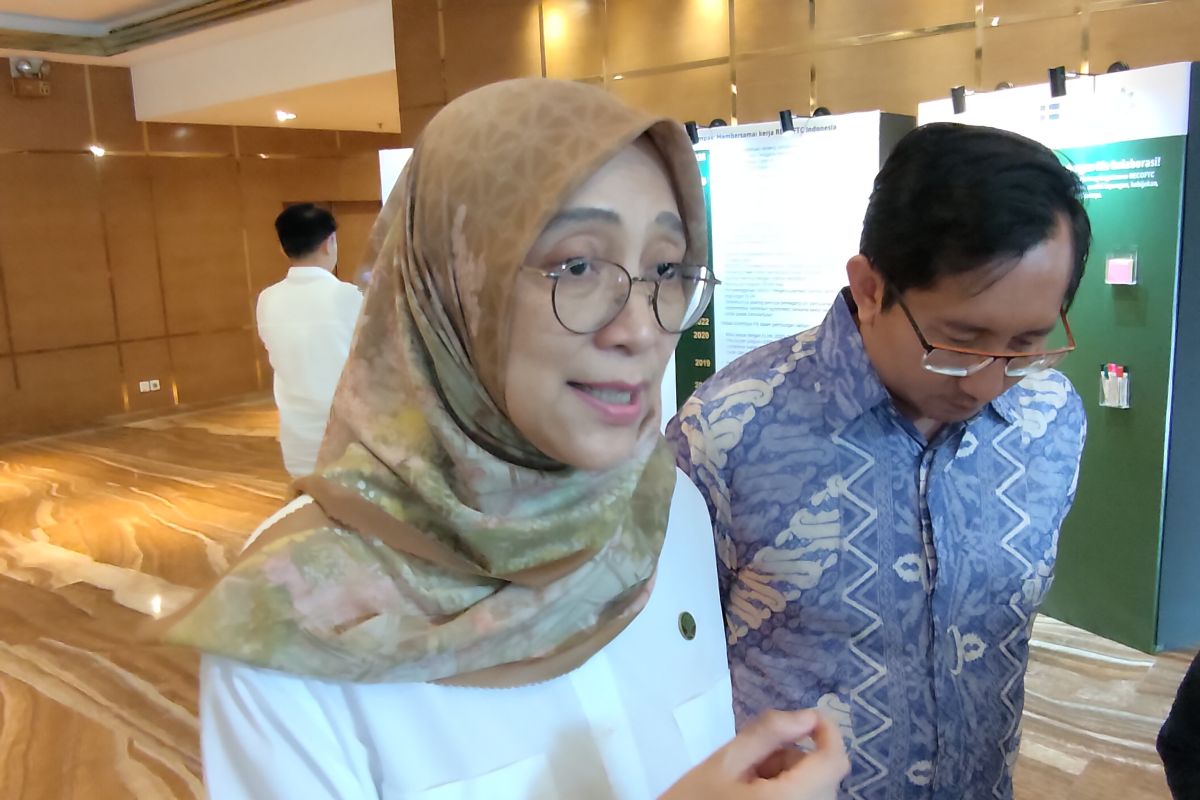
Catur Endah Prasetiani, Director General of Social Forestry at the Ministry, stated that social forestry is entering a new phase, moving beyond merely expanding management access to ensuring that such access evolves into productive, value-added, and competitive enterprises. “The transformation we are driving is from access to business, from productivity to value-add, and from area management to the development of a community economic ecosystem,” Endah said during an event in Jakarta on Monday.
She noted that downstreaming is a vital part of developing the forest community economy, as it can transform commodities from raw materials into processed products with higher economic value. According to her, non-timber forest products (NTFPs) possess significant economic potential that is yet to be fully developed. The Ministry is currently focusing on developing 10 flagship social forestry commodities: coffee, cocoa, sugar palm, vanilla, coconut, pepper, nutmeg, cashew, candlenut, and cloves.
“The goal is not merely to increase production, but to create a value chain capable of producing high-quality, competitive products with broad market access,” she added.
According to the Ministry’s presentation, the downstreaming of social forestry commodities is directed through several stages, ranging from production, processing, packaging, and certification to marketing and partnerships. Through this pattern, social forestry groups are expected to become producers of value-added products with greater economic benefits, rather than just raw material suppliers.
Ministry data shows that Indonesia’s NTFPs in 2024 reached over 850,000 tonnes, with a forest resource provision fee (PSDH) of Rp36.52 billion. Endah explained that the development of these commodities is being strengthened through a ‘Smart Agroforestry’ approach, which integrates forestry, plantation, and agriculture with technological innovation and climate change adaptation.
This approach is expected to encourage business diversification for communities so that income sources do not rely on a single commodity, while simultaneously maintaining the balance between economic functions and forest sustainability. She noted that this policy aligns with the development of multi-forestry businesses that optimise the potential of social forestry areas into mutually supporting business ventures.
She emphasised that successful downstreaming requires multi-stakeholder partnerships to connect communities with knowledge, technology, financing, investment, and markets. “Multi-stakeholder partnership is no longer just an option, but a requirement for the success of social forestry,” she said.
As of May 2026, social forestry achievements reached 8.35 million hectares through 11,226 decrees, providing management access to 1.43 million households. The programme is supported by 3,052 social forestry facilitators across Indonesia. Social forestry business groups are classified into four categories: Blue (52.79%), Silver (37.67%), Gold (8.75%), and Platinum (0.79%). “Platinum status means they can manage social forestry not only for their own livelihoods but also recruit new jobs and sell their products outside their local regions,” she revealed.
Furthermore, the Ministry noted that there are 36,095 villages within and around forest areas, with 36.7% of the population still living below the poverty line. Endah mentioned that this condition is influenced by limited legal access to forest areas, a lack of productive business land, and limited access to capital and markets.
Dodi Sumardi, Head of the Centre for Social and Economic Development of Forest Communities at the Ministry, echoed this, explaining that increasing community welfare requires the creation of value-add through collaboration. “Welfare requires value-add, and value-add requires collaboration,” said Dodi.
He stated that the government is encouraging regional economic development through the Integrated Area Development (IAD) approach, which integrates areas, actors, upstream-downstream value chains, and cross-sectoral development programmes. Local governments are seen as playing a crucial role as orchestrators in synchronising funding, cross-sectoral programmes, business development, and the strengthening of community institutions.
Through the strengthening of downstreaming and integrated area development, the Ministry of Forestry hopes that social forestry will serve not only as a land access policy but also as an instrument for creating green jobs and strengthening national food, economic, and ecological security.
Source: jawawa.id (https://jawawa.id/newsitem/ministry-of-forestry-pushes-for-downstream-processing-of-social-forestry-commodities-1782719710)
Originally published by Antara (Indonesian) (https://www.antaranews.com/berita/5627047/kemenhut-dorong-peningkatan-hilirisasi-komoditas-perhutanan-sosial), translated from Indonesian