
Ministry of Forestry promotes non-timber forest products for food and energy security
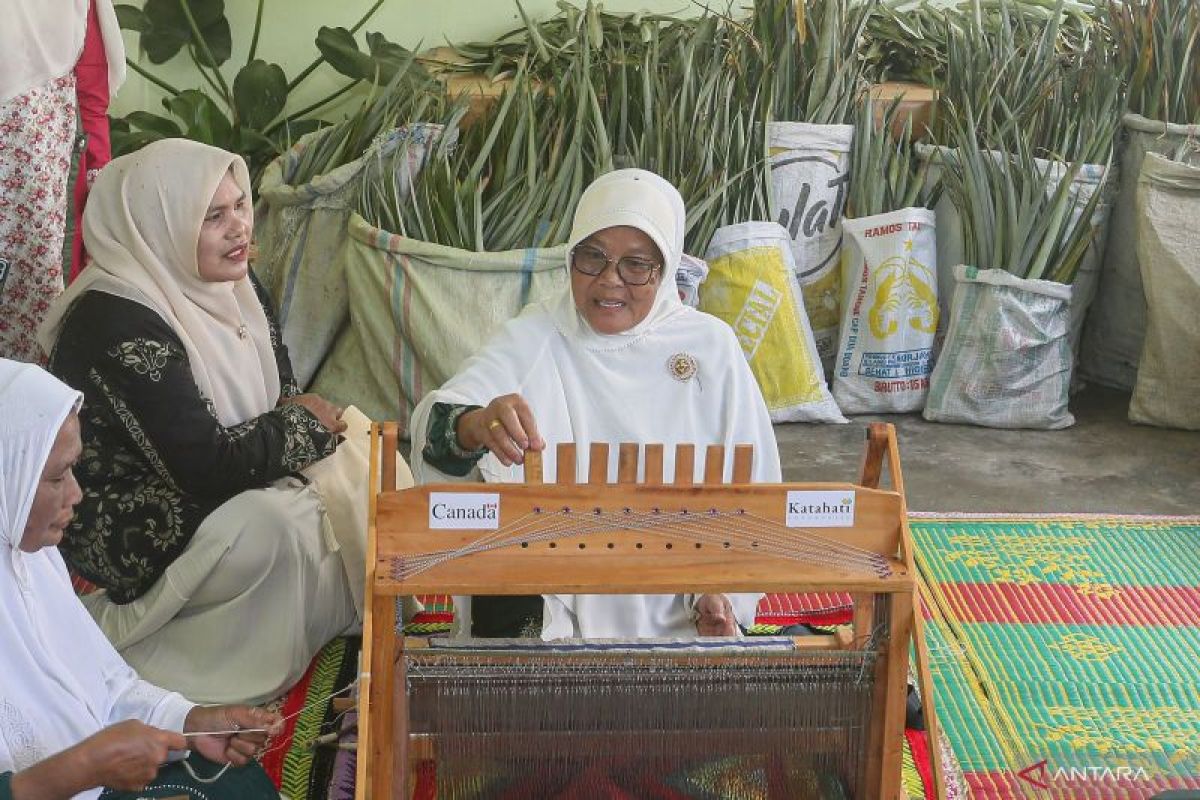
The Ministry of Forestry (Kemenhut) is encouraging the utilisation of non-timber forest product (HHBK) business activities to achieve food and energy security, while simultaneously boosting the real economy of forest land.
Director of Forest Utilisation Business Development at Kemenhut, Ilham, stated during a webinar in Jakarta on Thursday that this step can be taken through the transformation of Forest Utilisation Business Permits (PBPH) into a multi-business forestry (MUK) scheme.
“So, HHBK and environmental services are very much in line. If, for example, a multi-business forestry scheme is not created, it is not optimal. Because it is a shame, for instance, if we create an environmental services business, but the HHBK are not utilised,” Ilham said.
“In fact, there is potential there as well; HHBK represent potential for food security, energy security, and also water security. So there are three securities,” he added.
Ilham further explained that MUK is highly beneficial because all economic activities can be carried out within forest areas, provided they are socially and culturally acceptable and can maintain ecological sustainability.
He acknowledged that the transformation of MUK to support forestry bioeconomy currently still faces a number of challenges. These range from the very low real economic value of forest land and the low percentage of effective area, to a decline in market demand for timber from forests.
“The real economic value of our forests is currently very low, and it also relies on timber, whereas timber is now no longer commercial. The basic production cost is higher than the selling price. Therefore, we need to seek optimisation to transform beyond timber,” Ilham explained.
He cited the example that Indonesian forestry HHBK have great potential for energy security. Ilham assessed that currently, new and renewable energy alternatives through biofuel production can be carried out within forest areas.
In addition, the Indonesian government also sees the potential of carbon trading by continuing to strengthen the foundation of national carbon governance through various policies and regulatory reforms.
“So, we do not only rely on timber; we must also look for other alternatives besides timber, such as carbon, for example, which has extraordinary potential, or the aforementioned HHBK for energy security and food security,” Ilham said.
Source: jawawa.id (https://jawawa.id/newsitem/ministry-of-forestry-promotes-non-timber-forest-products-for-food-and-energy-security-1782996883)
Originally published by Antara (Indonesian) (https://www.antaranews.com/berita/5632644/kemenhut-dorong-pemanfaatan-hhbk-untuk-ketahanan-pangan-dan-energi), translated from Indonesian