
Ministry of Forestry Launches 'Leverage' Project, Involving Citizens in Monitoring Wildlife Trade
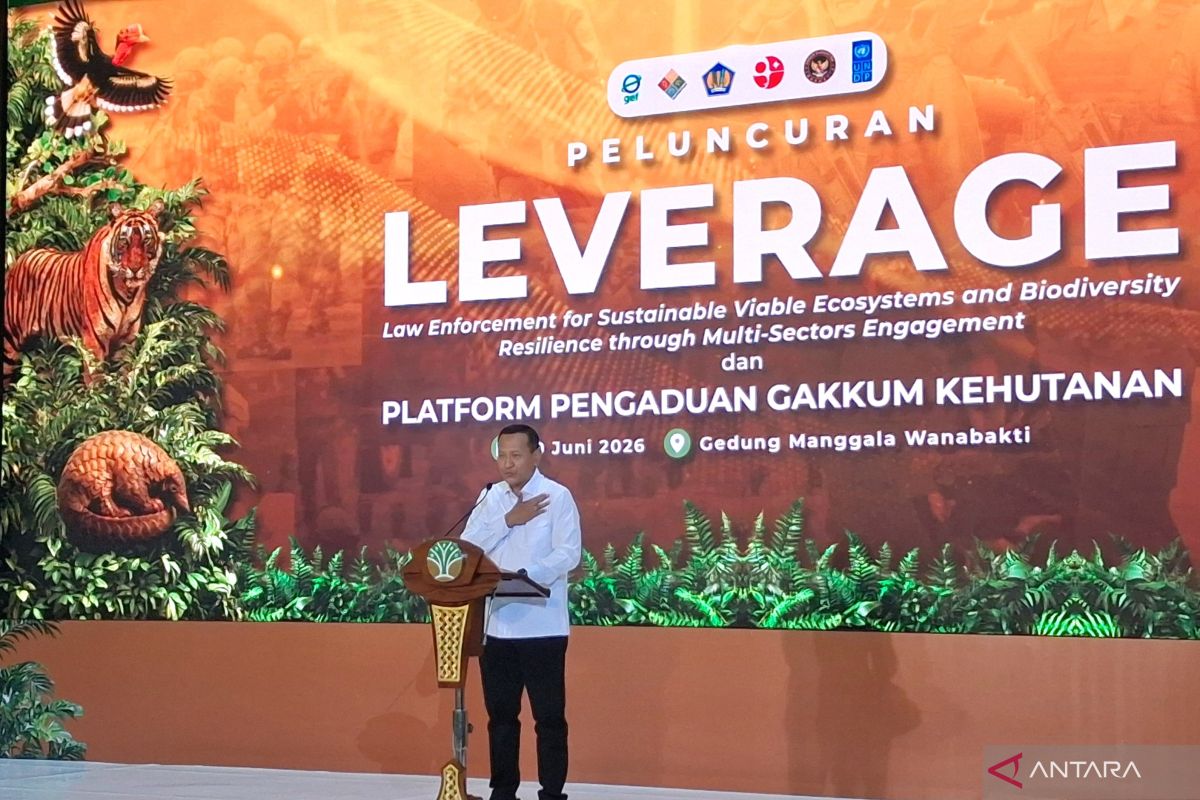
Jakarta (ANTARA) - The Ministry of Forestry (Kemenhut) has launched the Law Enforcement for Sustainable Viable Ecosystems and Biodiversity Resilience through Multi-Sectors Engagement project, known as ‘Leverage’, which involves the community in monitoring wildlife trade.
“A community-based approach is crucial, as residents living near forest areas possess the strongest field knowledge, yet are simultaneously vulnerable to being exploited by criminal networks as low-level perpetrators,” said the Director General of Forestry Law Enforcement (Gakkum) at the Ministry of Forestry, Dwi Januanto Nugroho, in Jakarta on Wednesday.
Dwi emphasised that community empowerment is one of the primary strategies within the Leverage Project to break the chain of illegal wildlife trade, which has long involved organised networks, even across international borders.
“The beneficial owners may be in Jakarta or even abroad, but the perpetrators on the ground often utilise communities that are economically and socially vulnerable,” he said.
Therefore, within the Leverage Project, the community must not only be viewed as perpetrators but must also be part of the solution. The Ministry of Forestry is encouraging the public to act as justice collaborators or whistleblowers to assist in uncovering wildlife trade networks, from the field level to the intellectual actors behind them.
This approach is being implemented through various education programmes, internalisation, and the development of productive businesses around forest areas, ensuring that local residents have alternative livelihoods while serving as a bulwark against wildlife crime.
“Those who most understand the field conditions are actually the local people. They understand the entry routes, the conditions of the area, and the various dynamics occurring on the ground,” he added.
Meanwhile, the Resident Representative of UNDP Indonesia, Sara Ferrer Olivella, stated that eradicating wildlife crime cannot rely solely on law enforcement. The programme, supported by the Global Environment Facility (GEF-8), also emphasises the importance of understanding the socio-economic conditions of the community, market incentives, and demand factors that often originate from outside Indonesia.
“People may indeed become involved in crime, but they are also part of the solution. We continue to involve the community in this Leverage project as parties who help protect the environment through cooperation with all stakeholders,” said Sara.
The platform launched under the Leverage Project is designed to strengthen collaboration between the government, the community, funders, and technology to ensure that the monitoring of wildlife trade can operate more effectively.
The Ministry of Forestry hopes that community empowerment through this project can strengthen early detection and reporting systems in the field, thereby breaking the illegal wildlife trade chain right down to the primary perpetrators.
Source: jawawa.id (https://jawawa.id/newsitem/ministry-of-forestry-launches-leverage-project-involving-citizens-in-monitoring-wildlife-trade-1781086090)
Originally published by Antara (Indonesian) (https://www.antaranews.com/berita/5602295/kemenhut-proyek-leverage-libatkan-warga-awasi-perdagangan-satwa-liar), translated from Indonesian