
Ministry of Forestry Ensures No Embers Remain at Bromo
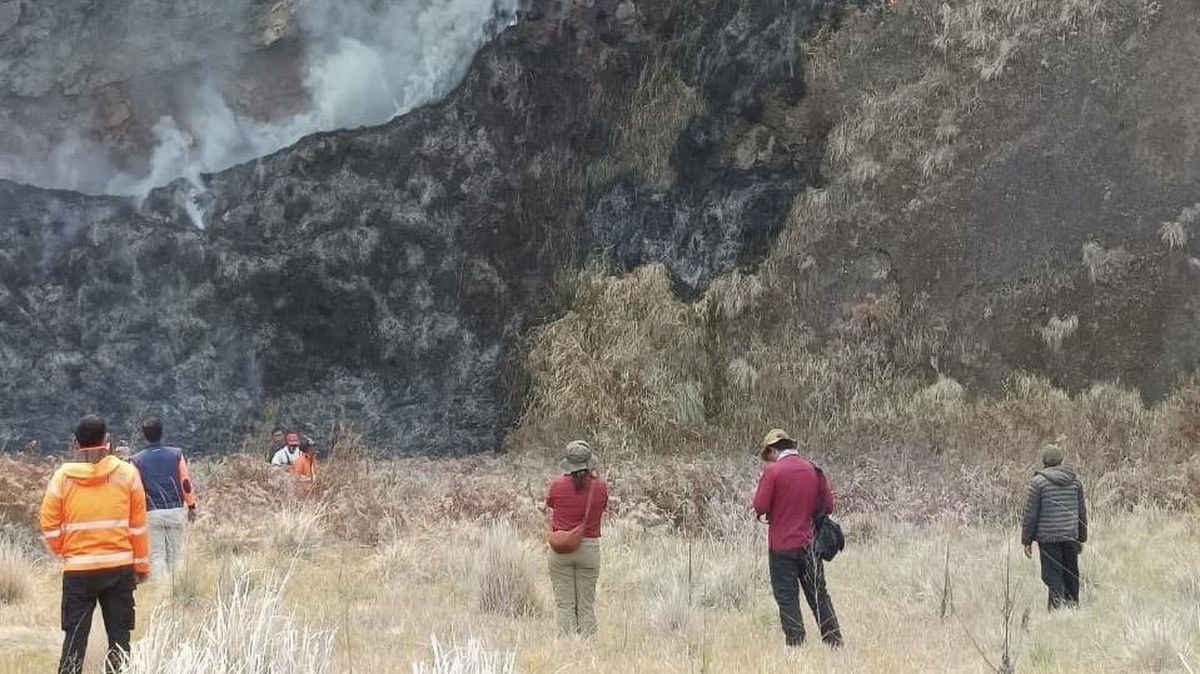
The Ministry of Forestry is still cooling down and sweeping the area affected by forest and land fires at Mount Bromo, within the Bromo Tengger Semeru National Park in East Java. The measure is being taken to ensure that no embers remain and reignite the fire.
Director General of Forestry Law Enforcement at the Ministry of Forestry, Dwi Januanto Nugroho, said the mopping-up process is focused on points that still have the potential to retain heat. “Cooling is focused on points that still have the potential to retain heat so that the embers are completely extinguished and do not spread to parts of the area that have not been affected,” Dwi said in a written statement received in Probolinggo on Monday, citing Antara.
After nearly two weeks of operations, personnel from Manggala Agni of the Forest Fire Control Centre for the Java, Bali, and Nusa Tenggara Region, together with the Bromo Tengger Semeru National Park Centre, the Indonesian National Armed Forces, the National Police, the Regional Disaster Management Agency, volunteers, and the community are still monitoring and wetting the burnt area.
Dwi said vigilance remains necessary because the previous fire affected several types of vegetation, ranging from savanna, mountain pine, ferns, shrubs, to a fairly thick layer of leaf litter. These conditions allow embers to survive within the burnt material even though the flames are no longer visible.
The team is also wary of the phenomenon of local wind vortices or dust devils that can lift light material and potentially carry embers to other areas. According to Dwi, the handling of forest and land fires at Bromo is an important lesson for strengthening fire prevention efforts, especially in facing the dry season.
“Bromo provides an important lesson: the fire may be under control, but the threat of forest and land fires is not over. Prevention must be strengthened from the site level,” he said.
He said area managers also need to strengthen community involvement, not only in fire prevention but also in the management of the national park area. According to him, the community is the party closest to the forest area and is often the first to know about disturbances. On the other hand, the community is also the most affected party when fires occur.
“Protecting the forest must be done together with the community,” Dwi said.
The Ministry of Forestry, he continued, is strengthening forest and land fire control in facing the 2026 dry season. This strengthening includes the readiness of Manggala Agni, early detection, patrols, and cross-sector coordination.
Meanwhile, Director of Resource Utilisation and Forest Protection Suharyono, who directly monitored the activities through a forest fire control alert assembly, appreciated all personnel who had been involved in the operation for nearly two weeks. “Personnel worked facing terrain and fire conditions that were not easy. Controlling the fire is not the end of the work,” he said.
Suharyono emphasised that the current focus of handling is to ensure that the entire burnt area is truly safe and that no embers reignite.
The Ministry of Forestry places forest and land fire control as an important part of efforts to protect forests and public safety. The handling of the fire at Bromo is also being used as evaluation material to strengthen forest and land fire prevention during the dry season.
Strengthening early detection, rapid response, and collaboration at the site level is considered important so that fires do not develop into wider ecological damage. In addition, the readiness of Manggala Agni personnel and equipment continues to be strengthened as part of efforts to face the potential for forest and land fires throughout 2026.