
Ministry of Forestry: Around 30 Percent of Forestry Concessions Yet to Perform Optimally
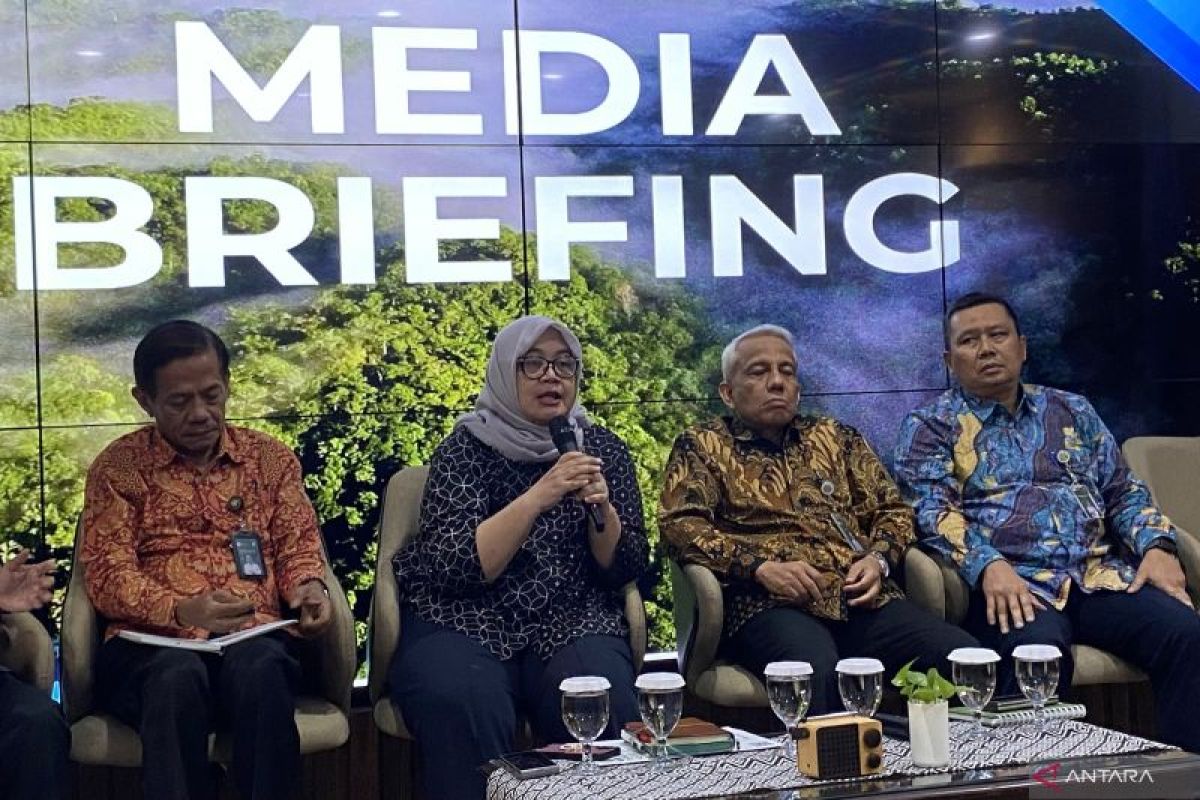
The government is encouraging a transformation of forest management through a multi-business forestry scheme that utilises the potential of forest areas in a more diverse manner. Director General of Sustainable Forest Management at the Ministry of Forestry, Laksmi Wijayanti, stated that around 30 percent of current forestry concession holders have not shown optimal performance amidst declining competitiveness in businesses that still rely heavily on timber utilisation. She noted this stagnation is one of the reasons the government is pushing for the transformation, including evaluations and revocations of certain concessions.
According to Laksmi, the forestry business model, which has long been dominated by timber utilisation, faces various challenges, from declining efficiency to the stagnation of certain wood-based product growth, especially those from natural forests. This condition has led to a decrease in investment interest in silviculture or forest cultivation activities necessary to maintain the sustainability of timber production. She explained that one of the sector’s main problems is a business model oriented towards a single use, whereas forest areas possess various other untapped potentials.
Currently, the total area of forestry concessions reaches around 29 million hectares, with the government also running a social forestry programme covering 12 million hectares. Laksmi explained that the majority of the sector’s revenue still comes from timber products, while non-timber forest products and environmental services have not contributed significantly due to a lack of developed incentives and markets. To address this, the government is promoting a multi-business forestry approach that allows concession holders to generate income from various sources, including non-timber products, agroforestry, nature tourism, environmental services, and carbon trading.
This approach aims to increase the economic value of each hectare of forest area while creating stronger incentives to maintain forest sustainability. Besides opening new business opportunities, the multi-business scheme is expected to serve as an alternative for concession holders when timber-based businesses experience a downturn. Laksmi added that agroforestry will become a backbone of this development, as it can combine economic functions with forest conservation while supporting food reserves and other strategic commodities. The government is currently preparing various measures to accelerate this transformation, including simplifying operational regulations, easing licensing, and opening market access, as well as preparing incentives such as reduced tariffs, affirmative assistance for certification, and market access support.
Source: jawawa.id (https://jawawa.id/newsitem/ministry-of-forestry-around-30-percent-of-forestry-concessions-yet-to-perform-optimally-1782402824)
Originally published by Antara (Indonesian) (https://www.antaranews.com/berita/5623347/kemenhut-sekitar-30-persen-konsesi-kehutanan-belum-berkinerja-optimal), translated from Indonesian