
Ministry of Forestry and YKAN collaborate to protect key wildlife habitats in Wehea-Kelay, East Kalimantan
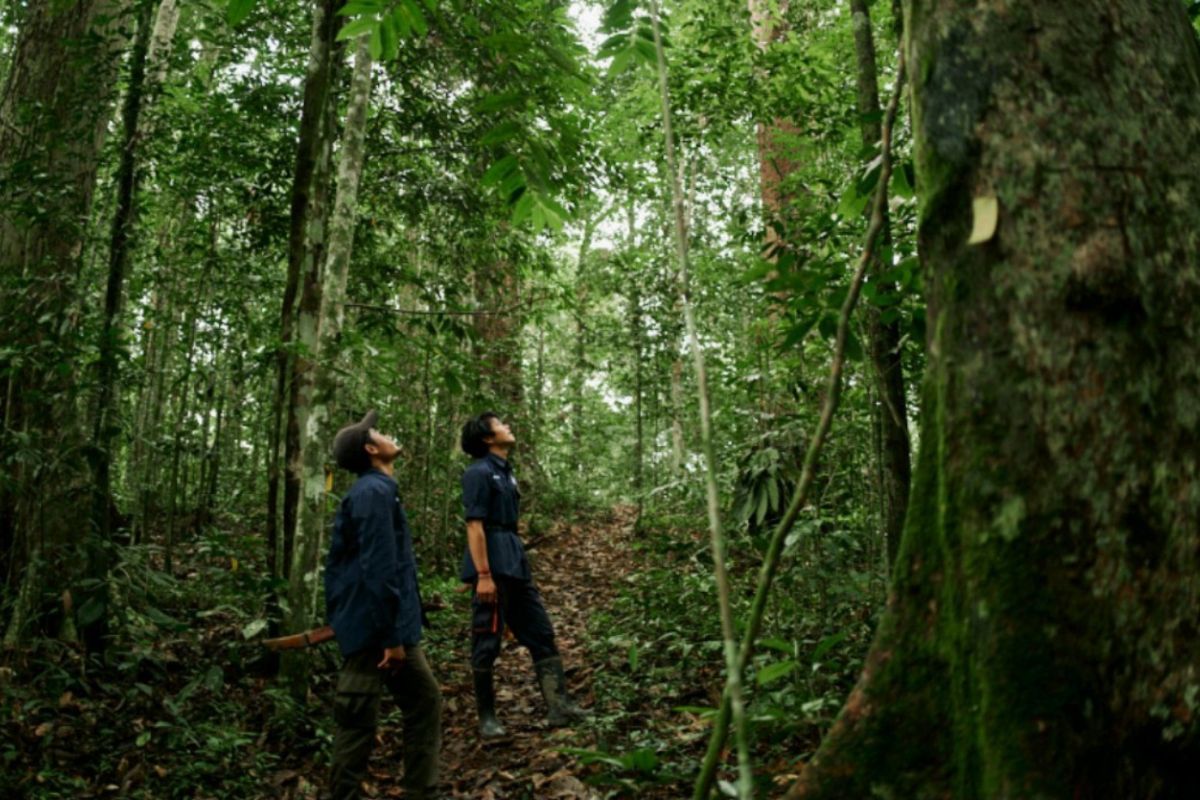
Samarinda (ANTARA) - The Ministry of Forestry and the Nusantara Conservation Foundation (YKAN) are collaborating to protect the habitats of key wildlife, including orangutans, gibbons, proboscis monkeys, hornbills, and various other endemic species, as part of an effort to strengthen the protection of the Wehea-Kelay landscape in East Kalimantan.
“This landscape has been designated as one of the pilot locations for the implementation of Multi-use Forestry (MUK), alongside four other areas in Indonesia, using a forest management approach that combines ecological, social, and economic interests,” said YKAN Executive Director Herlina Hartanto when contacted from Samarinda on Wednesday.
MUK no longer positions timber as the sole source of economic value from the forest, but instead opens opportunities for the development of agroforestry, ecosystem restoration, and environmental services, including carbon trading.
This approach is considered vital for ensuring forest areas remain productive while preventing degradation, deforestation, and land-use conversion within concessions that are no longer actively producing timber.
“The development of MUK in Wehea-Kelay is carried out on a ‘conservation-first’ principle, placing conservation as the priority in landscape management. Through this approach, protected forest areas and most production areas with high conservation value remain protected,” she said.
According to her, the model being developed through the Kalimantan landscape combines timber forest products with greener revenue sources, such as regenerative agroforestry and environmental services.
‘Bentala Kalimantan’, she noted, is a collaborative platform for sustainable landscape management initiated by YKAN in conjunction with the East Kalimantan Provincial Government, the private sector, academics, and local communities since 2024.
Currently, six companies holding natural forest utilisation business licences (PBPH-HA) and 14 villages have joined the initiative.
“Local communities are involved in forest surveys, nursery management, the development of rubber and cocoa agroforestry, and forest protection through the Forestry Partnership scheme,” she added.
Herlina stated that this collaboration is expected to strengthen forest protection, including providing access to green funding and investment.