
Ministry of Foreign Affairs: Cross-border royalty management must be part of the diplomatic agenda
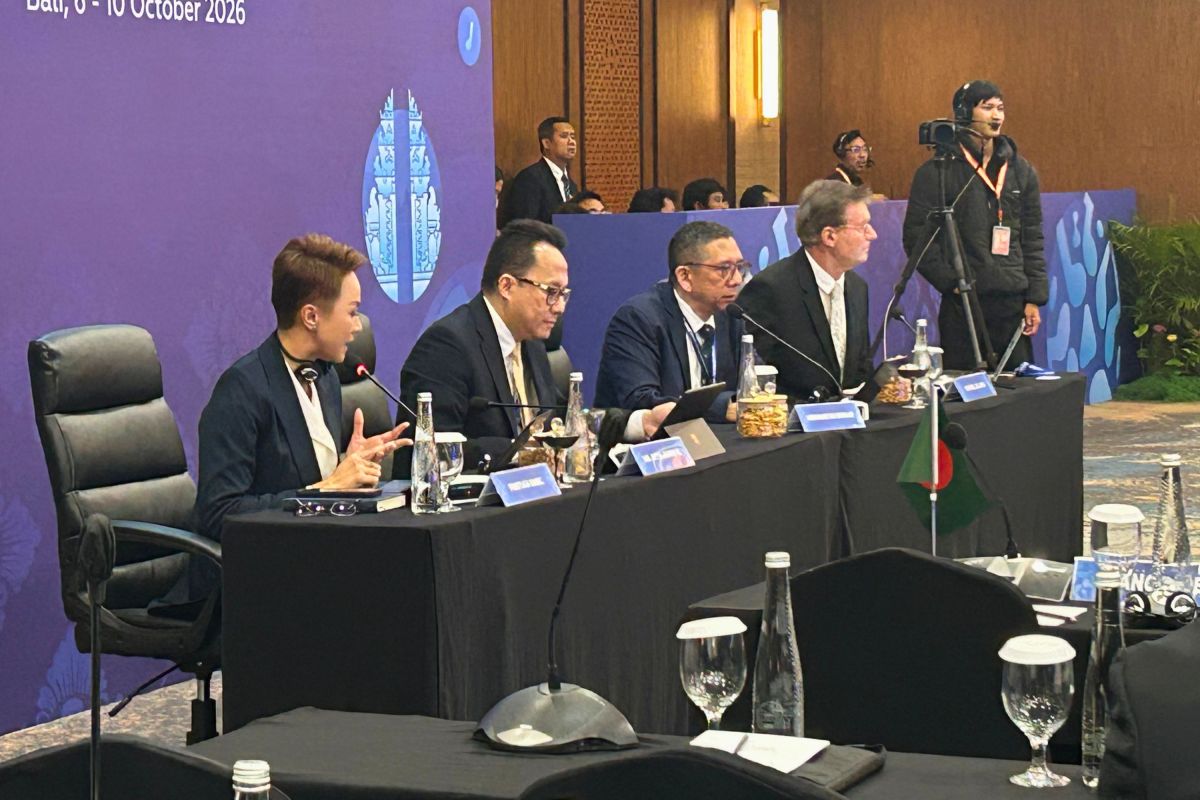
Badung, Bali — The Indonesian Ministry of Foreign Affairs (Kemenlu) has stated that the management of cross-border royalties needs to be positioned as part of the international diplomacy agenda.
Director of International Trade at the Indonesian Ministry of Foreign Affairs, Ditya Agung Nurdianto, noted that this aligns with the nature of the digital economy, which allows works produced in one country to be used by audiences in another, generating revenue through various platforms and rights management systems across different jurisdictions.
“In this context, cross-border royalty management must become an important part of the international diplomacy agenda,” Ditya said during the Global Dialogue on Cross-Border Copyright Royalty Governance in the Digital Era, held in Badung, Bali, on Wednesday.
He noted that the development of digital platforms, streaming services, artificial intelligence (AI), and the cross-border use of works have created both new challenges and opportunities for the international copyright system.
According to him, the issue of cross-border royalties can no longer be viewed merely as a technical intellectual property matter, but requires cooperation among various parties at the international level. This includes cooperation between governments, the World Intellectual Property Organization (WIPO), Collective Management Organisations (CMOs), industry representatives, and other relevant stakeholders.
Ditya stated that the increasing use of works through the digital ecosystem makes strengthening international coordination essential to ensure that creators and rights holders receive fair and transparent compensation.
“These developments demonstrate the importance of strengthening international cooperation and coordination to ensure that creators and rights holders can receive fair and transparent remuneration for the use of their works,” he said.
He emphasised that such cooperation does not mean all countries must have identical regulations. While differences in legal systems and development levels must be respected, a common ground is needed to handle cross-border issues through appropriate multilateral forums.
This view was supported by Michel Allain, Senior Manager of the Collective Rights Management Team at WIPO, who highlighted the shift in the creative industry ecosystem from physical media and digital downloads to streaming and AI. He noted that while the value chain has become global, the systems supporting rights management often remain local.
“As we move from physical media to downloads, then streaming, and now AI which creates new forms of creation, distribution, and exploitation, this value chain has become global,” Michel stated.
However, he continued, the systems supporting this value chain are often still local, meaning each country has global consumption but operates with local management and processes.
Michel identified three essential pillars for building cross-border copyright governance: transparency, accountability, and interoperability. He explained that all three depend on the quality, availability, and ability to exchange data regarding rights and the use of works.
The challenge, according to Michel, is not merely a lack of data, but how existing data sources can be integrated and used consistently. “We have many data sources, we have many information sources. The difficulty lies in reconciling them,” he said.
He added that the development of AI could be utilised to help resolve these issues. AI technology can be used to match and reconcile data from various sources, including information on creators, performers, rights holders, and the rights attached to a work.
“Certain AI tools that perform reconciliation between various existing data sources can be helpful. That is where I see AI being very helpful to us in the future,” he added.
Michel also emphasised that interoperability does not mean all countries must use the same systems or regulations; rather, it requires the ability of various systems to communicate and exchange data effectively. As the volume of work usage on digital platforms grows, a purely local approach is no longer sufficient.
“The market is global, therefore the solution must also be global,” concluded Michel.
Source: jawawa.id (https://jawawa.id/newsitem/ministry-of-foreign-affairs-cross-border-royalty-management-must-be-part-of-the-diplomatic-agenda-1791385227)
Originally published by Antara (Indonesian) (https://www.antaranews.com/berita/5775882/kemenlu-pengelolaan-royalti-lintas-batas-bagian-agenda-diplomasi), translated from Indonesian