
Ministry of Finance Outlines Four Key Principles for Tax Incentive Provision
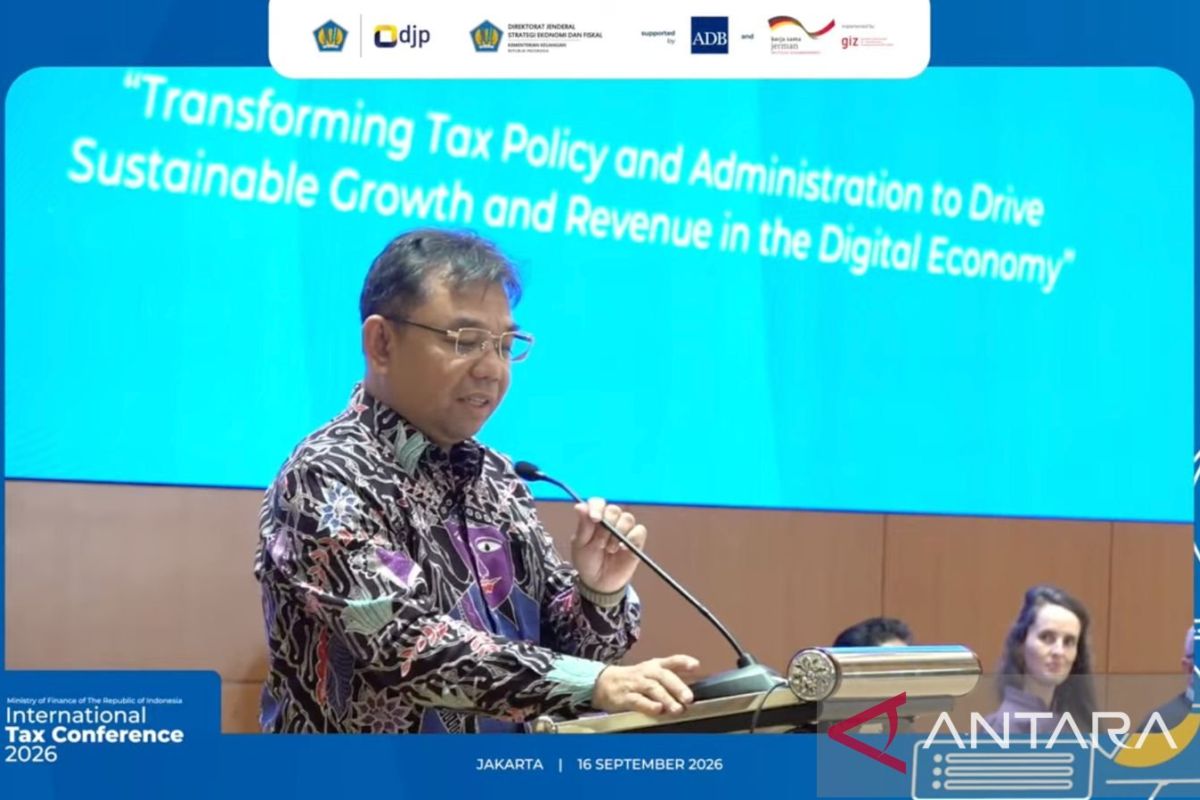
Jakarta (ANTARA) - The Ministry of Finance (Kemenkeu) has stated that there are four main pillars or principles in designing tax incentive policies: international alignment; strategic relevance; being timely and targeted; and being temporary, alongside continuous evaluation.
“Regarding the best way to provide incentives to the economy, there are at least four things that we believe can serve as the main pillars of a good tax incentive policy,” said Yon Arsal, Expert Staff to the Minister of Finance for Taxation, during the International Tax Conference 2026 in Jakarta on Wednesday.
Regarding the first pillar, Yon emphasised the importance of aligning tax incentive policies with developments in global taxation rules, including the Global Minimum Tax (GMT).
The implementation of the GMT, with a minimum effective rate of 15 per cent, impacts the use of traditional tax holiday and tax allowance schemes under certain conditions. Therefore, he noted, Indonesia needs to explore alternative incentive schemes that comply with GMT provisions.
For the second pillar, Yon emphasised the importance of the strategic relevance of tax incentives to the evolving business and economic structures, including the growth of the digital economy.
He reminded that Indonesia currently still relies heavily on traditional incentive schemes, such as tax holidays, particularly for the manufacturing sector. Meanwhile, several countries, such as Malaysia, Thailand, and Vietnam, are increasingly directing incentives towards the digital, electronics, and renewable energy sectors.
Source: jawawa.id (https://jawawa.id/newsitem/ministry-of-finance-outlines-four-key-principles-for-tax-incentive-provision-1789553492)
Originally published by Antara (Indonesian) (https://www.antaranews.com/berita/5743781/kemenkeu-sebut-empat-prinsip-utama-dalam-pemberian-insentif-pajak), translated from Indonesian