
Ministry of Finance and Bank Indonesia Agree on Five Pillars of Fiscal and Monetary Synergy
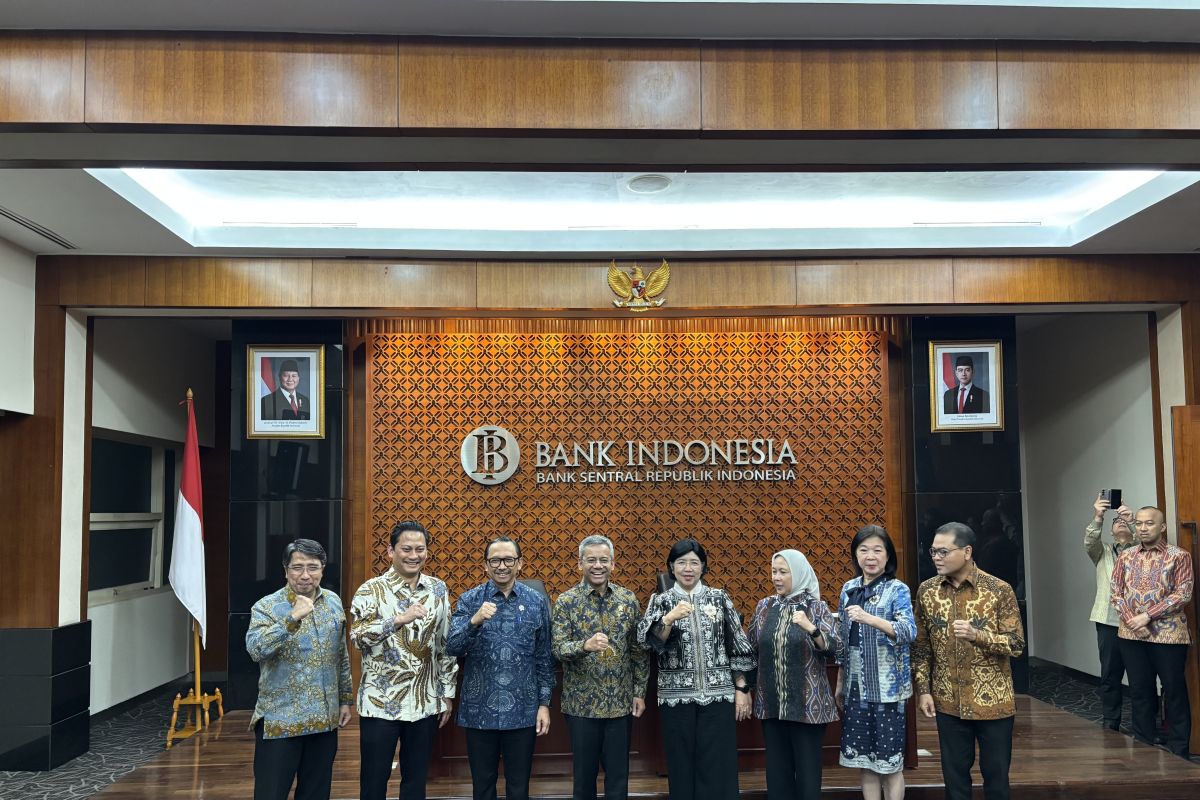
The Ministry of Finance and Bank Indonesia (BI) have agreed on five pillars of fiscal and monetary policy synergy to maintain stability and drive economic growth.
“We hope that coordination and synergy will continue within the bilateral context of BI and the Ministry of Finance, as well as within the Financial System Stability Committee (KSSK),” stated Deputy Finance Minister Suahasil Nazara during a press conference on Monetary & Fiscal Policy Synergy at Bank Indonesia in Jakarta on Thursday.
The synergy between fiscal and monetary policies is being strengthened to enhance economic resilience in the face of high global uncertainty.
The five pillars are as follows: first, synergy in maintaining economic growth momentum through the optimisation of fiscal and monetary policy instruments. Second, synergy in strengthening external sector resilience amidst global volatility, regarding both international trade and foreign capital flows. Third, synergy in managing liquidity adequacy in the money market, banking sector, and the broader economy. Fourth, policy coordination in inflation control conducted through the Central/Regional Inflation Control Teams (TPIP/TPID) via the implementation of the Inflation Control and Prosperous Food Movement (GPIPS). Fifth, coordination in efforts to deepen financial markets to support policy transmission and expand economic financing sources.
The Ministry of Finance and BI have expressed their agreement to strengthen fiscal and monetary policies in accordance with their respective mandates. The Ministry of Finance will consistently pursue prudent and sustainable fiscal policies to support long-term economic growth.
The 2026 State Budget (APBN) deficit is targeted to remain controlled below 3 per cent of Gross Domestic Product (GDP) through the strengthening of revenue streams and the sharpening of expenditure. Regarding financing, the issuance of Government Securities (SBN) will be conducted using precautionary principles and robust debt risk management to ensure the Government’s debt structure remains healthy, secure, and sustainable.
Meanwhile, Bank Indonesia continues to strengthen monetary policy by optimising various monetary instruments to maintain the stability of the rupiah exchange rate. This is intended to support the achievement of the inflation target of 2.5 per cent, plus or minus 1 per cent, for the 2026-2027 period, in order to encourage sustainable economic growth.
Source: jawawa.id (https://jawawa.id/newsitem/ministry-of-finance-and-bank-indonesia-agree-on-five-pillars-of-fiscal-and-monetary-synergy-1790262374)
Originally published by Antara (Indonesian) (https://www.antaranews.com/berita/5757348/kemenkeu-bi-sepakati-lima-pilar-sinergi-fiskal-dan-moneter), translated from Indonesian