
Ministry of Environment Urges Industry to Strengthen Compliance with Hazardous Waste Management Regulations
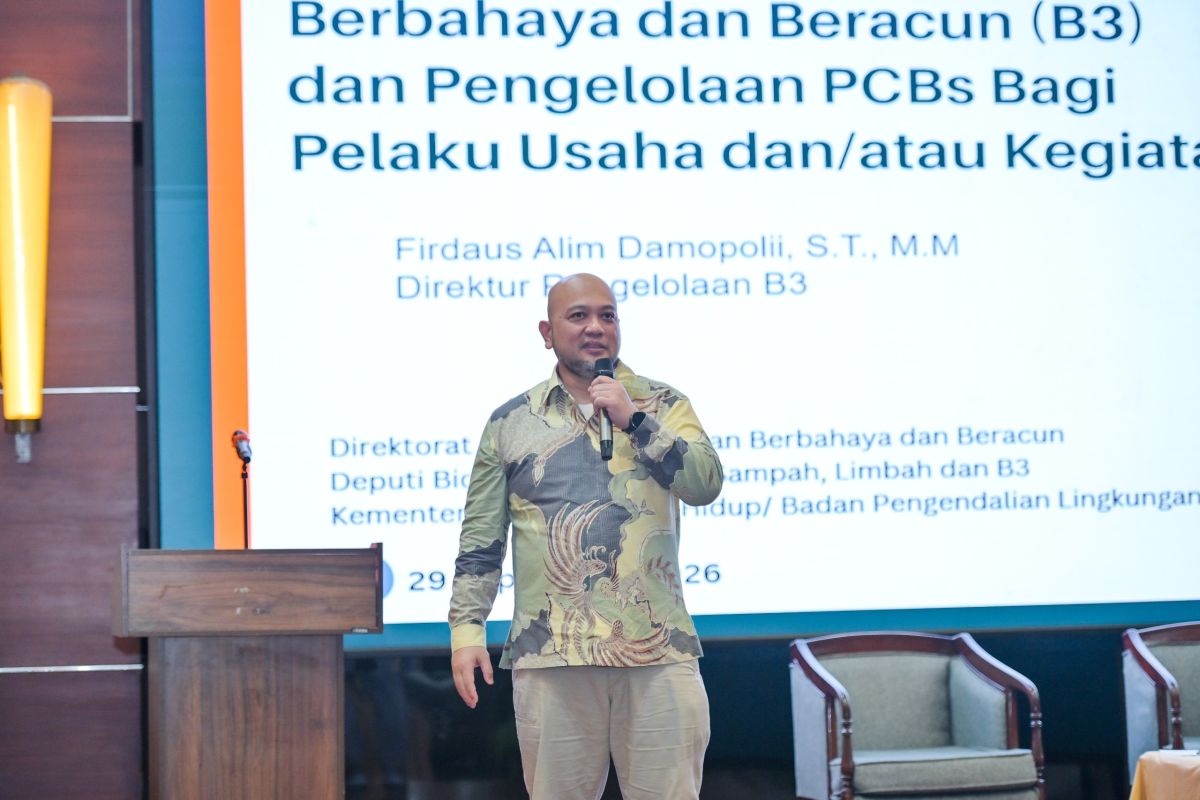
Jakarta (ANTARA) - The Ministry of Environment (KLH) has highlighted the importance of the industrial sector’s role in strengthening compliance with regulations related to the management of hazardous and toxic waste (B3), noting that several types of waste require specialised handling.
Firdaus Alim Damopolii, Director of B3 Management at the KLH/Environmental Control Agency (BPLH), stated in a briefing received in Jakarta on Friday, the importance of industrial commitment to managing B3 in accordance with Government Regulation (PP) Number 74 of 2001 concerning the Management of Hazardous and Toxic Substances, along with all its derivative regulations.
“One way to do this is by immediately undertaking amendments to environmental approvals for companies that have not yet aligned their field practices with their permits,” he said.
During a training and workshop session on the management of Polychlorinated Biphenyls (PCBs), B3, and B3 waste in Balikpapan, East Kalimantan, on Tuesday (29/9), he specifically highlighted the handling of PCBs, which are dangerous chemical compounds requiring high technology and specialised facilities.
Indonesia aims to achieve zero PCBs by 2028 as part of national regulations and the implementation of international commitments under the Stockholm Convention.
Amsor, Director of B3 and Non-B3 Waste Management at KLH/BPLH, emphasised the absolute obligation of B3 waste producers to implement accountable management, ranging from data collection to integrated reporting systems.
“B3 waste producers are obliged to manage their waste properly. Recording and reporting must be clear and transparent. If ignored, a company’s Operational Worthiness Certificate (SLO) may be revoked,” he said.
Waste producers are also required to recognise the characteristics of the B3 waste they produce to ensure targeted and appropriate handling.
Therefore, he stated, all parties involved in the B3 waste management chain must understand the necessary procedures.
With adequate technical understanding, the management workflow becomes easier, faster, and more effective, ultimately leading to official recommendations from the Ministry of Environment.
Elpido, Director of Technical & SHEQ at PPLI, expressed appreciation for the KLH/BPLH’s support in preparing industries for environmental performance assessments through PROPER B3 and the processing of waste such as PCBs.