
Ministry of Environment partners with universities to study ecoregion for post-disaster recovery in West Sumatra
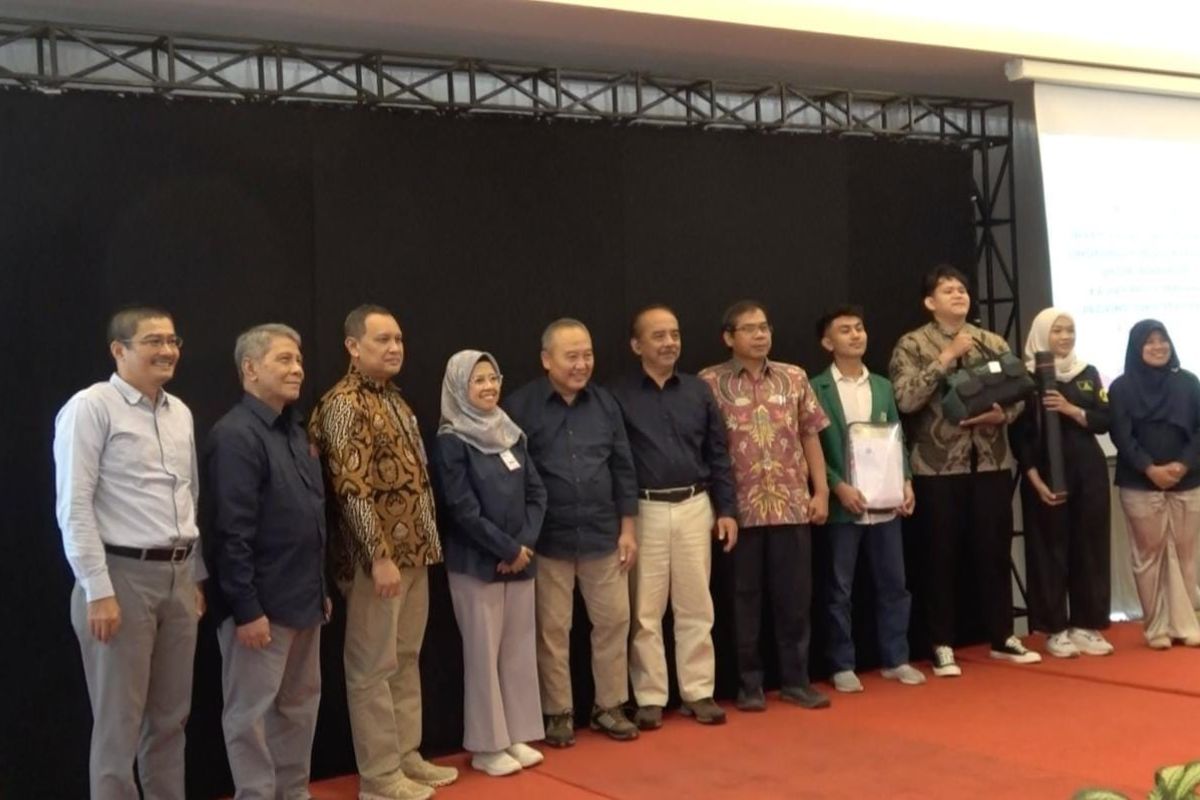
The Ministry of Environment is partnering with several universities, namely Andalas University, University of Indonesia, and Gadjah Mada University, to conduct an ecoregion study to strengthen post-disaster recovery in West Sumatra. The collaboration is carried out through environmental inventory and verification activities in ecoregion areas to support the post-disaster study in West Sumatra, implemented by the Directorate of Sustainable Natural Resources Management, Deputy for Environmental and Sustainable Natural Resources Management, Ministry of Environment/Environmental Control Agency.
Director of Sustainable Natural Resources Management at the Ministry of Environment, Hariani Samal, said in Padang on Friday that the activity aims to provide more comprehensive environmental information. ‘Post-disaster recovery is not enough just to rebuild. We need to ensure that rebuilding is in accordance with environmental characteristics and able to support the sustainability of community living spaces,’ she said.
She explained that the ecoregion approach is used to understand an area based on relatively similar environmental characteristics, such as climate, landform and land type, ecosystems, flora and fauna, as well as community interaction with the environment. ‘Through this approach, post-disaster recovery is expected not only to be oriented towards rebuilding infrastructure and settlements, but also to consider landscape conditions, natural resources, environmental functions, disaster risks, and the social and cultural character of the community,’ she said.
The inventory and verification is being conducted in 14 regencies and cities in West Sumatra, through two activity groups: biophysical verification and socio-cultural verification. The activity, targeted for completion within three weeks, involves 10 biophysical inventory and verification teams from Gadjah Mada University, 10 socio-cultural inventory and verification teams from University of Indonesia, and 40 biophysical and socio-cultural inventory and verification teams from Andalas University.
Biophysical verification covers topography, soil, geology, hydrology, land cover, vegetation, ecosystems, and other environmental factors that may affect the suitability and sustainability of spatial use. The Directorate of Sustainable Natural Resources Management at the Ministry of Environment is involving universities to strengthen the study through a multidisciplinary approach. Gadjah Mada University contributes to the study and verification of biophysical environmental aspects, University of Indonesia strengthens social and socio-ecological approaches, while Andalas University supports studies based on the local context of West Sumatra.
Head of the Centre for Land Resource Management Studies at Gadjah Mada University, Junun Sartohadi, said that in the ecoregion context, the relief conditions in West Sumatra actually reflect the potential for physical disaster threats. ‘This can be easily recognised through imagery and field conditions. Then, when talking about the area, there is also what is called a socio-cultural unit, here there is what is called wali nagari, their datuk have their own territories,’ he said.
This approach relates to ecoregion, namely uniting physical areas and socio-cultural areas and addressing the disaster conditions in West Sumatra. Meanwhile, Deputy Chair of the Environmental Study Centre at Andalas University, Muhammad Nasir, said his university plays a role in assisting the Ministry of Environment team in mapping areas based on the context of local wisdom. ‘Local wisdom in West Sumatra, for example, prohibits cutting down a single tree, meaning if it is one tree, who knows whether that tree is endemic or specific and cannot be cut down, that is what we want to record. Is it true that this area has certain living things that cannot be used, if you want to farm what is suitable to plant,’ he said.
The Ministry of Environment stated that the environmental data resulting from the inventory and verification will not be the sole basis for determining the location of temporary or permanent housing. The data will be one of the considerations together with disaster information, spatial planning, accessibility, community social conditions, and other technical aspects. Through this collaboration between the government and universities, the study results are expected to strengthen the scientific information base in formulating directions and recommendations for the recovery of disaster-affected areas in West Sumatra. This approach is expected to encourage recovery that does not merely rebuild affected areas, but rebuilds by considering environmental conditions, risks, and the sustainability of community living spaces.
Source: jawawa.id (https://jawawa.id/newsitem/ministry-of-environment-partners-with-universities-to-study-ecoregion-for-post-disaster-recovery-in-west-1787316869)
Originally published by Antara (Indonesian) (https://www.antaranews.com/berita/5705485/klh-gandeng-sejumlah-pt-kaji-ekoregion-pemulihan-pascabencana-sumbar), translated from Indonesian