
Ministry of Environment Accelerates Waste-to-Energy Development in Greater Bandung
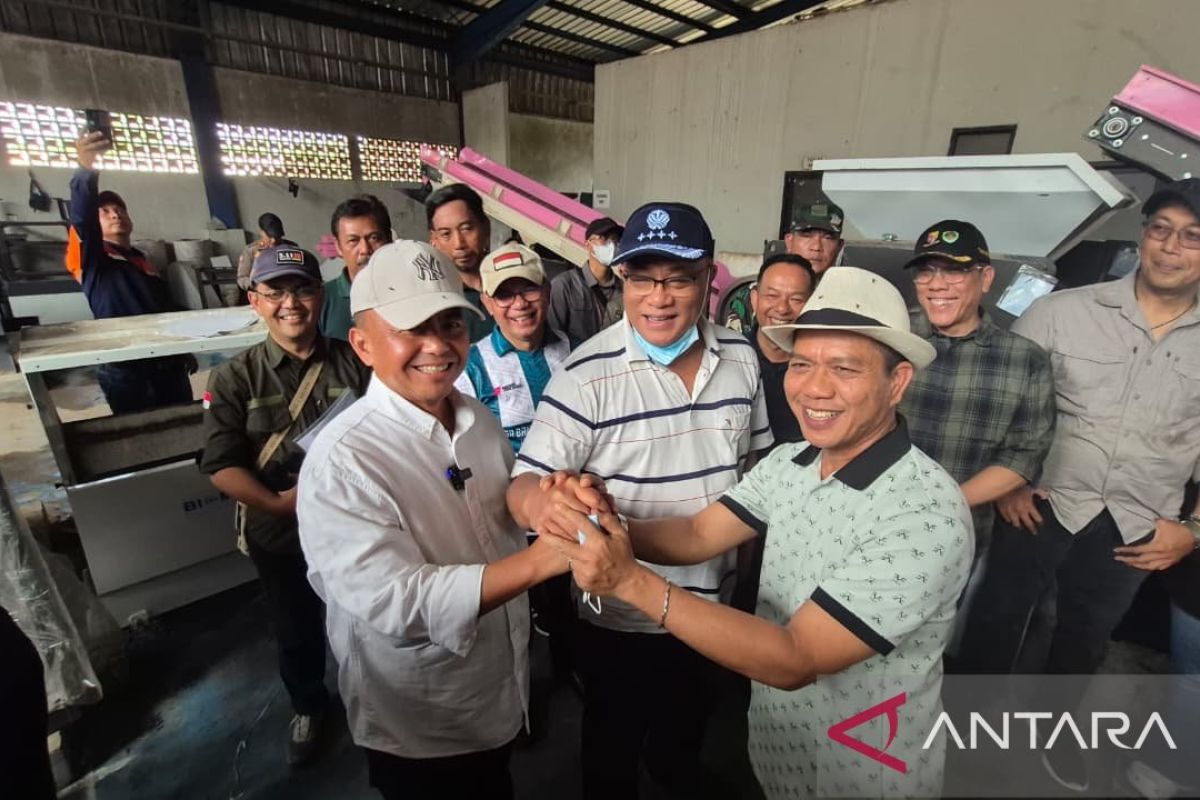
Bandung (ANTARA) - The Ministry of Environment and Forestry (KLH) is preparing to accelerate the development of a waste-to-energy processing facility to address the waste emergency in the Greater Bandung area, West Java.
Environment Minister Mohammad Jumhur Hidayat stated that his ministry does not wish to prolong the project so that the waste problems in the region can be resolved quickly.
“Of course, we do not want to drag this out (regarding the project); if decided in the coordination meeting, the tender for the waste-to-energy project can be carried out immediately,” he said in Bandung Regency on Sunday.
He explained that his ministry is currently promoting the acceleration of one of the Waste Processing into Electricity Zones (PSEL) projects at Oxbow Cicukang Margaasih to tackle the increasingly urgent waste issues.
He mentioned that KLH, along with the technical team, has inspected the projected site for construction and deemed it more feasible than previous plans because it is far from residential areas and close to a water source.
“This location is far more adequate because it is distant from community settlements and near a water source,” he said.
According to him, the process from tendering to appointing the implementer is estimated to take about one year, and the waste processing facility is targeted to begin operations in 1.5 to 2 years if it proceeds smoothly.
During the construction process, KLH, together with local government, is also preparing interim handling measures through the use of incinerators and refuse-derived fuel (RDF) technology.
On that occasion, the West Java Regional Secretary, Herman Suryatman, expressed support for the initiative, as waste management in Greater Bandung is one of the priorities.
“The Governor is committed that one of the top priorities is to resolve the waste issue in Greater Bandung,” he said.
He hopes the programme will be one of the efforts to address the longstanding waste problems in Greater Bandung.
He explained that current waste production has reached around 1,800 tonnes per day, while the disposal quota is only about 280 tonnes per day.
“The waste emergency condition is due to the limited quota of 280 tonnes per day, while waste production reaches around 1,800 tonnes per day,” he clarified.
The Regent also stated that he understands the public’s desire for this issue to be resolved quickly, so his side continues to push for the acceleration of the programme to tackle the problem.
He also urged the public to contribute by reducing waste production and managing waste at the upstream level to minimise the impact of waste in the region.