
Ministry of Energy to develop integrated solar power plants in nine remote villages in Maluku
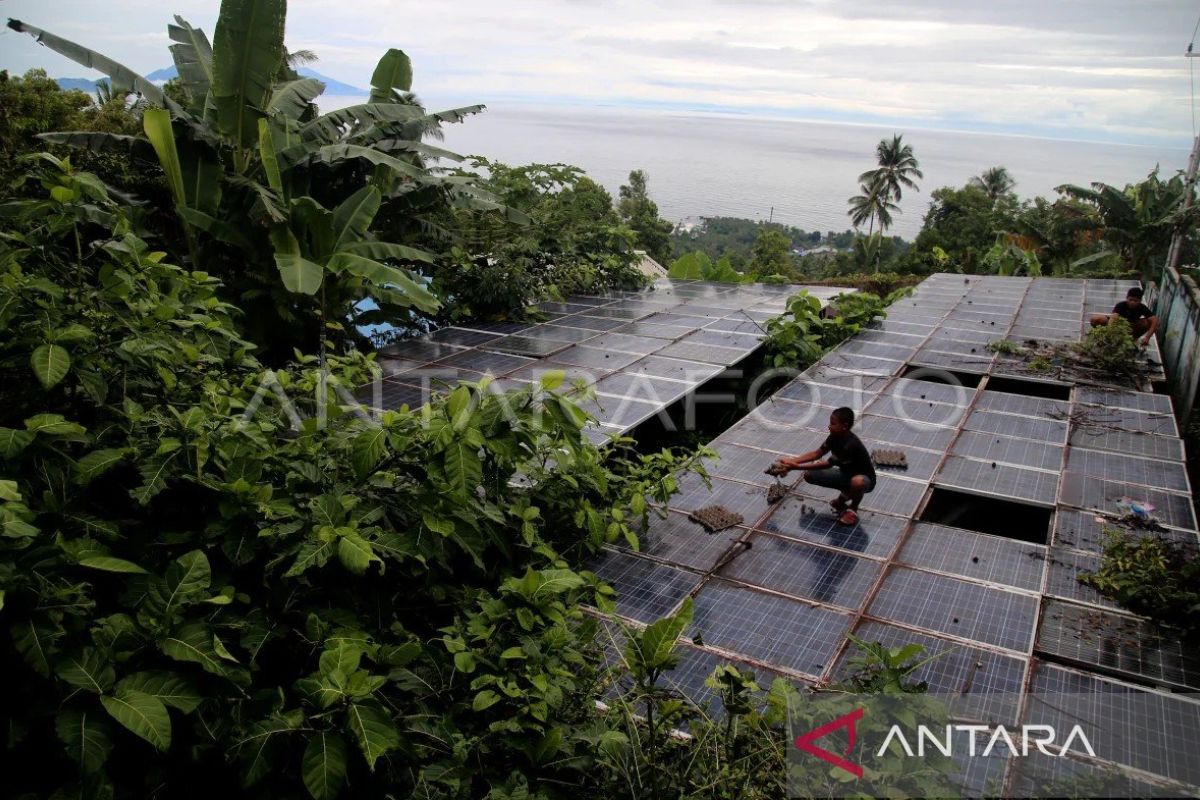
AMBON (ANTARA) - The Ministry of Energy and Mineral Resources (ESDM) is developing integrated Solar Power Plants (PLTS) at nine village locations across Maluku Province through the New and Renewable Energy Infrastructure Development Programme funded by the 2026 state budget.
Director General of New, Renewable Energy and Energy Conservation (EBTKE) at the Ministry of ESDM, Prof Eniya Listiani Dewi, said in Ambon on Tuesday that the development of integrated PLTS in Maluku covers a total capacity of 1,270.5 kilowatt peak (kWp).
“The national new and renewable energy mix has now reached around 18.3 per cent. However, the government still faces challenges because a number of small islands remain dependent on fuel oil (BBM) as the energy source for electricity generation,” she said.
This strategic step is being taken to expand access to clean energy and strengthen the energy resilience of communities in the 3T regions (disadvantaged, frontier, and outermost) of the archipelago.
She continued that, based on Ministry of ESDM data, the construction of the nine integrated PLTS units in Maluku is spread across a number of remote districts and villages in Aru Islands Regency and Tanimbar Islands Regency (Wuar Labobar).
The nine construction locations include Warialau Village in North Aru District with a capacity of 161.7 kWp (180 households), Jambu Air Village in South Central Aru at 138.6 kWp (138 households), and Warabal Village in South Central Aru at 138.6 kWp (138 households).
Furthermore, Lola Village in East Central Aru with a capacity of 77 kWp (65 households), Karawai Village in East Central Aru at 107.8 kWp (97 households), Labobar Village in Wuar Labobar at 184.8 kWp (205 households), Romnus Village in Wuar Labobar at 138.6 kWp (139 households), Lingada Village in Wuar Labobar at 138.6 kWp (143 households), and Nurkat Village in Wuar Labobar at 184.8 kWp (198 households).
She explained that the government continues to promote the optimisation of local energy sources tailored to the characteristics and geographic potential of each region. For eastern Indonesia, solar and wind energy are considered the most promising options for sustainable development.
“We may be able to harness a combination of various energy sources. Where water sources in an area are limited, we can maximise solar power or wind power generation,” she said.
She added that the use of local renewable energy is crucial for island regions to reduce the relatively high logistics costs of fuel oil and minimise dependence on fossil fuel supply chains from outside the region.
Nationally, the integrated PLTS programme for 3T regions in the 2026 fiscal year targets 39 generating units with a total capacity of 5,189.8 kWp, with a budget of Rp450.21 billion to serve 4,708 households. Beyond Maluku, the programme targets other regions such as East Nusa Tenggara, West Papua, Papua, and South Papua.
Source: jawawa.id (https://jawawa.id/newsitem/ministry-of-energy-to-develop-integrated-solar-power-plants-in-nine-remote-villages-in-maluku-1789480645)
Originally published by Antara (Indonesian) (https://www.antaranews.com/berita/5742531/kementerian-esdm-kembangkan-plts-terpadu-pada-9-daerah-3t-di-maluku), translated from Indonesian