
Ministry of Energy and Mineral Resources Discusses Deregulation of Solar Power Plants to Accelerate Renewable Energy Transition
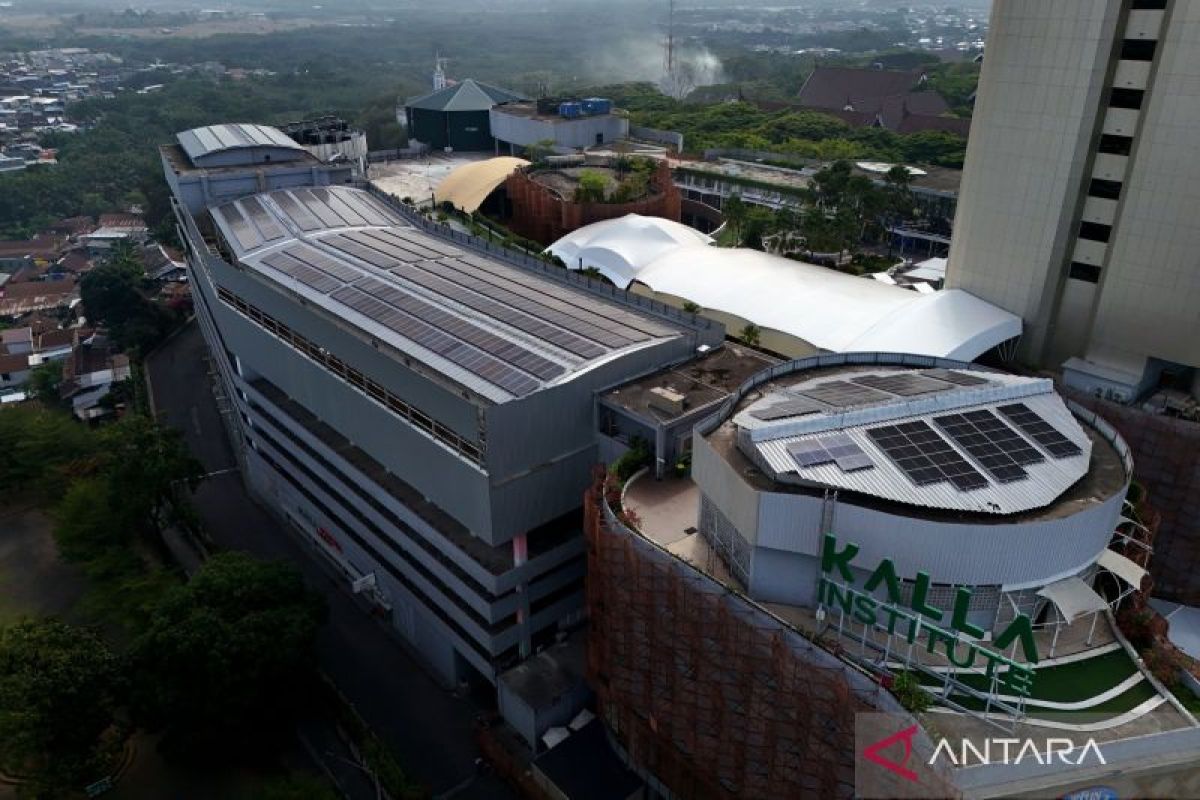
Jakarta (ANTARA) - The Ministry of Energy and Mineral Resources (ESDM) is currently discussing deregulation regarding solar power plants (PLTS) to accelerate the transition to new renewable energy (EBT) and efforts to achieve national energy resilience. “We are currently discussing PLTS deregulation, so in the future we may not need to discuss whether it is rooftop, floating, or ground-mounted, but all existing PLTS can be used as energy sources generated by us ourselves,” said Director General of New, Renewable Energy, and Energy Conservation at the Ministry of ESDM, Eniya Listiani Dewi, in a speech at the virtual launch of 1.3 GW Rooftop PLTS in Jakarta on Tuesday. Eniya stated that this regulatory simplification is one of the efforts to accelerate towards national energy resilience, which provides various multiplier effects in various industrial sectors and communities. “One of the elements supporting the development of PLTS in our country is that we must present a strong national solar energy industry, because it provides a large multiplier effect, creates jobs, provides potential for the manufacturing industry, also increases investment, and strengthens Indonesia’s competitiveness at the global level,” she explained. Furthermore, Eniya said that PLTS development has been included in the Electricity Supply Business Plan (RUPTL) of PT PLN (Persero) until 2034 with a target of 17.1 gigawatts (GW). This step, she continued, is in line with President Prabowo Subianto’s directive to increase solar power plant capacity to 100 GW. “The national PLTS development target will reach 80 to 100 GW. This ambitious target is hoped not only to focus on increasing energy capacity, but also on creating demand that can drive the domestic solar energy industry,” she said. Furthermore, Eniya stated that the current installed PLTS capacity nationwide has reached around 1.5 GW, with rooftop PLTS contributing 895 megawatts (MW). The realisation of the PLTS programme, she continued, not only supports a clean energy mix but also opens up potential for creating a large number of jobs and new economic opportunities. “We calculate that at least 760,000 new jobs can be created from this PLTS programme,” said Eniya. “In the future, the government wants to expand the use of photovoltaics not only on building roofs (rooftop). But also in ground-mounted areas, especially around village cooperatives, health facilities like puskesmas, as well as accelerating electric vehicles,” she added.